
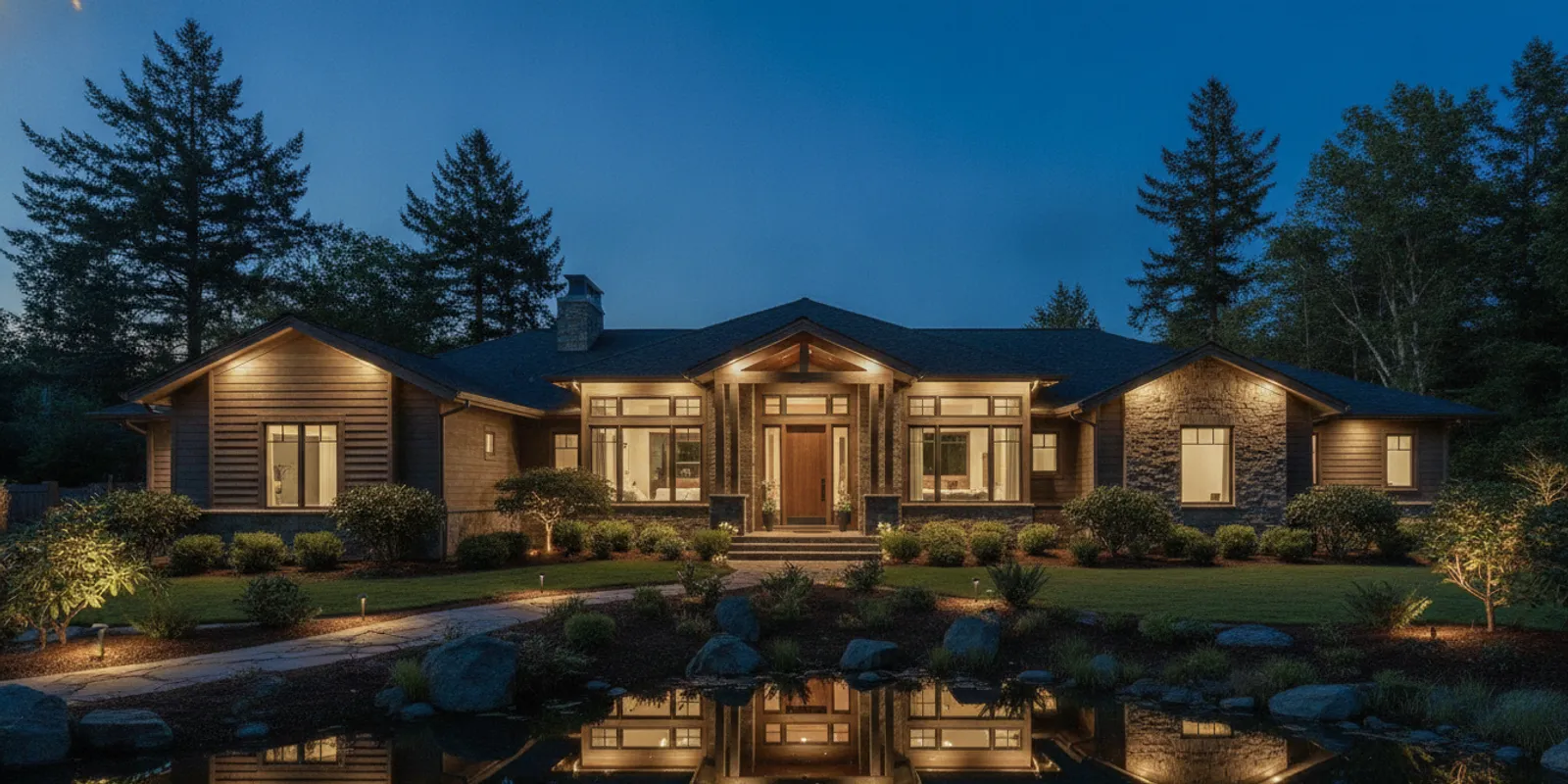
A permanent outdoor lighting system should suit the property, work reliably, and remain manageable as the home or its use changes. A permanent lighting retrofit may be worth exploring when an older installation no longer meets those needs, but a visible problem does not automatically mean every fixture or component must be replaced. Start by identifying what is not working, what still works, and what has changed. A property-specific review can help distinguish a targeted repair from a more extensive redesign.
Request a complimentary lighting review
What does a permanent lighting retrofit involve?
A retrofit is a planned update to an existing lighting installation. Depending on its condition and the property’s needs, work might involve addressing a control or wiring issue, replacing failed components, revising fixture placement, or reworking part of the system. Sometimes the useful question is whether an existing setup can be improved in stages. In other cases, the original layout or equipment may be poorly matched to the property, and a broader redesign deserves consideration.
The word “retrofit” does not describe one standard package. It does not tell you how many fixtures will change, whether existing wiring can remain, which controls will be compatible, or what the finished project will cost. Those details depend on what is installed, how it was installed, what is functioning, and what result you want. A written, property-specific proposal should identify the intended work rather than assume that every component is reusable or that everything needs replacement.
Permanent architectural lighting is designed for ongoing use on a building, commonly along rooflines and other architectural features. It is different from temporary holiday lighting and from landscape lighting aimed at trees, paths, planting beds or ground-level features. A property can have more than one type. Before asking about an update, be clear about which system is involved and what it is meant to illuminate. For an overview of the service and how a new system is approached, see CLG’s permanent architectural lighting service. An existing installation should still be assessed on its actual condition.
When should you consider reviewing an existing system?
Consider a review when the lighting no longer behaves as expected, controls have become difficult to use, wiring is conspicuous, or the illumination feels uneven. A review can also make sense after a roofline, exterior finish, entry, patio or other part of the property has changed. These are reasons to investigate, not proof that a retrofit is necessary. A control setting or isolated component issue may explain an apparent system-wide problem.
Useful questions include: Does the system turn on and respond consistently? Can you select and maintain the scenes you want? Is the light where it needs to be, without distracting brightness? Are wires or components visible from common viewpoints? Has a renovation changed the shape, finish or use of the area? Does anyone know what equipment is installed and how it is controlled? These observations can help focus a review on actual needs rather than broad impressions.
If the system still meets its purpose and the concern is limited, a full redesign may not be justified. If several issues occur together, or an isolated fix has not addressed the underlying problem, documenting the installation can give the review a better starting point. Keep concerns specific. “The lights are dated” is less useful than “the front eave does not respond to the controller, wiring is visible by the entry, and the side elevation looks much brighter than the front.” A precise description helps clarify what needs attention.
Consider whether the issue is recent or longstanding. A new failure after years of consistent use may lead to a different set of questions than a layout that never looked right. Note when the system last worked as expected, what changed since then, and whether any prior adjustment improved the result. Do not treat timing as a diagnosis; use it as context for the person reviewing the equipment and installation.
How can outdated or difficult controls point to a retrofit?
Controls shape how a permanent lighting system is used every day. A system may be a candidate for review if its controller is unreliable, available scenes do not fit current preferences, schedules are hard to adjust, or the person responsible cannot tell how to operate it. A control problem might be isolated, but it can also raise compatibility questions among the existing lights, wiring, controller and any proposed replacement equipment.
Write down what a control is supposed to do and what happens instead. Note whether the issue affects all lights or only one zone, whether it is consistent or intermittent, and whether it occurs with a wall control, app, remote or schedule. If the system has multiple zones, record which respond. A short, factual description is more helpful than repeatedly changing settings without noting the result. If you have an instruction sheet, controller model or installation record, gather it for the review.
Do not assume that a newer controller can simply be added to an older system. Compatibility depends on the equipment and configuration. A qualified review should identify existing components before recommending a control change. It should also explain what the owner or manager will need to operate the updated setup, including any handoff or basic programming steps that are part of the proposed work.
For a system that works but is confusing to operate, ask whether the issue is a setting, a control limitation, or a mismatch between controls and the lighting layout. Replacing equipment without clarifying the use case could leave the same practical difficulty in place. Likewise, a simple adjustment may not resolve a control that is incompatible with other installed components. Ask for the reason behind the recommendation and how the proposed change would affect everyday operation.
What should you do about visible wiring?
Visible wiring can be a sign that an installation needs closer attention, especially if it draws the eye, crosses an area where people move, or has become exposed as the property changed. But seeing a wire does not establish whether it is damaged, unsafe, improperly installed or merely routed in a visually distracting way. Avoid making technical conclusions from appearance alone. Describe the concern and ask for an assessment of the actual installation.
Record where the wiring is visible and from which viewpoints. Is it seen from the street, a patio, a window or the main entrance? Is the concern limited to one short section, or does it affect several parts of the building? Has landscaping, siding, trim or another improvement altered the route’s visibility? Photos from a normal standing position can help explain the concern without requiring anyone to guess what you mean. Include an overall view as well as a closer image if that is useful.
Do not pull, cut, bury or disconnect wiring as a cosmetic fix. Altering an existing system without understanding its layout can create more problems and make later troubleshooting harder. Ask the person reviewing the installation to identify what can reasonably be retained, what needs correction, and how proposed routing will relate to the building and finished surfaces.
Property care should be part of the discussion. Explain any areas where access is sensitive, finishes were recently updated, or work should avoid disturbing planting or exterior materials. A clear scope can state which portions of the property are involved and what work is proposed. The aim is to understand the work before it begins, not to assume every visible wire requires complete system replacement. Ask whether any adjacent work is excluded so responsibilities are clear.
How do failed components affect the decision?
A fixture that stays dark, a zone that drops out, or an intermittent response can have more than one possible cause. The visible symptom may come from a component, connection, control, power issue or another part of the installation. Without inspection, it is not possible to know whether a single replacement will resolve the issue or whether the symptom points to a wider problem. Avoid buying replacement parts before the existing system and its compatibility are understood.
Make a simple inventory. Note which lights or zones work, which do not, and when you first noticed the change. If the issue appears after rain, a change in settings, or other work on the property, record that timing as an observation, not as a diagnosis. Avoid repeatedly cycling power or opening equipment unless you are following manufacturer instructions and are qualified to do so. Share what you know with the professional reviewing the system.
When only one component is affected, ask whether an isolated repair is practical and whether it will work with the remaining equipment. If several components have failed, ask for an explanation of whether they appear connected by age, configuration, control or another factor. A proposal should distinguish confirmed findings from possibilities that need further investigation. This distinction helps prevent a likely cause from being mistaken for a proven cause.
It is reasonable to ask how any replacement component will be selected and how it will relate to the existing lights and controls. Do not rely on a general promise that a replacement will match. The precise equipment, compatibility and appearance should be discussed for the actual system. If proposed work includes ongoing support or a warranty, request current written terms and confirm which components and labor they cover. Do not infer a specific warranty from a manufacturer statement alone.
What does poor light distribution tell you?
Uneven or uncomfortable light can indicate that the current layout no longer suits the building, or that one or more fixtures are not performing as intended. Examples include an entry that remains dim while another section looks overly bright, a conspicuous hot spot, a gap along the roofline, or light that calls attention to the fixture rather than the architecture. These observations are useful even if the underlying cause is not yet known.
Describe the result you want in terms of use and appearance. You might want the front elevation to read as a consistent architectural line, a particular entry to feel more welcoming, or a brighter scene available for an occasion while retaining a quieter everyday setting. Avoid prescribing a technical solution before the layout and equipment have been reviewed. One property may need a change in aiming or programming; another may need a change to its layout or components.
Observe the system from more than one location and at more than one time, if practical. Look from the street, driveway, main entry and spaces where the lighting is used. Note whether the problem appears in every scene or only one setting. For a commercial or shared property, ask people responsible for different areas what they see; their vantage points may reveal issues a single view misses. A brief record of different observations can make the review more complete.
Glare is worth describing carefully. Note where the bright source is visible and whether the concern affects a view, neighbor-facing side or frequently used path. Do not equate brighter with better. A review can consider desired visual balance and how the system is operated without making unsupported promises about safety or a particular outcome. If the concern appears in a specific scene, say so; the solution may depend on whether the issue is limited to a setting or present across the system.
When do property changes make a retrofit worth discussing?
A permanent system is installed for a particular building and its surrounding use at a point in time. Later changes can make the original layout feel incomplete or out of place. A new roofline detail, exterior remodel, changed entry, addition, patio or altered use of an outdoor area may affect what should be lit and where existing equipment is visible. A review can help determine whether the existing arrangement still relates to the property as it is now.
Walk through the property and compare the current lighting with the current building. Ask whether the system still highlights features that matter, whether an updated façade has changed the visual balance, and whether a newly used area needs to be considered. Identify surfaces or features that should remain visually quiet. The goal is not to illuminate every edge or add fixtures everywhere; it is to decide whether the existing arrangement still fits the property and its daily use.
For a phased renovation, mention what has already been completed and what remains planned. A review can distinguish work that may be sensible now from decisions that depend on later construction. Coordinate lighting work with other relevant property work and confirm who is responsible for each part of the project. Do not assume a lighting proposal includes roofing, electrical, finish or landscaping work unless the written scope says so. If other trades will be involved, ask how timing and work boundaries should be coordinated.
For a managed or multi-property site, record which building or zone has changed and whether the same design approach should apply across locations. Similar-looking buildings may have different roof details, access conditions, controls or operating needs. A property-specific review is important; a plan that fits one building should not automatically be treated as the right scope for another. Identify who can approve the work and who will use or manage the controls after the project.
How can you distinguish a repair from a broader retrofit?
A repair addresses a specific fault. A targeted upgrade changes a limited part of the installation to address an identified need. A broader retrofit or redesign considers a larger portion of the system, potentially including layout, controls and visible integration. Those labels are useful for organizing a conversation, but the actual work must be defined in the proposal. Ask what will be done, where, and why.
Ask the reviewer to explain the options in plain terms. Which issue does each option address? What existing equipment is expected to remain? What is being replaced or adjusted? What assumptions depend on further inspection? What would be left unchanged? How will the result be checked and the controls handed over? These questions help you compare scope rather than choose based on a broad label or a general description.
A repair may be reasonable if the problem is isolated and the rest of the system meets your needs. A targeted upgrade may make sense if one zone or control needs attention while other areas continue to work well. A broader plan may deserve discussion when several parts have issues, the layout no longer fits the property, or changes to one part would affect the performance or appearance of others. These are decision categories, not a diagnosis of any particular system.
None of these options should be presented as a universal answer. A professional assessment can clarify the current configuration and possible paths, but the decision should account for your goals, the system’s condition, the work involved and the proposal. If findings remain uncertain, ask what additional information is needed before committing to a larger scope. If options are offered, request a clear description of what each one resolves and what concerns would remain afterward.
How can you make the review diagnostic rather than guesswork?
A useful review begins with observed conditions and then works toward possible causes. If lighting fails, describe the behavior before asking for a replacement. If the issue is visual, describe where it appears and when. That order helps avoid treating a symptom as proof of a particular fault. A dark section is a reason to investigate; it does not by itself show whether the cause is a fixture, connection, control, power supply or another issue.
Separate what you know from what you suspect. “Three lights on the north side do not turn on in any scene” is an observation. “The north-side controller is broken” is a possible explanation. Keeping those statements distinct helps the reviewer examine relevant parts without being anchored to an unconfirmed diagnosis. Share prior repair information as well, including what changed afterward and whether the same symptom returned.
Ask what can be confirmed during the property visit and what would require additional inspection or information. A useful explanation may identify one likely cause, several possibilities, or a limitation in what can be determined. It is reasonable for a proposal to state assumptions where the system’s configuration is unknown. The important point is that uncertainty should not be presented as a confirmed finding. If an answer depends on testing, ask how that testing fits into the proposed scope.
When there are multiple concerns, decide which ones affect the decision most. A control that cannot be operated may be a practical priority even if the appearance remains acceptable. A visual inconsistency may matter most on a prominent front elevation, while a less visible area can wait. Ranking concerns does not dictate the technical answer; it gives the review a clear measure of what the proposed work needs to address.
For property managers, identify the person who can answer questions about access, schedules and operations, and the person authorized to approve changes. If tenants, staff or guests use the area, gather concise observations from them rather than assuming one perspective covers the site. Clear ownership of decisions can prevent a proposal from being based on incomplete or conflicting expectations. Share operating constraints before an estimate is finalized.
How do use, control and appearance fit together?
A permanent system is not only a row of lights; it is also a set of choices about when and how the property is illuminated. A retrofit discussion should include everyday operation, not just the moment the lights are viewed during a visit. Consider whether the system is used for a regular evening scene, occasional gatherings, seasonal colors, or several purposes. The answer can shape which controls or scenes matter and which features are unnecessary.
Make a short list of actual users. A homeowner may prefer selecting a scene from a phone, while a property manager may need a repeatable schedule another staff member can understand. These are different operating priorities, not a claim that a particular control method is available for every installation. Confirm the existing and proposed equipment before expecting app access, remote operation, scheduling or particular features. Ask how the controls will be demonstrated after any approved work.
Appearance and operation can affect each other. A scene that looks appealing for a gathering may be too prominent for routine use. A schedule may turn lights on when a property is not being used, or a current setting may fail to cover a newly used entrance. State the situation you want to improve and ask what configuration or design options can address it. A review should not assume that brighter output or more scenes necessarily improves the experience.
Consider how the system should be left for other users. Ask whether controls will be labeled or organized in a way that makes sense, what settings will be demonstrated at handoff, and whether basic instructions will be available. If the person who originally configured the system is no longer involved, note that. An update should not leave a new owner or manager with unexplained equipment and no clear way to operate it. Clarify what the proposal includes for programming and handoff.
How do site conditions affect the scope?
The work involved in a retrofit depends partly on how the existing system sits within the building and property. Access to rooflines, the location of controls, the condition of finished surfaces, landscaping and other site features can affect how a proposed change is planned. Do not assume a standard amount of work or a uniform installation method without a review of the actual property. Describe access considerations when requesting an estimate.
Point out areas that are difficult to reach or where access needs coordination. For a business or shared property, discuss hours when work may be disruptive and whether the affected area needs to remain accessible. For a residence, identify recent exterior improvements or surfaces that need particular care. These details help frame the estimate and make it easier to understand what preparation or access is expected.
Oregon weather and damp conditions may be relevant to what an owner observes, especially when symptoms vary over time, but they do not establish a cause by themselves. If a concern appears under particular conditions, record when it happens and share that pattern. Do not assume a component is weather-damaged or a particular replacement is needed based only on timing. The installation and its parts need to be evaluated in context.
Site conditions can also affect the visual result. A surface finish, roof detail, surrounding planting or nearby view may have changed since the original installation. Explain which features matter and where the light is viewed from. A thoughtful scope should relate to those conditions and identify work outside the lighting proposal. Confirming boundaries in advance helps prevent confusion about who is responsible for adjacent building, electrical or landscape work.
What should you document before a property review?
A little preparation can make a review more focused. Collect any available records about the original installation, equipment, prior service or changes made since installation. These may not exist, and their absence does not prevent a discussion, but they can help establish what is already known. Do not infer a component’s specification from appearance alone. Bring the records you have and identify any gaps rather than guessing.
- List the symptoms: Note which lights, zones, controls or scenes are affected and when the issue occurs.
- Take useful photos: Capture the overall building view and closer views of visible wiring, failed areas or locations where the result feels uneven.
- Describe desired use: Explain how you want the system to look or operate in everyday use and whether special scenes matter.
- Record property changes: Identify renovations, exterior updates, changed access or changes in how an area is used.
- Note constraints: Point out sensitive finishes, planting, access considerations, operating hours or other project conditions.
- Gather equipment information: If accessible without opening or altering equipment, note controller or product names and any available manuals.
Photos should show the concern in context. A close-up of a single fixture may not show why it is distracting; an overall image can show its relation to the elevation. If a problem occurs only in one scene or at a particular time, say so. The purpose is to make the concern understandable, not to conduct your own technical inspection. Keep notes concise enough that the reviewer can quickly understand the issue.
For an existing lighting system with care or troubleshooting questions, CLG’s outdoor lighting support guide offers related considerations. For a broader look at planning permanent systems, see permanent lighting design tips for Oregon homes. Use those resources to organize questions, not as a substitute for evaluating the actual installation.
What should a retrofit proposal explain?
A useful proposal should connect recommended work to the observed condition and goals discussed. It should describe the areas involved and identify what will be retained, adjusted, replaced or newly added. If a recommendation is based on an assumption that could not be confirmed during the review, that uncertainty should be clear before work is authorized. A scope should be specific enough for the owner or manager to understand what the project will and will not cover.
Look for clarity on the reason for the work and which stated problems or property changes the scope addresses. Confirm which elevations, zones, controls and components are included and which are outside the work. Ask what existing equipment is expected to remain and how compatibility will be considered. Discuss the visual intent, what access is needed, how sensitive areas or finished surfaces will be handled, and what will be configured or demonstrated at handoff.
Ask for clear pricing and assumptions. What is included in the itemized proposal? What conditions or additional work could change the scope? What support or warranty terms apply, and where are the current written details? Ask questions before approving broad terms such as “upgrade” that are not defined. A clear description helps compare options and reduces the risk of assuming an adjacent service or repair is included when it is not.
Clarify whether a plan concerns permanent architectural lighting, landscape lighting or both. They are distinct service lines, and a project involving both should state which work belongs to each. Landscape lighting projects start at a $5,000 minimum project value. This is separate from permanent Gemstone lighting, listed at $2,500–$10,000+. Final pricing depends on property, access, fixtures, controls, wiring and defined scope. Do not use the permanent-lighting starting price as the landscape minimum.
CLG describes permanent Gemstone lighting as a property-specific service and provides estimates through a human-reviewed process. If financing is part of your decision, ask about the Synchrony Home Design Credit Card application and review current promotional terms directly; approval is not guaranteed and terms can change. Do not assume financing, a particular equipment choice, or a specific warranty is included unless the current written proposal and terms confirm it.
How should you compare repair, targeted upgrade and redesign?
Compare options against the same practical criteria. A repair may have a narrow purpose and leave the layout unchanged. A targeted upgrade may address one control, zone or visual issue. A redesign may involve a broader change to how the property is illuminated. The best comparison is not the name of each option but the exact work, its cost, its assumptions and how well it addresses your priorities.
Start by ranking concerns. If controls are the main obstacle, prioritize an explanation of compatibility and use. If wiring visibility is the concern, confirm what routing changes are proposed. If light distribution is unsatisfactory, describe the desired appearance and ask how the proposed layout responds. If the property has changed, identify which changes matter most. A short list can keep the discussion from expanding into unrelated additions.
Then ask what would happen if you addressed only the highest-priority issue. This is not a request to minimize scope at any cost; it is a way to understand dependencies. The reviewer may explain that one issue is connected to another, or that the existing layout limits a small fix. Ask for that reasoning. When options are technically viable, a phased approach might align with property plans, but no phase should be treated as guaranteed to work without considering compatibility and the full design.
Finally, consider care and operating experience after the work. Know who will explain the controls, what documentation will be provided, and how future service questions should be handled. The finished result is not only the appearance of the lights; it is also whether the person managing the property understands what changed and how to use the system. Compare the practical handoff as well as the installation tasks.
What common assumptions should you avoid?
Several assumptions can make retrofit decisions harder. The first is that a system is too old to repair. Age can be relevant, but it does not by itself establish condition, compatibility or the remaining usefulness of every component. The opposite assumption—that an older system can be kept indefinitely with a small fix—is also unsupported without a review. Ask for the condition and scope to be assessed rather than relying on age alone.
Do not assume all lights, wiring and controls are interchangeable, that a new controller will resolve every problem, or that a dark fixture is the only source of a zone failure. Do not assume the existing layout is appropriate just because the lights turn on. A system can operate and still fail to deliver the appearance or control the property owner wants. Nor should a single symptom automatically lead to replacement of the whole installation.
It is easy to equate more light with a better result. A thoughtful review should consider where light is needed, where it is distracting and how different scenes will be used. Avoid asking for a fixed solution before describing the concern. The right questions are grounded in the property: what is not working, what should change, and what should remain as it is? That discussion can help keep the proposed scope aligned with actual priorities.
Do not treat a general range, manufacturer statement or verbal description as the complete project agreement. Ask for the specific scope, itemized proposal and current written terms. The final choice should be based on what applies to your installation, not a broad promise of savings, performance or service that has not been established for it. If an answer is unclear, ask for it to be clarified before work is authorized.
How can you prepare for a property-specific consultation?
Before a consultation, decide who should take part in the discussion. For a residence, that may include people who use or manage the lighting. For a commercial, hospitality or shared property, include the person familiar with operations and the person who can approve proposed work. This helps ensure the review covers both intended appearance and practical requirements. If several people have distinct concerns, gather them in advance and identify which ones are priorities.
Share the system history you know, symptoms you have observed, photos and relevant property changes. State priorities plainly. You might say the front roofline is inconsistent, the controls are hard to use, or wiring is visible after an exterior update. If you do not know the system’s age or equipment, say so rather than guessing. If a particular scene or operating schedule matters, explain why it matters to the people using the property.
Ask what the review can establish and what might require additional investigation. Confirm how a written estimate or proposal will be provided, what it will cover, and whether any scope depends on access or further inspection. CLG’s lighting financing overview can help you prepare financing questions, but check current application and promotional details with the provider. A property-specific proposal is the place to clarify actual scope and pricing.
For a property with several buildings or stakeholders, request that the proposed scope identify the relevant building and areas. Keep records of final selections and any control handoff. Clear documentation supports an informed decision now and makes it easier to explain what changed if a future service question arises. Ask whom to contact with questions about the installed system and what documentation will be provided.
How should you decide what to do next?
Begin with a short condition check from normal viewpoints: what works, what does not, what appears visually out of place, and what has changed around the property? Record observations without opening equipment or attempting repairs. If the issue is a simple setting, a careful review of existing instructions may resolve it. If symptoms persist or several concerns overlap, arrange a professional review before choosing parts or scope.
Use the review to understand options, not to commit to the broadest recommendation by default. Ask how each proposed task relates to your stated concern. Confirm system boundaries, treatment of existing components, control handoff, itemized price and written terms. If a smaller scope is offered, ask what it will and will not address; if a broad scope is proposed, ask why a targeted alternative would not meet the need. You should be able to explain what the proposal is intended to accomplish.
A permanent lighting retrofit is best considered as a property-specific decision. The goal is to bring an existing system into line with how the building looks, how the lights are used and what the owner or manager expects from controls and support. A clear review and defined proposal make it easier to decide whether the right next step is a repair, a limited update or a larger redesign.
Explore permanent architectural lighting options
If you are unsure whether the issue is isolated or part of a broader mismatch, gather your notes and photos and ask for a review of the existing installation before deciding what to change.