
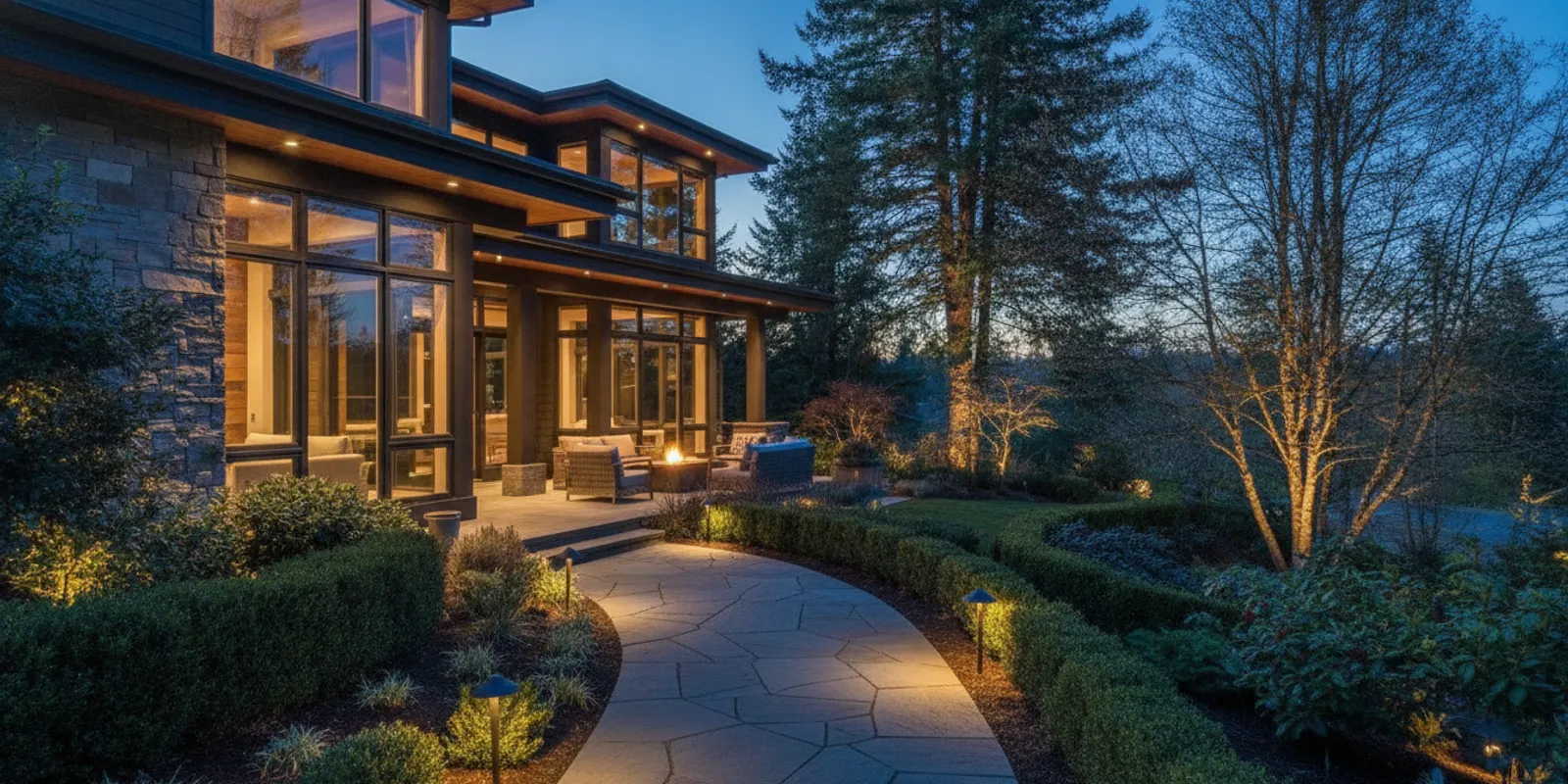
A well-planned lighting system needs more than a good first installation. Outdoor lighting support helps property owners understand what to check, how to respond when a fixture or control stops working, and what ongoing service may involve. For Oregon homes, estates, commercial properties, and managed sites, a clear support plan can make care more predictable without assuming every system needs the same schedule.
Request a complimentary lighting consultation
What does outdoor lighting support include?
Support can mean different things depending on the system and provider. It may include checking fixtures and connections, diagnosing a control issue, replacing a lamp or component, adjusting aim, repairing wiring, expanding a layout, or discussing an upgrade. It can also include planned seasonal care for certain services. Ask what is actually included rather than assuming that installation automatically comes with an ongoing maintenance agreement.
For landscape lighting, support may focus on fixtures, lamps, wiring, transformers, and the effect of changing plants or site conditions. Permanent architectural lighting can involve the controller, app settings, programmed scenes, and the visible fit of roofline components. Professional holiday lighting has a seasonal cycle that may include installation, in-season maintenance, removal, and storage, depending on the selected service terms.
These are distinct needs, not one universal service package. CLG Outdoor Lighting describes landscape lighting, permanent architectural lighting, and professional holiday lighting as its principal services, with maintenance and repair also offered. The appropriate scope depends on the property, equipment, access, and issue.
Why plan support before something goes wrong?
Planning ahead gives an owner or property manager a practical record of what is installed and how it is intended to operate. That matters when a system has multiple zones, timers, controls, or fixtures that are difficult to identify from the ground. A basic plan can also clarify who to contact, what information to provide, and how to protect the property while a problem is assessed.
- Keep a simple system record. Save the proposal, product information, controller details, scene or schedule notes, and any written service terms.
- Note changes. Record when a zone stops responding, when a fixture shifts, or when work on landscaping or a building may have affected equipment.
- Separate symptoms from assumptions. “The back garden zone does not turn on” is more useful than guessing that a transformer has failed.
- Know access constraints. Note gates, operating hours, tenant coordination, irrigation schedules, or areas that require special care.
- Ask how follow-up works. Confirm how the provider reviews a request, communicates scope, and identifies work that needs separate approval.
For a multi-property portfolio, the same habits can be applied at each site. Keep records property-specific so that fixture layouts, controls, access instructions, and service history are not mixed together. A common checklist may help managers compare needs, but it should not replace an inspection of each property.
What should be in a useful lighting record?
A lighting record does not need to be a complex technical drawing to be helpful. Start with the address, the lighting type, the areas served, and the person who can authorize service. Add the date of installation or the last known update, if available. Keep photos of the transformer or controller label, but do not remove covers or expose wiring simply to create documentation.
For landscape work, a marked site plan can identify paths, beds, trees, walls, steps, driveways, and the approximate location of fixtures. It is useful to label zones by plain language, such as “front entry,” “east garden,” or “parking edge,” rather than relying only on an installer’s internal numbering. For permanent architectural lighting, record the controller or app name, the email account used for access, and the scenes that the household or business uses most often. Do not share passwords in an open service request; use the provider’s requested process.
For seasonal holiday displays, keep the proposal, photographs of the intended appearance, roofline or tree locations, and any access limitations. A commercial manager may also want a note identifying who approves display changes and who can report an in-season issue. These details reduce avoidable back-and-forth without promising that a provider can resolve a concern without an assessment.
What can you check when lights stop working?
Start with observations that do not require opening equipment or disturbing wiring. Check whether the issue affects one fixture, a group in one area, or the whole system. Note whether lights come on at the expected time, whether a control or app responds, and whether there has been recent landscaping, construction, or a power interruption.
- Describe the affected area. Identify the zone or fixtures and whether the problem is constant or intermittent.
- Check the normal control method. Review the schedule, switch, or app setting you ordinarily use. Avoid changing several settings at once, which can make the cause harder to identify.
- Look for visible changes. From a safe position, note a fixture that appears displaced, blocked by new growth, or visibly damaged.
- Record timing. Note when the issue began and whether weather, site work, or a change in the schedule preceded it.
- Contact a qualified service provider when needed. Share the observations and ask what assessment is appropriate.
Do not assume that a dark fixture means the same thing in every system. The cause could relate to a lamp or fixture, a connection, a control setting, a power source, or another issue. Electrical work and equipment diagnosis should be left to an appropriately qualified professional. If there is visible damage or a concerning electrical condition, keep people away from the area and seek professional guidance rather than attempting a repair.
For a deeper discussion of diagnosing existing systems, see this guide to resolving dark areas in landscape lighting. If your concern is a particular fixture or layout, a provider can help determine whether the issue calls for adjustment, repair, or a broader review.
How should you document a service issue?
Write down what happened in ordinary language. “The path lights were working on Monday and the west side was dark on Tuesday” gives a provider a useful starting point. Include whether other zones continued to operate, whether the issue appeared after irrigation or gardening, and whether lights flicker, remain dim, or fail to turn on. If safe and practical, take a daytime photo showing the fixture location and a short evening photo showing the symptom.
For an app-controlled system, note the exact scene or schedule selected and whether the app showed an error. Avoid deleting scenes, changing user permissions, or repeatedly resetting a controller before speaking with the provider. For a holiday display, identify the section that is out and whether the problem is visible from the ground. Do not climb a roof, handle temporary connections, or work around wet equipment to obtain a better photo.
Good notes help separate an isolated symptom from a system-wide concern. They also help a commercial or HOA manager give one consistent account when several people have noticed the issue. The notes are not a diagnosis, but they can make the first conversation more efficient and help the provider determine what information or access is needed.
How does routine care differ by lighting type?
Outdoor equipment is exposed to changing weather, plant growth, ground movement, and everyday use. The right check depends on how the system is installed and what it is meant to do. Avoid treating a fixed calendar as a guarantee that every system needs identical work. Instead, use periodic observation and respond to changes in appearance or operation.
Landscape lighting
Observe whether paths, entries, planting, and architectural features still receive the intended light. Plants grow, beds are refreshed, and fixtures can be disturbed during gardening or other property work. A fixture that was once aimed at a tree may now be blocked by foliage; a path light may need attention after edging or soil changes. Keep the intended effect in view: more brightness is not automatically the right solution.
When planning updates, note the locations where light is useful and where it may cause glare or spill. CLG’s Oregon pathway lighting guide discusses fixtures, wiring, and mounting considerations. For an existing system, a review can help determine whether the layout needs a simple adjustment or a more involved repair.
Permanent architectural lighting
Permanent roofline systems combine installed components with controls and programmed behavior. Keep track of the app or controller used, the schedule, and the scenes that matter to the household or business. If a scene changes unexpectedly, first note what you see and which control was used. Avoid repeatedly resetting equipment without understanding the effect, especially where settings or access are shared.
Ownership handoff matters. Make sure the person responsible for the property knows how to use the controls and where to find the written product and service terms. The permanent lighting app setup guide can help frame questions about scenes and operation.
Professional holiday lighting
Seasonal displays have different support needs because installation, in-season attention, removal, and off-season storage may be part of the service arrangement. Confirm the exact work included, how to report a display issue, and how timing is handled during the season. Do not assume every proposal includes the same response time or storage terms.
Commercial properties may also need coordination around opening hours, access, tenant activity, brand requirements, or shared areas. A manager should identify the person authorized to approve changes and the person who will provide access, so service requests do not stall between stakeholders.
What changes with Oregon seasons?
Seasonal observation is more useful than a promise that one visit will cover every need. In wetter months, owners may notice soil movement, plant growth, muddy access routes, or changes around paths and retaining features. In drier periods, dust, gardening activity, and landscape changes may affect what fixtures illuminate. Wind can move branches or temporarily alter the appearance of tree lighting. None of these observations alone establishes a repair requirement, but each can explain why a previously satisfactory scene now looks different.
Before a major landscaping project, tell the landscape contractor that lighting is present and identify areas where wiring or fixtures may be located. Before roof work, painting, gutter work, tree work, or paving, coordinate with the appropriate parties about installed components. A support plan should include a way to report accidental disturbance rather than assuming that another contractor will recognize every lighting element.
For a property that changes substantially over time, the right response may be a design review rather than repeated small adjustments. New trees, a changed driveway, a rebuilt patio, or a different use of an outdoor area can alter the priorities of the original plan. A provider can compare the current property with the intended effect and explain whether adjustment, repair, expansion, or redesign makes sense.
What is the difference between maintenance, repair, and an upgrade?
These terms can overlap in ordinary conversation, so ask for a plain-language explanation of the proposed work. Maintenance generally means planned attention that helps an existing system continue to serve its purpose, such as checking operation, addressing aim, or replacing an identified component. Repair usually responds to a specific fault or damage. An upgrade changes capability, appearance, control, efficiency, or coverage. A redesign changes the overall lighting approach.
For example, re-aiming a path fixture after a bed has been refreshed may be a limited adjustment. Replacing a damaged fixture may be repair. Adding a new zone for a patio may be an expansion or upgrade. Moving several fixtures because the garden layout has changed may require design work even if the existing equipment still operates. The labels matter because each type of work can involve different access, materials, approvals, and expectations.
- Maintenance question: Is the current system working as intended, and what limited attention would help it continue to do so?
- Repair question: What component or condition is causing the reported symptom, and what must be corrected?
- Upgrade question: What new function, coverage, control, or appearance does the owner want?
- Redesign question: Has the property or the desired nighttime experience changed enough to revisit the plan?
A provider may discover during diagnosis that the requested remedy is broader than the initial symptom. That does not mean every recommendation must be accepted. Ask the provider to separate required corrective work from optional improvements, explain the consequence of deferring each item, and provide a written scope before proceeding.
What should you ask about repairs and service scope?
Before authorizing work, describe the symptom and ask what the initial assessment covers. Then clarify whether the proposal includes diagnosis only, repair labor, replacement parts, adjustments, or follow-up. A clear itemized scope helps distinguish a limited repair from an upgrade or redesign.
- What system components and areas are included in the assessment?
- Will the provider inspect controls, wiring, fixtures, or only the reported symptom?
- Will proposed repair work be itemized separately from any optional improvements?
- Are replacement parts and labor included in the estimate, or addressed after diagnosis?
- What access, site preparation, or coordination is needed?
- How will the provider confirm the work is complete and explain any remaining issue?
- Who will communicate if the observed condition requires a change in scope?
- What records, photographs, or control information should the owner provide?
For a property-specific project, costs depend on factors such as equipment, access, wiring, controls, and scope. CLG publishes indicative planning ranges for its principal installation services, but a repair is not necessarily comparable to a new installation. Request a written estimate for the actual condition and work being considered rather than applying an installation range to an unrelated service request.
How can owners compare service proposals?
Compare what each proposal actually promises to do, not only the total figure. One proposal may cover a diagnostic visit while another includes parts, labor, adjustments, and a follow-up check. Ask whether taxes, disposal, access equipment, programming, or restoration of disturbed planting are addressed. If something is not included, a clear exclusion is more useful than an assumption.
Check whether the proposal identifies the areas or zones involved. “Repair outdoor lights” is less specific than “assess the front entry and west garden zones, review the controller schedule, and provide an itemized recommendation.” Specific language helps the owner decide whether the scope matches the concern. It also creates a better record if the issue returns later.
For a managed property, make sure the person approving the proposal understands the difference between a diagnostic authorization and permission to complete all recommended work. Establish who receives updates, how additional work is approved, and whether a tenant, guest, customer, or resident needs notice. For an HOA or multi-property manager, retain the approval for the specific address and do not assume a decision at one site applies to another.
How should you think about warranties?
A warranty is not the same as a maintenance plan or a promise that every service call will be covered. Ask for the current written terms and identify which party provides each part of the coverage. Product coverage, labor, workmanship, and ongoing service may have different conditions.
For permanent lighting, distinguish manufacturer coverage for lights and other parts from labor coverage and any separate workmanship terms. Do not infer that a manufacturer warranty covers all labor, every type of damage, or future maintenance. Check registration, transfer, exclusions, and the process for requesting service in the applicable documents. For landscape or holiday work, ask for the relevant written terms for that proposal.
Keep invoices, product details, installation records, and correspondence together. If a concern arises, the provider can use those records to identify the system and determine which terms may apply. Confirm coverage before scheduling work; do not assume that a repair will be free or that a warranty claim guarantees a particular outcome.
What questions clarify coverage?
- Which component or service is covered?
- Is the coverage provided by the manufacturer, installer, or another party?
- Does it address parts, labor, workmanship, or more than one of these?
- Are registration, transfer, maintenance, or installation records required?
- What conditions or exclusions could affect a request?
- How should an owner start a claim, and who decides the remedy?
- Will diagnosis or site visits be treated separately from covered replacement work?
Written terms are especially important when property ownership or management changes. Give the next owner or manager the product information and service documents, but do not represent coverage more broadly than the documents allow. If the original proposal is unavailable, ask the provider whether a copy can be supplied or whether a new assessment is needed.
How do controls and scenes affect ongoing support?
Controls are part of the service experience, not an afterthought. A system can be functioning physically while still creating frustration if schedules, scenes, user access, or handoff instructions are unclear. During installation or a service visit, ask who will explain the controls and what information the owner should retain.
For a timer, record the intended on and off behavior in plain language. For an app-controlled system, identify the primary account owner and the people who need access. Keep a short list of the scenes that are used regularly, such as a quiet everyday setting, a gathering setting, or a seasonal setting. The exact scene names and capabilities depend on the equipment and configuration, so do not assume that one app behaves like another.
If a schedule appears wrong, first confirm the device, time, date, location, and selected scene according to the manufacturer’s instructions or provider guidance. Note the result rather than changing several variables at once. If a property has multiple users, ask whether one person’s change can affect everyone else. A documented handoff can prevent a new manager or household member from treating a control question as an equipment failure.
When control access is lost, avoid creating duplicate accounts or removing the existing account without understanding the consequences. Gather the device information and contact the provider or the relevant manufacturer support path. A provider may need to confirm ownership or configuration before changing access. This is another reason to keep installation and account records with the property file.
How do you choose the right support approach?
Not every property needs the same level of follow-up. A homeowner with a small, straightforward system may mainly need clear operating instructions and a contact path for occasional issues. A large estate, hospitality property, or HOA may benefit from documented zones, access coordination, and a defined process for submitting and approving requests.
Consider these points when discussing support:
- System complexity: How many zones, controls, or separate lighting types are involved?
- Use and occupancy: Are there tenants, guests, customers, or shared spaces affected by outages?
- Property care: What landscaping, construction, or access conditions could affect fixtures and wiring?
- Decision process: Who can approve diagnostics, repairs, and changes in scope?
- Records and communication: How will service history, recommendations, and approvals be documented?
- Timing: Is there a special event, seasonal display, opening date, or property handoff that affects planning?
- Desired outcome: Is the goal to restore the existing appearance, change the design, improve control, or add coverage?
For a new system or significant change, compare support expectations alongside design and installation scope. A considered layout, clear controls handoff, and understandable written proposal can make later care easier to manage. For details on a permanent system’s installation considerations, review permanent lighting in Oregon.
What should a homeowner expect?
A homeowner can begin with a focused request: identify the property, the lighting type, the area involved, and the outcome desired. If one path fixture is out, say that. If the entire front elevation appears different after a remodel, say that instead of requesting a particular replacement before the cause is known. Share relevant photos and records, then ask what the next assessment involves.
Homeowners should also consider how support fits around gardening and household routines. Gates may be locked, pets may need to be secured, and a service visit may require access to a controller or side yard. Providing these details early helps the provider explain what is needed. It does not guarantee a visit date or a particular repair result.
What should a property manager expect?
A manager usually needs a repeatable process. Create one request per property and identify the affected zone, access contact, approval authority, and deadline. Keep a copy of the approved scope and the final notes. If a tenant or staff member reports the issue, preserve the original observation rather than allowing several people to make independent changes to controls.
For a commercial or hospitality site, consider the effect of lighting on entrances, customer circulation, shared spaces, and operating hours. A manager can ask for work to be planned around access and for any temporary condition to be explained. For an HOA or multi-property portfolio, distinguish common-area responsibility from owner responsibility and confirm who is authorized to approve work at each location.
When is an adjustment enough, and when is a review better?
An adjustment may be appropriate when the equipment operates but a fixture has shifted, foliage has changed, or a scene no longer looks balanced. A broader review may be more useful when several areas are dark, repeated repairs have not resolved the concern, controls are confusing, or the property’s use has changed.
Look for patterns. One dark fixture in an otherwise consistent zone may call for a focused assessment. Several fixtures that stopped together may point to a shared control, connection, or power issue. A system that still turns on but creates glare, uneven brightness, or unwanted spill may need design attention rather than simply brighter lamps. A property that added a patio, path, retaining wall, or new entry may need an expansion or revised layout.
Do not use a temporary symptom to make a permanent design decision without understanding the cause. Conversely, do not keep repeating the same small fix when the surrounding property has changed. Ask the provider to explain what the current system can reasonably deliver, what work would restore the original intent, and what work would create a new result.
How should support be coordinated with other property work?
Outdoor lighting often shares space with planting, irrigation, paving, roofing, fencing, electrical work, and building maintenance. Coordination does not require every contractor to perform lighting work. It does require the owner or manager to identify installed equipment and ask who is responsible for protecting or moving it.
Before planting or bed renovation, point out fixture locations and avoid burying, covering, or pulling components. Before tree pruning, identify uplights and wiring paths that may be near the work area. Before paving or hardscape changes, ask for the lighting plan so sleeves, conduits, or fixture positions can be considered. Before roofline work, tell the contractor that permanent lighting components are installed and confirm the access plan.
If damage occurs, record it promptly and keep people away from unsafe areas. Do not ask an unrelated contractor to diagnose a lighting system unless that work is within the contractor’s qualifications and scope. Contact the lighting provider with the property-work details and ask whether a site assessment is appropriate. Clear coordination can reduce uncertainty, but it cannot eliminate the need for a professional evaluation after damage.
What happens during a support consultation?
A useful conversation begins with the property and the question that prompted the inquiry. Share the type of lighting, approximate location of the affected area, when the issue occurs, and any relevant records or photos. For a commercial or managed property, explain access requirements and who can approve work.
The provider can then review whether the request appears to involve existing-system service, a new design, an expansion, or a different service line. Any proposed visit or work should be confirmed directly; a website inquiry is not an instant booking or a guarantee of a particular service date. A written proposal should make the agreed scope clear before work proceeds.
What information should you prepare?
- The property address and the best contact for the request.
- The lighting type: landscape, permanent architectural, professional holiday, or a combination.
- The affected area, zone, fixture, control, or display section.
- When the issue began and whether it is constant or intermittent.
- Recent landscaping, construction, weather, power, or control changes.
- Photos that can be taken safely from the ground.
- Access instructions, operating hours, gate details, tenant coordination, or event deadlines.
- The proposal, invoice, product information, or warranty documents if available.
You do not need to identify the failed component before calling. In fact, describing the symptom without making an unsupported diagnosis can help keep the initial request accurate. The provider can explain whether a consultation, diagnostic visit, adjustment, repair, replacement, or design conversation is the appropriate next step.
CLG Outdoor Lighting serves Oregon properties through consultation, design, installation, and ongoing support. Coverage and availability should be confirmed for the specific property and request. To discuss a system concern or project, contact the CLG team with the details you have gathered.
Outdoor lighting support questions
Does every outdoor lighting system need a maintenance agreement?
No. The appropriate arrangement depends on the system, property, equipment, access, and owner’s preferences. Some owners may need occasional troubleshooting or adjustments, while a larger or managed property may benefit from a more documented support process. Ask what is included in any agreement and what work requires separate approval.
Can I troubleshoot an outdoor light myself?
You can make safe observations about the affected area, timing, controls, and visible condition. Avoid opening equipment, disturbing wiring, climbing, or attempting electrical diagnosis. If there is visible damage or a concerning electrical condition, keep people away and seek professional guidance.
Is a warranty the same as ongoing service?
No. A warranty may address defined product, labor, or workmanship conditions, while ongoing service may involve maintenance, diagnosis, adjustments, or repairs outside those terms. Review the current written documents and ask who provides each type of coverage.
What if my landscape has changed since installation?
Describe the changes and the effect you now see. New planting, construction, hardscape, or changed use may call for an adjustment, expansion, or design review. A provider can compare the current property with the original intent and explain the available options.
Can a support request include a new lighting idea?
Yes, but identify it as a separate goal from restoring an existing issue. A request can address a dark area and ask about adding a patio zone, changing a scene, or improving an entry. Separating the goals helps the provider explain the scope and any optional work clearly.
Ask about lighting service for your property
A clear support plan starts with knowing what is installed, documenting what has changed, and confirming the written scope before repair or maintenance work begins.