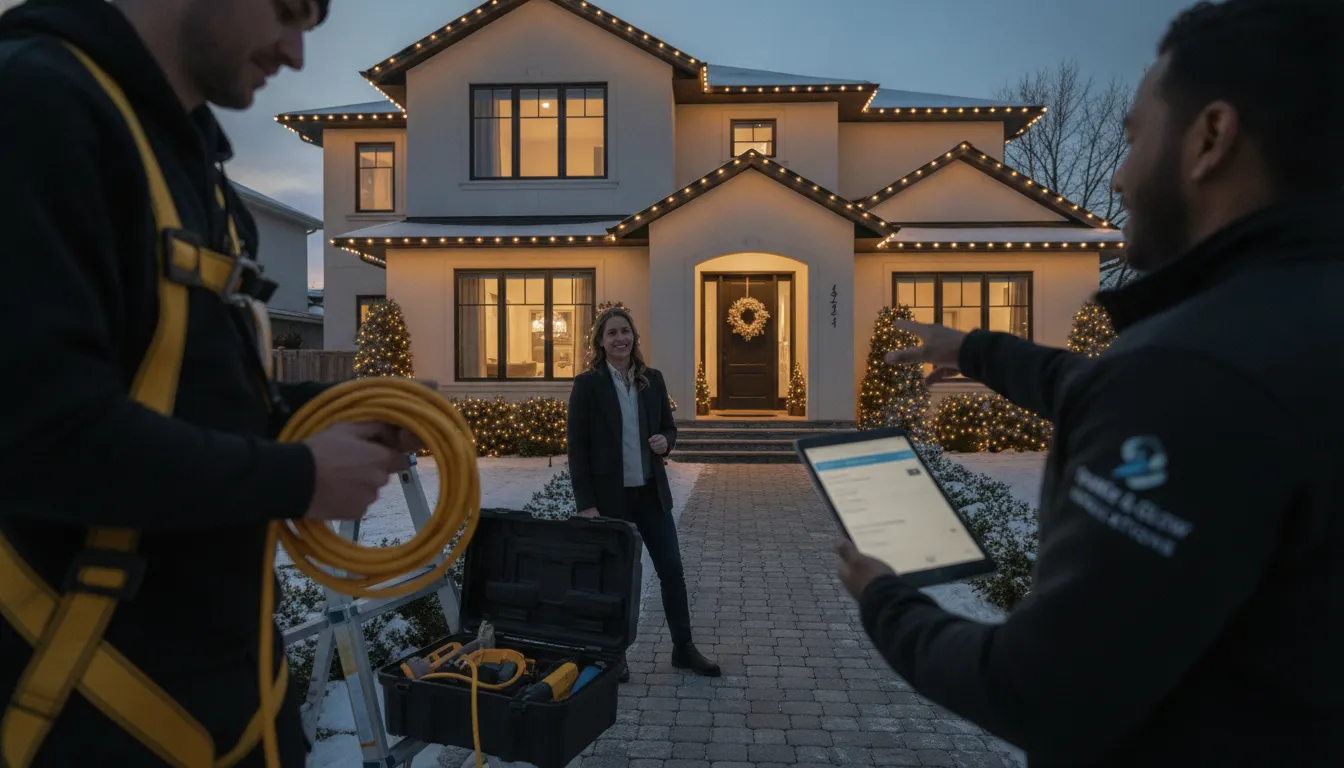
Holiday lighting prices can vary widely, even for homes that look similar from the street. If you’re asking how much does residential holiday light installation cost, start by looking at the design, not just your home’s square footage. A straightforward roofline may need less time and material than a smaller home with steep peaks, tall trees, and a long walkway. The quote may also include lights, removal, storage, or repairs, so the lowest installation price may not represent the full seasonal cost. Here’s what typically affects the estimate, which extra services to check for, and how to plan a display that fits your budget.
Key Takeaways
- Use price ranges as a planning guide: The final cost depends on your home’s layout, the areas you light, and the services included.
- Request itemized quotes: Check whether lights, repairs, removal, and storage are included, and ask for optional features to be priced separately.
- Match the service to the project: DIY may suit a simple, accessible display; consider a professional for steep roofs, tall trees, or complex designs.
How Much Does Residential Holiday Light Installation Cost?
Residential holiday light installation can cost a few hundred dollars for a simple display, while larger or more detailed designs may run into the thousands. The total depends on the areas you want lit, the layout of your home, and whether the service includes lights, removal, and seasonal storage.
Use the ranges below as a starting point, not a firm quote. Services and homes vary, so ask local installers for an itemized estimate that explains what’s included and how your design affects the price.
Typical prices for small, medium, and large displays
A small home display may cost about $250 to $500. Medium homes often fall between $500 and $1,200, while larger homes may start around $1,500 and increase based on the design and installation requirements. These estimates are useful for planning, but they don’t account for every home or service package.
Home size is only one factor. A basic roofline display on a larger home may cost less than lighting a smaller home with several trees, roof peaks, or walkways. Some installers also include commercial-grade lights, installation, removal, and seasonal service in their package. Review this holiday lighting cost guide for typical ranges, then request a quote based on your home and plans.
Why simple displays may cost hundreds and extensive designs thousands
A simple display might include lights along the front roofline and around the entry. A more elaborate design could add roof peaks, trees, shrubs, pathways, and other architectural features. Each area requires materials and labor, while detailed layouts can take more time to install.
As a result, two homes of similar size can have very different quotes. A focused design may stay in the lower hundreds, while a display covering multiple parts of the property can reach thousands. If you have a budget in mind, start with the features that matter most, such as the roofline or front entrance. Ask the installer to price optional additions separately so you can see how each choice affects the total. This guide to holiday lighting costs explains how the scope and detail of a display can affect the price.
Per-foot pricing and why estimates vary
Some installers charge by the linear foot. As a general benchmark, homeowners may see rates of about $3 to $5 per foot for installation. This rate may include installation and takedown, but often doesn’t cover the lights themselves. Check the details before comparing quotes.
Per-foot pricing can help estimate a basic roofline display, but it may not account for trees, tall roof peaks, or hard-to-reach areas. Costs can also vary with the light type, installation difficulty, and whether the company provides materials or handles removal. Ask how the installer measures the project and whether features beyond the roofline cost extra. This Christmas light installation cost overview explains what per-foot pricing may include.
How buying, renting, or reusing lights affects upfront costs
The lights themselves can affect what you pay at the start of the season. Some installers let you provide lights you already own, which may lower your upfront cost if the strands are in good condition and suit the design. Confirm that the company can work with your lights, and ask whether any replacements or additional materials will cost extra.
Other installers supply commercial-grade lights as part of a seasonal package. The quote may be higher, but the service could also include installation, removal, or repairs. Ask whether the lights are rented or yours to keep, and what happens if they stop working. This homeowner’s cost guide outlines how company-provided lights can affect the overall price.
What Affects Holiday Light Installation Costs?
Holiday light installation costs depend on more than the number of lights. The size and layout of your home, the features you want to decorate, the products you choose, and the time it takes to install everything all affect the estimate. Electrical access, local weather, and seasonal demand can also shape the final price.
Online prices can offer a useful starting point, but they may not reflect your property or the details of your design. Ask for an estimate that breaks down the work and materials, so you can see what’s included and adjust the plan to fit your budget.
Home size, roofline length, and areas you light
A larger home may have more roofline to cover, but square footage alone doesn’t determine the cost. The length of the eaves, peaks, and other architectural details matters, along with the areas you want to decorate. A roofline-only display usually requires less material and labor than a design that also includes windows, entryways, railings, or pathways.
Ask your installer to list each area included in the estimate. This makes it easier to compare proposals and decide where to focus your budget. You could start with the front roofline and entry, then add trees or walkways if you want a more detailed display. Showcase Services MN’s pricing overview gives example costs by home size, though local rates and project details vary.
Roof height, pitch, access, and safety needs
The height and slope of your roof affect how safely and efficiently a crew can install lights. A steep roof, a second story, or a hard-to-reach peak may require extra setup time, specialized equipment, or added safety precautions. These factors can increase labor costs compared with a straightforward installation on a low, accessible roof.
Access around the home matters, too. A narrow side yard, landscaping, or uneven ground can limit where ladders and other equipment can be placed. When requesting an estimate, share photos of challenging areas and ask whether the price includes any extra equipment or access work. Bob Vila’s holiday lighting cost guide explains why difficult-to-reach areas can affect installation pricing.
Design complexity, trees, peaks, and hard-to-reach areas
A simple roofline display generally takes less time to install than a design with multiple peaks, dormers, trees, or shrubs. Wrapping branches and outlining intricate roof details require more work than placing lights along a straight eave. Multiple colors, patterns, or separately controlled sections can add planning and setup time as well.
To keep costs in check, choose a few focal points first, such as the front roofline, a prominent tree, or the entryway. Then ask for separate prices for optional features. This shows how each addition affects the total and lets you scale the design to your budget. Published examples can help you understand what an extensive display may involve, but prices vary by property and region. Christmas Lights Experts DFW shares an example of a detailed seasonal display.
Light type, quality, color, and custom features
The type of lights you choose affects material costs and installation time. Standard string lights may work well for a simple design, while commercial-grade products, custom-cut roofline lighting, or specialty colors may require different materials and careful fitting. Color-changing effects, synchronized patterns, and separate control zones can also add equipment and setup costs.
Ask whether the installer supplies the lights or uses products you already own. If lights are included, confirm whether you keep them after the season or whether they’re part of a seasonal service package. It’s also helpful to ask what happens if a strand stops working. Govee’s holiday lighting cost guide outlines how lighting types and system features can affect project pricing.
Electrical access, power needs, local conditions, and timing
The location and number of outdoor outlets can shape the installation plan. Long extension cords, additional connections, timers, or separate circuits may require more materials and setup time. Ask how the installer plans to route cords, protect connections from moisture, and manage the power needs of your display. An on-site assessment can help identify electrical considerations before installation day.
Local weather and seasonal demand may affect scheduling, too. In Oregon, rain and wet conditions can influence when crews can safely complete outdoor work, while popular installation periods may fill quickly. Book early when possible, and ask how the company handles weather delays, rescheduling, and changes to the service window. Shine Window Cleaning’s holiday lighting pricing guide notes that project costs depend on the property and its specific requirements.
What Extra Costs Should You Expect?
An installation estimate may not include every part of your holiday lighting service. Before booking, ask what the price covers, including lights, takedown, storage, repairs, and electrical equipment. Knowing which services cost extra makes it easier to compare quotes and plan for the full season.
Lights, removal, and seasonal storage
Ask whether your installer supplies the lights or expects you to provide them. Buying your own may mean a lower initial service price, but you’ll also be responsible for keeping the lights in good condition and storing them between seasons. A package that includes design, installation, removal, and storage may cost more upfront, but it can save time and leave you without boxes of lights to manage.
If removal is a separate charge, ask how much it costs and when it will happen. One holiday light installation cost guide notes that full-service packages can include takedown and storage. Confirm whether those services are part of your quote, where the lights will be stored, and who is responsible if they’re damaged before next season.
Maintenance, repairs, and replacement materials
Outdoor lights can go out, clips can loosen, and cords or bulbs may need replacing during the season. Ask how your installer handles repairs after the display is up. Some service plans include maintenance visits, while others charge separately for labor, replacement materials, or each callout.
Before signing, check whether the warranty covers both labor and materials, and whether it applies to lights you own. Find out how quickly the installer typically responds to service requests, especially if the display is for a business or a specific event. Since holiday lighting costs vary by project, request a written outline of repair fees and replacement policies. Clear terms help you avoid unexpected charges during the season.
Timers, smart controls, cords, and electrical setup
Your display may need more than lights and clips. Timers, smart controls, extension cords, weatherproof connections, and electrical work can add to the total. Ask whether your existing outlets can support the planned setup or if you’ll need additional power access. If you want app-controlled lights or separate schedules for different areas, confirm the equipment and setup costs before work begins.
The lighting system you choose also affects the estimate. A cost guide for holiday lighting lists basic professional installation at about $5 to $10 per linear foot and premium permanent systems at about $15 to $30 per foot. These are general ranges, not a quote for your home. Ask your local installer to price your layout, controls, and electrical needs.
Weather delays, service policies, and peak-season scheduling
Rain, ice, and strong winds can delay outdoor installation. Ask how the company handles weather-related changes, whether it offers a set installation window, and how it will contact you if the schedule shifts. If your lights need to be ready for a gathering or business event, book early and get the expected timing in writing.
Clarify the provider’s policies for takedown, repairs, and storage, too. These services may be included in a seasonal package or billed separately. For context, TaskRabbit’s price guide estimates removal at $100 to $400, though costs vary with the display and home. Compare the complete seasonal price and service terms, rather than choosing based on installation cost alone.
Should You Install Holiday Lights Yourself or Hire a Pro?
DIY holiday lighting can work well for a small display on a single-story home. If your plans include steep rooflines, tall trees, or several areas around the property, a professional can take on the more demanding parts of the job. Compare more than the initial price: factor in your time, safety, storage, and who will handle repairs or removal. In Oregon, where outdoor conditions can be wet, choose a setup and schedule that let you work safely.
Upfront costs for lights, clips, cords, and supplies
A basic DIY display may cost about $50 to $500 for materials, according to Eufy’s holiday lighting cost guide. Your total depends on the areas you plan to cover and what you already own. If you’re starting from scratch, budget for outdoor-rated lights and extension cords, clips suited to your gutters or roofline, timers, and replacement bulbs.
Professional installation can cost more upfront, with larger or detailed projects exceeding $1,000. The quote may include the lights and installation, but packages vary. Ask for an itemized estimate so you can compare the service with the actual cost of DIY materials, rather than the price of lights alone.
Time, storage, repairs, and replacement costs over time
DIY lighting takes time beyond hanging the strands. You’ll need to plan the layout, test the lights, install them, take them down, and pack them away. You’ll also need a dry place to store lights and cords between seasons. If a strand stops working or a clip breaks, you’ll be the one tracking down the problem and finding a replacement.
A professional service may include in-season repairs, removal, or storage, but confirm the details before booking. TaskRabbit’s holiday lighting price guide puts removal costs between $100 and $400. Ask whether a service includes repair visits, replacement materials, and storage, then compare those costs over multiple seasons.
Roof, ladder, and tall-tree safety risks
Installing lights can mean working on ladders, near roof edges, or around electrical connections. Reaching a steep roofline or wrapping a tall tree can make the job riskier, especially when the ground or surfaces are wet. If you choose DIY, use a stable ladder on level ground, follow product safety instructions, and stay clear of power lines. Don’t take on a section that feels unsafe to reach.
Falls and electrical mishaps are real seasonal hazards, as ABC Home and Commercial’s installer guide explains. For high or difficult areas, consider hiring a professional. Ask whether the installer carries insurance and what safety practices the crew follows. A clear answer helps you assess whether the company is prepared to work on your home.
When professional design, installation, and service make sense
Professional help may be a good fit for multistory homes, steep roof sections, tall trees, or displays that involve several parts of the property. An installer can plan the layout, recommend lights for outdoor use, and handle hard-to-reach areas. Some seasonal services also include maintenance and takedown, which can save you time during the busiest part of the year.
It can also make sense to hire a pro if you’d rather not buy, store, and maintain the equipment yourself. Before you commit, request a written estimate that lists design, lights, installation, repairs, removal, and storage. Seattle Holiday Lights’ DIY-versus-professional overview highlights why package details matter: a higher upfront price may cover more than installation.
What Should You Check Before Hiring an Installer?
Before you book a holiday lighting service, make sure you know exactly what the quote covers. A clear estimate helps you compare installers and avoid surprises once work begins. Ask about the display plan, included services, repair policies, and safety practices, especially if the project includes rooflines, trees, or other hard-to-reach areas.
Request an itemized estimate and coverage plan
Ask for a written estimate that separates labor, materials, and additional services. It should list the areas included, such as rooflines, peaks, trees, shrubs, and walkways, so you know what the finished display will cover. If the installer charges by the foot, ask how they measure and whether roof height, complex angles, or difficult access change the rate. Share photos or request an on-site assessment if your property has multiple rooflines or large trees. Bob Vila’s holiday light installation cost guide recommends clarifying the amount of lighting needed before agreeing on a price. A detailed scope makes it easier to compare quotes on equal terms.
Confirm whether the price includes lights, removal, storage, and maintenance
Installation may not include the lights, post-holiday removal, storage, or repairs. Ask whether the company supplies the lights or installs ones you already own, and confirm when removal will happen. If storage is included, find out where the lights are kept and whether they’re labeled for your property. Also ask who to contact if a strand fails or a clip comes loose during the season, and whether service calls cost extra. Bob Vila notes that light purchases and removal may be separate charges, so ask the installer to list each included service and any added fee in writing.
Ask about warranties, repairs, insurance, and safety
Find out what the warranty covers, how long it lasts, and whether it applies to the lights, installation, or both. Ask how to request a repair and what response time to expect during the busy holiday season. Verify that the company carries appropriate insurance, and ask what safety equipment its crew uses. For roofline and gutter work, check that installers have experience with ladders and roofs, not just general handyman tasks. ABC Home and Commercial recommends asking about crew training and safety procedures. A professional installer should answer these questions clearly and explain how the crew will protect your home, landscaping, and walkways.
Compare the full seasonal cost, not just installation
A low installation price may leave out lights, removal, storage, maintenance, or replacement materials. Compare the full seasonal total, including any service fees, and make sure each quote covers similar areas and services. If you’re weighing seasonal displays against permanent lighting, consider the upfront cost, expected maintenance, and how long you plan to stay in your home. Seasonal service spreads the expense across each year and lets you change the design, while permanent systems typically require a larger initial investment. Ask providers to explain the costs over time, not only the first installation. This comparison of permanent and seasonal lighting costs can help you identify which expenses to include.
How Can You Set a Holiday Lighting Budget?
Set a spending range first, then build a lighting plan around it. Ask for an itemized estimate so you can compare services and see what fits.
Prioritize key areas before adding decorative features
Start with the areas people notice most, such as the front roofline, entryway, and porch. Lighting these focal points can create a festive look without covering every tree, window, and roof peak. If your budget allows, add details like pathway lights, wreaths, or bistro-style accents.
DIY materials can cost around $50 to $500, while professional installation may cost more than $1,000, depending on the project, according to Eufy’s holiday lighting cost guide. Use broad estimates like these to plan, not as a substitute for a quote. A local Oregon installer can help you prioritize areas and account for your home’s layout and access needs.
Share photos or request an on-site assessment for complex homes
If your home has several rooflines, steep pitches, tall trees, or hard-to-reach areas, share clear photos when asking for an estimate. Include front and side views, and point out the features you want lit. For a more complex design, ask whether the installer can assess your home in person. An on-site visit can help identify access requirements and clarify which design options are practical.
If you can, estimate the length of the roofline or other areas you want covered. Bob Vila’s guide to installation costs notes that knowing the total linear footage can help when an installer prices by the foot. Treat that measurement as a starting point, since height, roof shape, and access can also affect the estimate.
Confirm how design changes affect price and timing
Before approving a design, ask how changes could affect the price and installation date. Adding another roofline or lighting a large tree may require more materials and labor. Find out whether the installer will get your approval before making changes, and request an updated estimate if the work shifts.
Check what the quote includes, too. Providing your own lights may have a different upfront cost than renting them. A service package that covers design, installation, removal, and storage may cost more, but includes more of the seasonal work. Showcase Services MN explains how these options affect pricing. Ask for each service to be listed so you can compare quotes fairly.
Compare seasonal service with the long-term cost of permanent lighting
If you decorate every year, compare seasonal installation with the cost of permanent lighting. Seasonal service spreads expenses across each year and may include installation and removal. Permanent lighting costs more upfront, but you can use it for holidays and other occasions throughout the year.
One provider estimates professional seasonal service at about $700 to $2,500 or more per season, compared with roughly $6,500 to $16,000 for a permanent system over a decade. Costs vary by home, region, and service, so use these figures as a general comparison. Review the seasonal-versus-permanent cost breakdown, then request local estimates based on your home and how you plan to use the lights.
Frequently Asked Questions
How much should I budget for professional holiday light installation?
Plan for a few hundred dollars for a simple display and more for larger homes or detailed designs. The best estimate comes from a written quote based on your home, chosen features, and service needs.
Does a holiday light installation quote usually include the lights?
Not always. Some companies provide lights as part of a seasonal package, while others install lights you supply. Confirm who owns the lights, and whether removal, storage, and repairs are included.
When should I book holiday light installation in Oregon?
Reach out early, especially if you want a particular installation window. Ask how the company handles rain or other unsafe conditions, and whether weather delays affect your appointment or price.
Is professional installation worth the cost?
It may be a good choice for steep roofs, multistory homes, tall trees, or displays that need ongoing maintenance. Compare the full service price with the time, equipment, storage, and safety responsibilities involved in doing it yourself.
How can I keep my installation costs within budget?
Choose your top priorities, such as the entry and front roofline, then request separate prices for additional areas. An itemized quote helps you adjust the design before approving the work.