
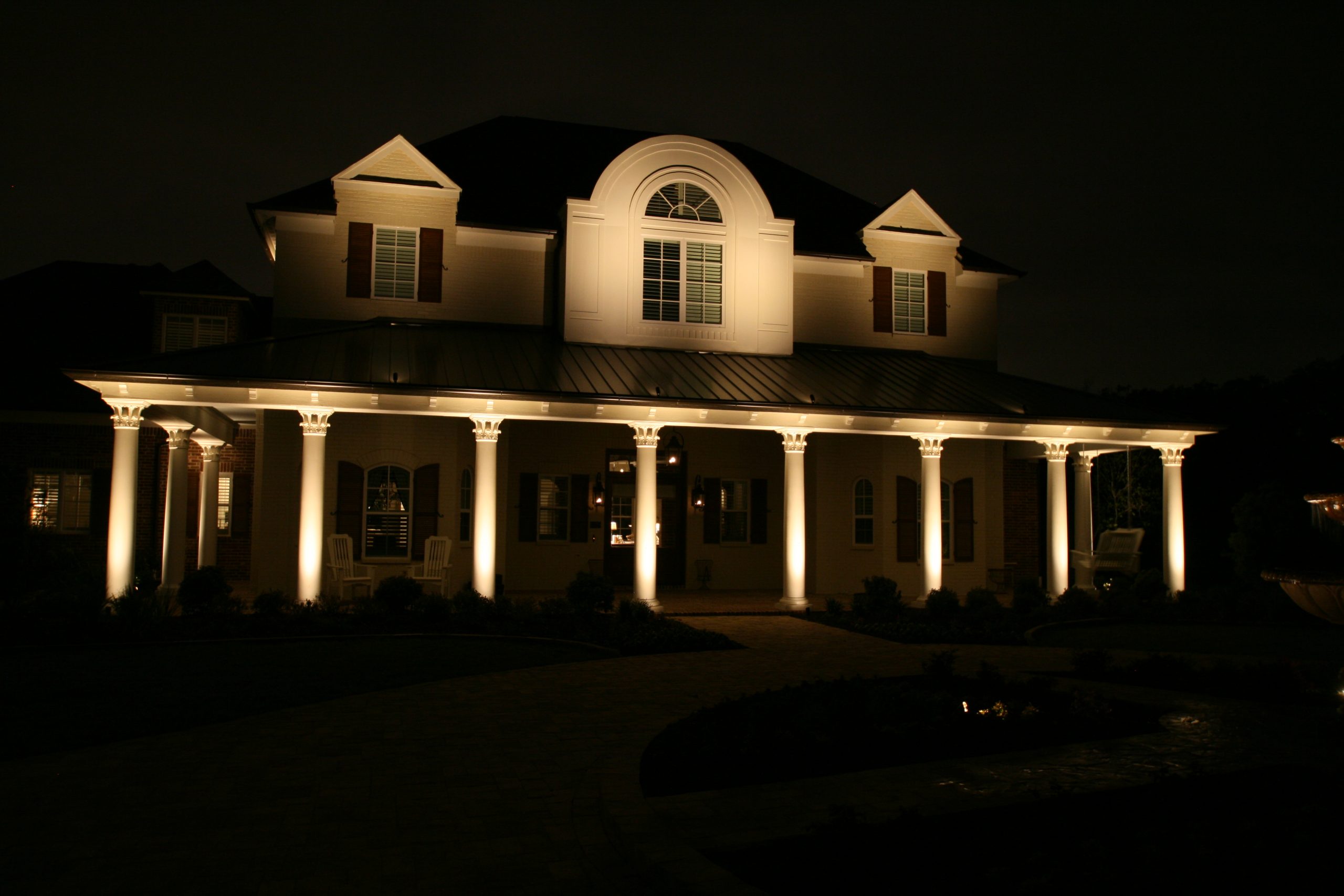
Elevate Entry Features with Layered Lighting
Good entry lighting does more than help you find your keys. It sets the tone for your whole home. In Bend, where stone columns, timber beams, and clean modern facades are common, a beautiful entry can look flat and lifeless after dark if the lighting is not planned well.
When fixtures are placed with care, with the right beam angles and glare control, an entry starts to feel warm, high-end, and safe. You see texture in the stone, the grain in the wood, and the clean lines of modern walls without harsh hot spots in your eyes.
Bend’s clear high-desert nights, snow glare, and dark skies make lighting even more noticeable. Good design looks bright and welcoming, but still respects neighbors and the night sky. In this guide, we will walk through mounting heights, beam spreads, and shielding for stone columns, timber beams, and modern facades, plus how permanent lighting works with holiday displays for smart entry feature lighting Bend homeowners can enjoy year-round.
Design Goals That Shape Entry Feature Lighting Plans
Every plan starts with the “why.” What is the main job of the entry lighting?
Common goals include:
- Safety and wayfinding
- Drama and visual impact
- Soft, calm elegance
If safety is the top goal, we keep light levels even and avoid deep shadows near steps, curbs, and driveways. Fixtures may be mounted a bit higher and spaced closer together to reduce dark gaps. When drama is the priority, we may use stronger contrast, tighter beams, and more focused highlights on key features.
A clear focal hierarchy also keeps things from looking busy. Pick one or two main focal points, such as:
- Primary stone column or pier
- House numbers or name sign
- Front door or gate
- Key art piece or feature tree near the entry
Then we layer softer, secondary accents around those points. This helps the eye know where to land first and stops everything from competing.
Color temperature matters just as much. Warm white light, in the 2700K to 3000K range, tends to flatter stone and timber, making them feel cozy and natural. Neutral white, around 3000K to 3500K, works well on smooth modern siding, metal, and light-colored stucco. Snow and holiday décor can make light feel brighter and cooler, so we often plan slightly warmer tones and dimming options.
We also think about Bend’s darker skies. Shielded fixtures, thoughtful aiming, and reasonable light levels give a polished entry without spilling light up into the sky or across the street.
Lighting Stone Columns with Precision and Control
Stone columns and piers are usually the first features you see as you pull up to a home. To show off their texture without glare, placement is everything.
For most stone columns, we place fixtures 12 to 24 inches from the base, slightly offset from corners. This angle grazes the face and pulls out the joints and rough edges without creating a bright hot spot. For very tall or wide columns, two fixtures may be needed on different sides to keep the light even.
Beam angles make a big difference:
- Narrow beams (10 to 20 degrees) for tall, slim columns
- Medium beams (20 to 30 degrees) for average posts
- Wider beams (30 to 45 degrees) for large piers or signs
Mounting height also matters. In-ground or low surface-mounted fixtures at 6 to 18 inches create strong upward shadows that show the stone pattern. The higher the fixture, the softer and wider the shadow pattern becomes.
Stone columns often sit right at driveways and walkways, so glare shielding is key. We favor:
- Shielded or louvered fixtures
- Aiming that keeps the light below eye level
- Cowls or caps that block direct view from cars
For entry feature lighting Bend homes need to handle freeze-thaw cycles, snowbanks, and gravel drives, we look for durable in-ground or low fixtures rated for local conditions, and we place them where they are less likely to be buried or kicked by tires.
Showcasing Timber Beams and Natural Wood Details
Timber beams are a big part of the Bend look. Good lighting can make those posts, trusses, and brackets feel warm and crafted instead of heavy and dark.
There are two main approaches:
- Grazing: Light placed close to the timber, aiming almost straight up, to pull out grain and joinery.
- Washing: Light set a bit farther away for a softer glow that shows the overall mass of the beams.
For lodge-style covered entries, we often mix both. Uplights 12 to 24 inches from posts reveal vertical lines. Concealed downlights 10 to 16 feet up on beams can mimic soft “moonlight” on the porch floor and steps.
For wood, we usually choose narrow to medium beams, around 15 to 30 degrees, to keep the light tight on the timber and off nearby siding or windows. Deep overhangs and big gable brackets often benefit from cross-lighting, with fixtures on two sides so the details do not disappear into shadow.
Because people stand, sit, and talk under covered entries, glare control is even more important. We avoid bare, bright lamps in direct view, especially near:
- Seating areas
- Door thresholds and mats
- Hot tub decks or side entries
We also plan for durability. In Bend’s sun, snow, and temperature swings, sealed, commercial-grade fixtures, careful cable routing along or within timbers, and corrosion-resistant hardware all help the system last.
Modern Facades and Permanent Architectural Lighting
Modern homes around Bend often have flat planes, large glass panels, and materials like metal and fiber-cement. On these smoother surfaces, you want clean, even light without stripes or streaks.
To avoid “tiger striping,” we usually:
- Use wider beams, around 40 to 60 degrees
- Keep mounting heights and spacing consistent
- Align fixtures with windows, panels, or joints for a steady rhythm
Wall-mounted uplights often sit 18 to 36 inches off the ground, with downlights placed around 10 to 14 feet up, tucked into soffits when possible. This helps echo the strong horizontal lines typical of modern design.
Glare on glass is a big concern. Shielded fixtures and careful aiming keep light on the facade, not reflecting in large windows or spilling into interior rooms.
Permanent architectural lighting is a strong fit for modern entries. Low-profile linear LEDs and small accent nodes can:
- Trace rooflines and soffits
- Highlight reveals and vertical fins
- Shift from soft white to gentle color for special seasons
For homes that see more guests during ski season, permanent, programmable systems mean no ladders or seasonal installs. Entry feature lighting Bend homeowners set once can then run different scenes for clear nights, stormy evenings, or holiday gatherings.
Holiday and Seasonal Layers on a Permanent Lighting Base
A solid permanent lighting layout is the backbone of a good entry all year. Uplights on stone and timber, downlights for steps and walks, and linear accents on modern facades keep the home looking finished, even when holiday lights are off.
Seasonal pieces then become a light “layer,” not the main system. Temporary items might include:
- Small spotlights on wreaths or signs
- Gentle wraps on nearby trees
- Extra path accents where winter traffic increases
We keep these from overpowering the permanent design by watching brightness, beam spread, and glare, especially on snow and wet pavement where reflection can be intense.
Color scenes from permanent architectural systems can stay subtle but fun. Warm amber for fall, soft white for most of winter, then light color touches during holiday weeks all work well when dimmed and balanced with existing entry lighting.
Winter safety is part of every plan. We think about:
- Fixture heights that sit above typical snow lines
- Light on steps, handrails, and driveway edges
- Clear visual guides where ice or packed snow may form
Plan Your Bend Entry Lighting Project with Confidence
When fixture placement, beam angles, and glare shielding all work together, stone columns gain depth, timber beams feel rich and warm, and modern facades look crisp and welcoming. The entry reads clearly from the street, feels safe underfoot, and still respects Bend’s darker skies.
Projects with long drives, HOA or commercial monuments, mixed materials, or a wish list that includes both permanent architectural lighting and holiday modes often benefit from professional design. Local experience with snow, irrigation overspray, gravel drives, and high UV exposure helps with product choices and layout that will hold up over time.
A helpful first step is to walk your entry after dark. Notice where it feels too dark, where there is glare in your eyes, and which features you would like to see first as you arrive home. From there, a well-planned design can turn your entry into a year-round welcome that looks just as good at night as it does during the day.
Get Started With Your Project Today
Transform your front entry into a welcoming, beautifully lit focal point with our custom lighting designs. Explore how our entry feature lighting bend solutions can highlight your architecture, guide guests safely, and enhance curb appeal after dark. At CLG Lighting, we listen to your goals and tailor every project to your property and budget. If you are ready to talk through ideas or schedule a consultation, simply contact us today.