Driveway Lighting Built for Eugene’s Wet Winters
Driveways around Eugene spend a lot of time slick, dark, and shiny with rain. That combo can make it hard to see where the edges are, hard to spot mossy patches, and stressful to back in or pull out at night. Thoughtful driveway lighting in Eugene can turn that same space into something safer, clearer, and a lot more inviting.
Good lighting does more than just put a bright spot on the pavement. It should work with your home, your plants, and our Pacific Northwest weather. At CLG Lighting, we design and install outdoor and permanent architectural lighting that is built for months of rain, low clouds, and long nights. Here we will walk through how to choose the right fixtures, plan a smart layout, and get a long-lasting system that looks great from fall through spring.
Why Oregon Driveways Need Purposeful Lighting Design
Driveway lighting in our area is first about safety. When the sun sets early and the rain comes down sideways, you want to clearly see:
- Edges of the driveway, steps, and curbs
- Slopes, dips, and tight turns
- People, pets, and parked cars
- Puddles and slick mossy spots
A professional lighting design looks at your driveway as part of a bigger picture. We pay attention to your house style, existing plantings, slopes, and how you actually drive in and out. That helps us avoid harsh glare, dark gaps, and awkward bright spots that make it harder to see on wet pavement.
We also think in layers of light, not just one type of fixture. A driveway usually needs a mix of:
- Path or marker lights to define edges and curves
- Ambient light to gently brighten the whole area
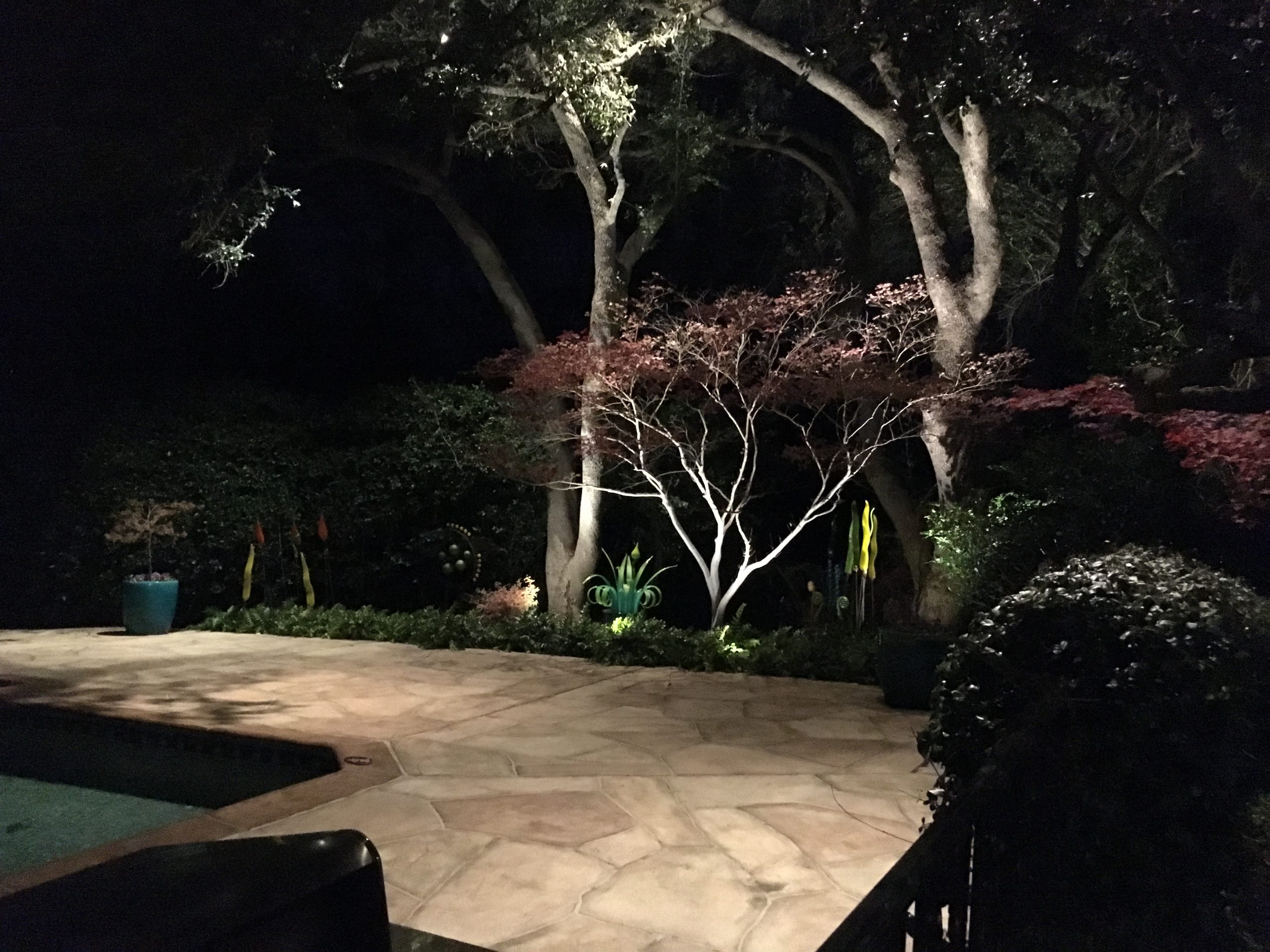
- Accent light to highlight trees, stonework, or the front of the home
Color temperature matters too. On rainy nights, cooler light can bounce off wet surfaces and feel harsh. A warmer white often feels calmer while still giving good contrast on shiny pavement. Shielding and aiming are just as important, so the light goes where it is needed and not straight into your eyes or a neighbor’s windows.
Choosing Fixtures That Stand up to Rain and Moss
Our weather is tough on outdoor fixtures. Constant moisture, moss growth, wet leaves, and road grit can quickly break down cheap lights. For driveway lighting in Eugene, we look for fixtures that have:
- Marine-grade metals or high-quality composite bodies
- Powder-coated finishes to resist rust and peeling
- High IP ratings so water cannot easily get inside
- Sealed LED modules to keep out moisture and dirt
Common fixture styles for driveways include low-profile bollards along the sides, in-grade or recessed lights set into pavers, downlights mounted in trees or on structures, and subtle path lights that mark edges without feeling like a runway.
Because moss and debris are constant in our area, we try to avoid designs that trap water or leaves. Fixtures that sit slightly above the grade line, or that have smooth tops and sides, are usually easier to keep clear. We also think about where tires, snow shovels, or gravel might hit, so lights are not placed where they will be crushed, clogged, or turned into trip hazards.
Smart Layouts for Safer, More Beautiful Driveways
Driveways in and around Eugene come in a lot of shapes. A long rural drive through trees has very different needs from a short, steep city lot or a shared access lane. The lighting plan needs to flex with that.
For a long rural drive, we might use:
- Wider spacing between fixtures to avoid a harsh runway effect
- Occasional downlights from trees or posts to create pools of light
- Edge lighting that gently guides the way without over-brightening nature
On sloped city lots, the priority is often clear depth and edge cues. We adjust mounting height, beam spread, and placement so you can judge distance, see where the driveway drops, and avoid glare bouncing off wet pavement.
Good spacing keeps light even from the street to the garage. Too close and it feels harsh, too far apart and you get dark patches that are hard on the eyes. We also like to tie driveway lighting into nearby plant beds, trees, or stone walls, so everything feels like one calm, connected scene instead of a random string of lights.
That might mean softly lighting a tree at the corner where you turn in, or washing a stone retaining wall with light that also helps define the edge of the drive. Done well, your driveway lighting feels natural, not like a separate, bright strip.
Permanent Lighting That Works All Winter, Not Just Holidays
Permanent architectural lighting can quietly boost driveway safety as well. Mounted along rooflines, in eaves, or around key entry points, it can fill in the background so the whole front of the home glows gently while the driveway stays clearly visible.
Modern permanent systems are usually low-profile and LED-based. Many offer app control and color tuning, so you can choose:
- Soft white for nightly use
- Slight color shifts for seasonal moods
- Dimmer levels for late-night, low-glare settings
At CLG Lighting, we design permanent lighting with moisture in mind. That means solid, secure mounting that will not loosen in storms, protected wiring paths so water has fewer places to sneak in, and careful power management so the system keeps working when the weather is at its worst. When permanent architectural lighting and driveway lighting are planned together, you get a smoother, more balanced nighttime look all year.
Winter-Ready Controls, Power, and Maintenance Plans
Even the best fixtures will not help much if the controls are awkward or the power system is pushed too hard. For driveway lighting in Eugene, we like control setups that fit how people actually live.
Common options include:
- Astronomical timers that adjust on their own as sunset shifts
- Motion sensors in select zones for extra light when someone arrives
- Simple scenes like “arrival,” “guests,” and “late night”
On the power side, we usually recommend dedicated low-voltage transformers sized for LED loads, with proper load balancing to keep voltage consistent to all fixtures. Surge protection is also smart in an area where storms and power blips are fairly common.
Regular care keeps everything working through the wettest months. A seasonal maintenance plan might include clearing leaves and branches away from fixtures, cleaning lens surfaces so light output stays strong, straightening fixtures that shifted due to soft soil or plant growth, and swapping any worn parts before they fail in the middle of winter.
Light Your Driveway Before the Dark Days Arrive
The best time to plan driveway lighting is before the darkest, wettest stretch of the year hits. That way the system is in place, tested, and ready when you really need it. Many homeowners start with the driveway and key entry points, then add more landscape and permanent architectural lighting over time as they see how much easier and calmer their evenings feel.
At CLG Lighting, we focus on outdoor and permanent lighting that respects Oregon’s weather and architecture. Thoughtful design, durable fixtures, and smart controls can turn a slippery, shadowy drive into a space that feels safe, welcoming, and quietly beautiful every night.
Get Started With Your Project Today
Transform your exterior with expertly designed driveway lighting in Eugene that boosts safety, curb appeal, and nighttime comfort. At CLG Lighting, we listen to your goals and craft a tailored lighting plan that fits your home and budget. If you are ready to upgrade your driveway and landscape, request an estimate so we can schedule a consultation and walk you through your options.