Safer Winter Arrivals on Tight Driveway Curves
Driving up a steep, curving driveway in the SW Portland Hills on a rainy night can feel stressful. Headlights bounce off wet pavement, wipers are on full speed, and the edge of the drive can seem to disappear into the trees. On tight turns and steep grades, it becomes hard to tell where the driveway ends and the slope or drop-off begins.
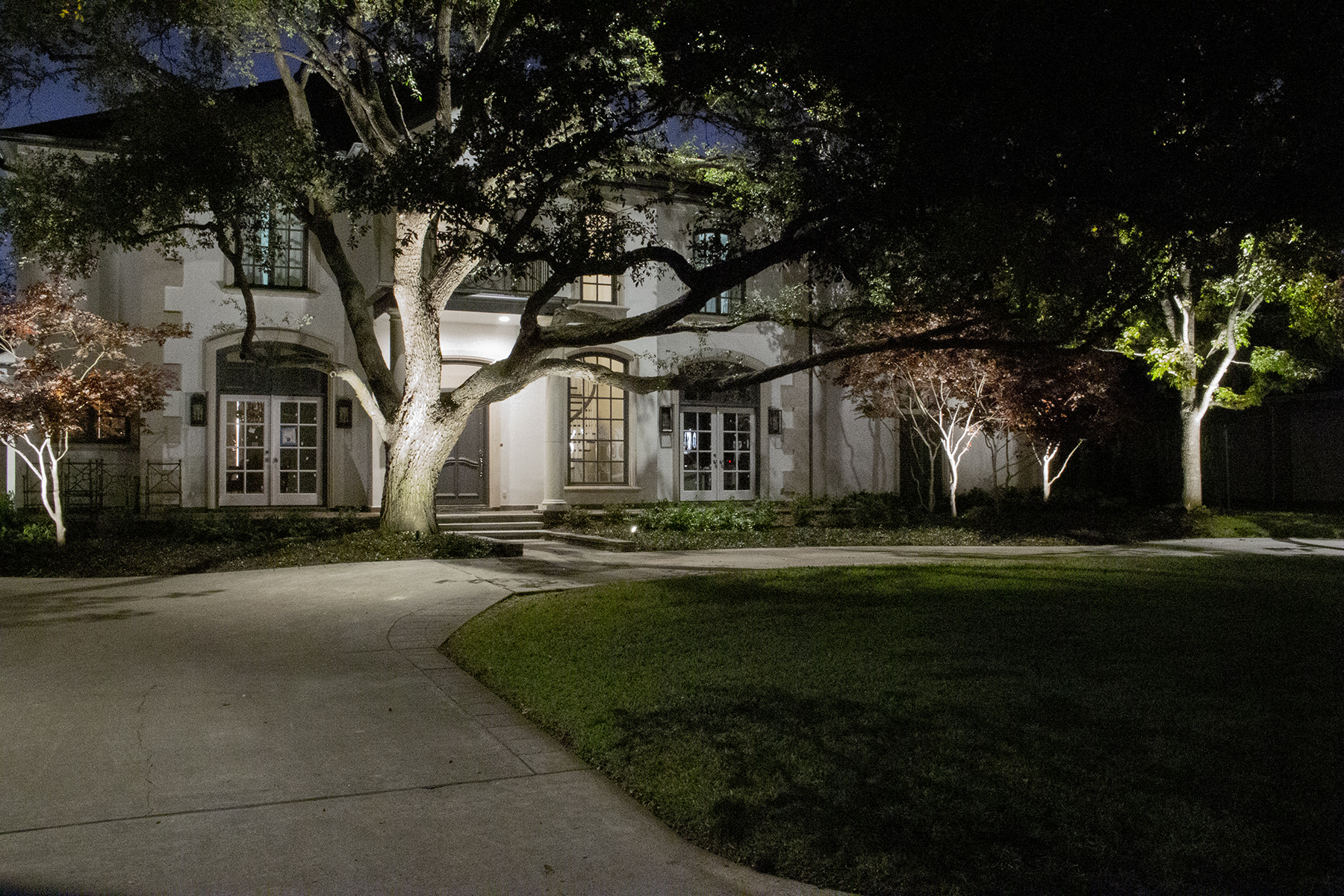
Good entry lighting in SW Portland Hills helps calm that feeling. When the curve of the drive is clearly outlined, you can slow down, stay on track, and pull in without guessing. Clear light cues protect cars from scuffs on rock walls, reduce near-misses by garage doors, and make late-night arrivals easier for you and your guests.
At CLG Lighting, we work with Oregon homes and hillside properties all the time. We design and install outdoor lighting systems that respect steep slopes, blind corners, and complex drive layouts, so the first 50 feet of your property feel just as well planned as the front door.
Reading the Curve: How the Eye Follows Light
Our eyes naturally follow lines. At night, drivers read the road by tracking edges of light and contrast, not just by staring at what is straight ahead. A single bright floodlight at the top of the driveway often creates a harsh pool of light, then deep darkness behind it. Your eyes adjust to the glare, and everything beyond that hotspot becomes harder to see.
Soft “breadcrumb” cues along the curve work much better. When small, even lights run along the path of travel, your brain connects the dots and reads the shape of the driveway before the steering wheel reaches that point. This lets you set your speed and position early, instead of reacting at the last second.
Peripheral vision is a big part of safe night driving. You are not just looking straight at the garage. You are noticing:
- Changes in the line of the driveway
- Edges of retaining walls and rock outcroppings
- Where the shoulder drops away
- Where the drive widens into parking or a turnout
Evenly spaced marker lights keep those cues glowing softly in your side vision. Color temperature and brightness levels matter too. Warm white LEDs are usually easier on the eyes and help with depth perception in fog, rain, and on shiny or leaf-covered pavement. Light that is too cool or too bright can flatten the scene and make it harder to read slopes and turns.
Marker Spacing That Guides, Not Confuses
On hillside curves, placement matters just as much as the type of fixture. The goal is to show the line of the driveway without turning it into a runway or a jumble of bright spots.
A few simple ideas guide our spacing:
- Tighter curves usually need closer spacing than gentle bends
- Areas near hazards, like tall rock walls or steep shoulders, deserve extra attention
- Transition zones, like the turn into a garage or parking pad, benefit from clear visual cues
There are two basic styles of driveway guidance:
- Continuous edge delineation, using low bollards, in-grade pavers, or recessed wall lights along one or both sides of the drive
- Strategic markers at decision points, like the start of a bend, a sharp switchback, a turnout, or the final approach to the garage
Both can work well, and many hillside drives use a mix of the two. What you want to avoid are common spacing mistakes, such as:
- Irregular gaps that feel random from the driver’s seat
- Mixing tall and very short fixtures in the same small area
- One or two fixtures that are much brighter than the rest
These issues can trick your depth perception, so the curve looks closer or farther away than it really is.
Reflective Cues, Low Glare, and Working with the Site
Good driveway lighting does not always mean more fixtures. Reflective details can carry light farther and make the curve easier to see without turning everything up to full power.
Subtle reflective strips on a rail or step edge, the sheen of a metal handrail, or the natural color of stonework can all work with the lighting. When we place fixtures to graze or wash these surfaces, they become large, legible shapes that show where the drive bends or narrows. A softly lit basalt wall or boulder can be easier to read than a bright point fixture alone.
At the same time, glare is a serious concern on tight hillside turns. On a switchback, a bare, bright light in your eyes can cause:
- Eye strain
- Loss of contrast between driveway and background
- A “black hole” effect where everything beyond the glare goes dark
To avoid this, we focus on:
- Lower mounting heights, so light lands on the drive, not in your eyes
- Shields and louvers that block direct views of the LED source
- Angled optics that push light across the surface instead of straight at the car
- Cross-lighting from the inside of the curve, which shows shape without shining into the driver’s line of sight
Dark-sky-friendly design is important in the SW Portland Hills, where tree canopies and night views matter. Warm, controlled beams and cut-off fixtures keep the focus on the driveway and nearby plantings, not on sending light into the sky or over a neighbor’s fence.
Integrating Driveway Lighting with the Home and Landscape
Driveway curve lighting should not feel like an add-on. When it is part of a full outdoor lighting plan, the whole property feels calm and clear from the street to the front door.
Marker lights can tuck into:
- Low plant beds along the edge of the drive
- Stone retaining walls or step risers
- Existing concrete or paver borders
Fixture styles and finishes work best when they look at home with Northwest materials like cedar siding, basalt rock, and weathered steel. The fixtures also need to handle moss, constant moisture, and freeze-thaw cycles that are common in our area.
Permanent architectural lighting adds another layer of guidance. A softly lit entry, subtle light on garage doors, or gentle washes on key walls can help drivers find the driveway entrance from the road. Once you turn in, the same system can shift brightness or even color for winter evenings or special occasions, as long as the core guidance along the curve stays clear and low-glare.
Holiday displays and seasonal decor can layer on top of a permanent system without creating confusion. When the main driveway cues are set and steady, temporary lighting can focus on trees, facades, or gathering areas, while the path of travel stays simple and easy to follow.
Planning a Safer Hillside Entry Before Dark, Wet Months
For many homeowners in the SW Portland Hills, the first signs of a problem are small: last-minute braking on a bend, tread marks near a wall, or guests stopping in the road because they are not sure where the driveway starts. Those are all hints that marker spacing, reflective cues, or glare might need attention.
A thoughtful permanent lighting plan can turn that stressful curve into a calm, readable approach in any season. At CLG Lighting, we focus on tying driveway safety lighting into the broader outdoor and architectural lighting of your property, so your entry looks good, feels safe, and works reliably year after year.
Get Started With Your Project Today
If you are ready to transform the way your home feels the moment guests step inside, we are here to help. At CLG Lighting, we design and install tailored entry lighting in SW Portland Hills that highlights your architecture and improves everyday comfort. Tell us about your space and goals, and we will recommend practical, attractive options that fit your budget. To schedule a consultation or ask questions, simply contact us.