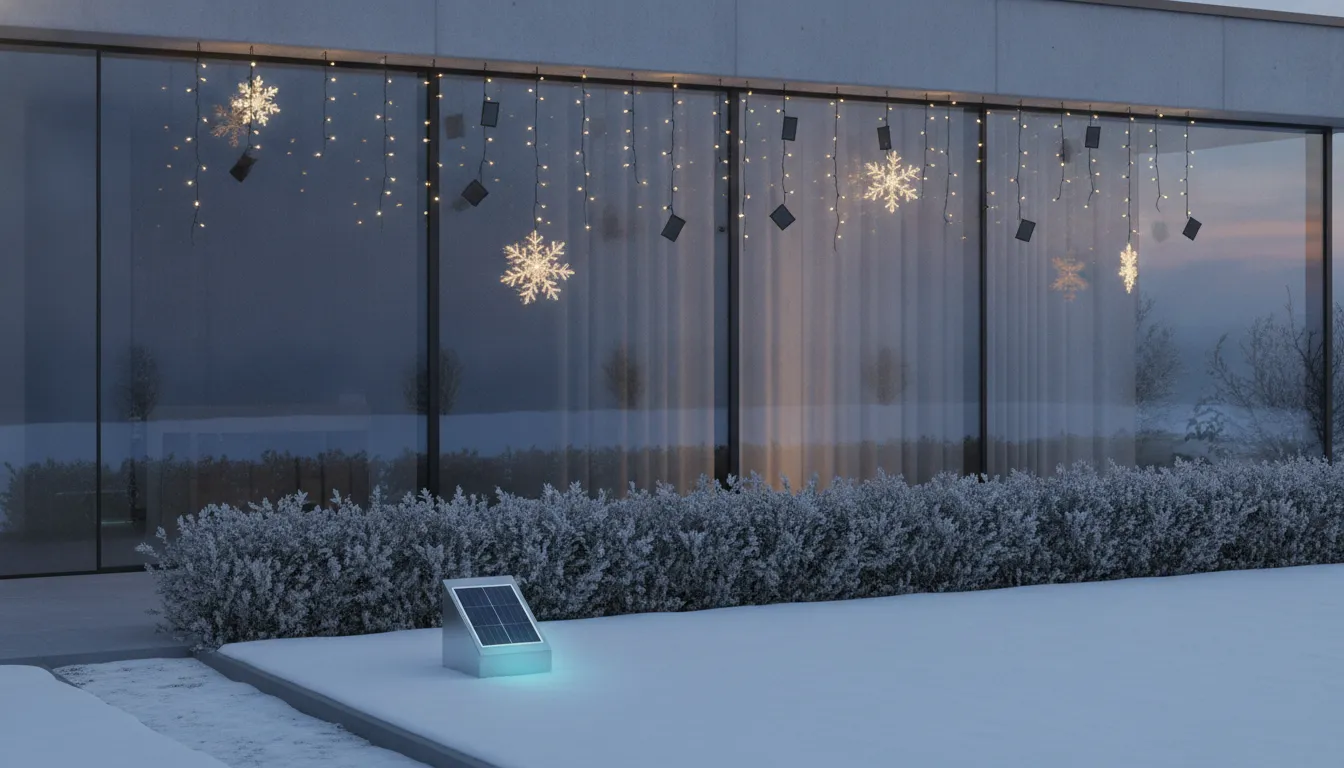
A festive outdoor display starts with choosing lights that work for your space. Solar Christmas lights can be a practical choice for shrubs, railings, fences, and garden features, particularly when an outlet is out of reach. But not every set performs the same way, and a sunny product photo won’t tell you how many hours the lights will shine on a cloudy winter evening. The panel’s location, battery capacity, cable length, and lighting mode all matter. This guide explains what to look for, how Oregon’s winter weather can affect charging, and when solar may not be the best fit for a larger or shaded display.
Key Takeaways
- Place solar panels in sunny spots: Direct sunlight helps charge the battery, while shade, clouds, and short winter days can reduce nightly runtime.
- Choose lights to fit your display: Measure the area and check the light style, cable length, battery details, weather rating, and controls before buying.
- Match the power source to your needs: Solar lights can suit small, sunny areas; professional lighting may work better for large displays, shaded spaces, and rooflines.
How Do Solar Christmas Lights Work?
Solar Christmas lights collect sunlight during the day, store energy in a rechargeable battery, and use that energy to power LED bulbs after dark. Their nightly runtime depends on the amount of sunlight they receive and the capacity of the panel and battery.
Solar panels charge batteries that power LED bulbs
During the day, a solar panel converts sunlight into electricity and stores it in a rechargeable battery. When it gets dark, a sensor on many light sets switches the LEDs on. The lights then use the stored energy until the battery runs low or a timer turns them off.
Some sets attach the panel directly to the lights, while others connect to a separate panel by cable. A separate panel can be useful if you want to decorate a shaded porch or tree but can place the panel in a sunnier spot. Before buying, check the cable length, mounting options, and whether the set includes automatic controls. This video comparison of solar Christmas lights shows how panels, batteries, and LEDs work together.
Short days, clouds, and shade reduce charging
Solar panels need daylight to recharge, and direct sunlight typically gives them the best opportunity to collect energy. Cloud cover, overhanging branches, nearby buildings, and shaded locations can all reduce the light reaching a panel. Winter days are shorter, too, leaving less time to charge than in summer.
As a result, a set may shine for fewer hours after a cloudy day or when its panel sits in the shade. Before installing your lights, look for a spot that receives direct sunlight for as much of the day as possible. If the display itself is shaded, consider a set with a separate panel and a cable long enough to reach a brighter location. Runtime can still vary from night to night with changing weather and daylight.
Oregon weather and limited daylight can shorten nightly runtime
Oregon’s cloudy winter weather and shorter days can make solar Christmas light performance less consistent. A product comparison reports runtimes of about three to ten hours after six to eight hours of direct sunlight, with cloudy conditions potentially reducing that to around three to six hours. These are estimates, not guarantees. Battery capacity, panel size, temperature, and lighting settings also affect how long a set stays lit.
For better results, position the panel where it can receive direct sun, and clear away leaves, dirt, or snow. If your display needs reliable light throughout a long winter evening, consider whether a solar set will meet that need. For large rooflines or areas with limited sunlight, professionally installed holiday lighting may be worth considering for more dependable coverage.
Which Solar Christmas Light Style Fits Your Display?
Choose lights based on the surface you want to decorate and the look you’re after. Strings work well for outlines, nets cover shrubs quickly, and accent lights add detail to specific spots. Before buying, measure the area and consider where the solar panel can get daylight. A little planning helps you choose a set that fits your display and is easier to install.
Use string lights on trees, railings, fences, and rooflines
String lights are a versatile choice for wrapping tree trunks and branches or outlining fences, porch railings, and rooflines. They can also suit areas where running an extension cord to an outlet would be difficult. Check the strand length and bulb spacing, then measure the area you plan to cover so you can estimate how many sets you’ll need. Browse solar Christmas string lights and confirm that the set is designed for outdoor use. For rooflines, choose appropriate clips and keep lights clear of gutters. If the roof is high or hard to reach, professional installation can help make the setup safer and more polished.
Use icicle lights on eaves and gutters
Icicle lights hang from a horizontal strand, creating a curtain-like effect along eaves, porch edges, and covered entryways. They’re a simple way to give a roofline a festive look without wrapping it in multiple strands. Before choosing a set, measure the edge you want to cover and check the strand length, drop length, and spacing between hanging sections. Some icicle-style lights are designed for eaves and rooflines, but also consider where the solar panel will sit. It needs access to daylight, while the lights need to reach the display area. If the eaves are shaded for much of the day, charging may be limited. For high rooflines, consider having a professional install the lights.
Use net lights on shrubs and hedges
Net lights spread bulbs across a grid, letting you drape a single sheet over a shrub or hedge instead of winding a strand around it. This makes them a practical option when you want broad, even coverage with less arranging. Check the net dimensions and stated coverage area before ordering, then compare them with the size of your shrubs. Net lights are a popular choice for shrubs and hedges, though dense branches may hide some bulbs. They tend to look most even on trimmed plants with a fairly regular shape. Secure the net gently so it stays in place without pressing heavily on branches, and position the solar panel where it can receive direct sunlight.
Add accents with shapes, spotlights, and pathway lights
Use accent lights to draw attention to a few features rather than lighting every part of the yard. Solar spotlights can highlight an evergreen, wreath, or entry feature, while pathway lights can mark a garden edge or walkway. Decorative shapes, such as stars, snowflakes, and mini trees, add a seasonal touch to porches and yards. You’ll find options including holiday shapes and themed figures, but check how each item is powered and where its panel needs to go. A few accents can complement string or net lights without making the display feel crowded. Keep pathway fixtures clear of foot traffic, and aim spotlights away from windows and neighboring properties.
Match the style and panel placement to your display
Start by choosing the areas you want to highlight: strings for wraps and outlines, icicle lights for eaves, nets for shrubs, and accents for focal points. Then plan the panel location before you hang the lights. A panel shaded by trees, roof edges, or nearby buildings may not charge as well as one with direct sun. Place it in the sunniest practical spot, angle it toward the sun, and make sure its cable reaches without stretching. Positioning a solar panel in direct sunlight can support more effective charging. Oregon’s winter cloud cover and shorter days can affect evening runtime, so consider a design that still looks complete if some lights switch off earlier than expected.
What Features Matter Most?
Choosing solar Christmas lights starts with matching the set to your display and the sunlight available at your home or business. A string that works well on a sunny garden fence may not provide the same runtime when its panel sits beneath a covered porch or beside a shaded roofline. Before you buy, check how much light the panel needs, how long the set may run after charging, and whether the cable can reach both the panel’s sunny spot and the area you want to decorate.
Oregon’s winter weather makes those details especially useful to consider. Short days, cloud cover, rain, and shade can all affect charging, while wind and wet conditions put outdoor materials to the test. Think about how many hours you want the display lit, whether the lights need to cover a large area, and how easy the set will be to maintain between seasons.
For a small accent, a compact set may be enough. Larger displays, commercial properties, or rooflines that need consistent coverage may call for more careful planning. Compare the features below, read product specifications closely, and treat advertised performance as a guide rather than a guarantee. That way, you can choose a set suited to your space and have a clearer idea of what to expect once it is installed.
Compare battery capacity, charging time, and runtime
Check the battery capacity, often listed in milliamp-hours (mAh), along with the stated charging time and runtime. A larger battery can store more energy, but it still needs sufficient sunlight to charge. Some sets list six to eight hours of direct sun for a full charge and three to ten hours of nighttime use. Actual performance varies with sunlight, shade, battery condition, and the selected lighting mode. A side-by-side comparison of solar Christmas lights can help show how results differ between sets.
For Oregon homes and businesses, consider the advertised runtime a best-case estimate during cloudy winter weather. If you want several hours of light each evening, choose a set with a longer stated runtime and place its panel where it receives as much direct sun as possible.
Check brightness, color, bulb spacing, and lighting modes
Check product photos and customer reviews to get a sense of brightness at night. Listings may not use consistent measurements, so focus on the effect you want: a soft accent along a railing or a more visible outline around an entrance. Warm white, cool white, and multicolor bulbs each create a different look. Bulb spacing matters, too. Closer bulbs create a fuller line of light, while wider spacing can work well for a more understated display.
Many sets offer modes such as steady, twinkle, and chase. Consider whether those options suit the setting, and check if the lights remember your preferred mode after switching off. Some solar Christmas light listings include multiple lighting modes, but confirm the available settings in the specifications for the exact set you’re considering.
Assess panel size, cable length, and placement flexibility
The panel needs daylight, while the bulbs need to reach the display. Check the cable length between the panel and the first light, the total lighted length, and the distance between bulbs. If the lead cable is short, it may be difficult to place the panel in direct sun while decorating a shaded fence or covered entry. A detachable panel can offer more flexibility because you can position it separately from the lights.
Measure the route from a sunny panel location to the display before ordering. Solar lights can be useful for fences, patios, decks, and gardens without a nearby outlet, as shown in this solar lighting comparison. For rooflines or larger commercial spaces, check that the cable reaches without stretching and that the panel won’t sit beneath eaves, trees, or other sources of shade.
Check weather resistance, automatic controls, and timers
Outdoor lights should be designed for exposure to rain and changing temperatures. Look for an ingress protection rating, shown as “IP” followed by two numbers. The rating describes resistance to dust and water, but it does not mean the lights can be submerged. Protection may differ between the bulbs, panel, battery compartment, and connectors, so check the product instructions for each part.
Automatic dusk-to-dawn controls can switch the lights on as evening falls. A timer gives you more control over how long they stay lit, which may help conserve stored energy on cloudy days. Check whether controls are built into the set or operated with a button on the panel. Some solar Christmas light listings show ratings from IP44 to IP65, but compare the rating with the manufacturer’s guidance for installation and care.
Review replaceable batteries, warranties, and lifespan
Rechargeable batteries can lose capacity over time, so check whether the battery can be replaced and whether the correct replacement is easy to find. If the battery is sealed inside the unit, you may need to replace the full set when it no longer holds a charge. Review the warranty, too. Confirm its length and whether it covers the panel, battery, bulbs, or only certain parts. Save your receipt and product details in case you need to contact the seller.
Customer reviews can offer clues about durability after a season of use. Look for comments on battery life, charging, and performance in rain or snow, while remembering that results depend on placement and care. For example, this SHONE solar Christmas light review describes a set tested for outdoor conditions. Use reviews as one source of information, then check warranty coverage and replacement options before you buy.
How Do Solar and Plug-In Lights Compare?
Compare brightness and consistency in winter weather
Solar Christmas lights charge a battery during the day, then use that stored power after dark. Some sets advertise up to 10 hours of light after a full charge, but actual runtime depends on the panel, battery, and available sunlight. Oregon’s short winter days, cloudy weather, and shaded yards can limit charging, so lights may run for fewer hours or appear dimmer on some evenings.
Plug-in lights draw power from an outlet, which generally makes their brightness and schedule more consistent. They can be a better fit when you want your display lit for a predictable stretch each night. Check the product’s brightness and runtime details, and use this solar and plug-in light comparison as a guide to how charging conditions can affect solar performance.
Weigh outlet-free placement against charging and runtime limits
Solar lights make it easier to decorate areas far from the house, such as a garden bed, a distant tree, or a fence without a nearby outlet. You can position the panel in a sunny spot and place the lights where you want them, without running an extension cord across the yard. Before buying, check the panel cable length and whether the set allows strands to connect end to end.
That flexibility depends on receiving enough daylight to charge. Plug-in lights need an outlet, but they can be more practical for longer rooflines or displays that use several strands. Consider where the panel could sit throughout the day, not just where the lights will hang. A side-by-side comparison can help clarify the placement and runtime trade-offs.
Compare purchase price, electricity use, and battery replacement
Solar lights don’t use household electricity while they’re on, which can be useful for small displays or locations where adding an outlet or extension cord isn’t practical. However, compare more than the purchase price: battery quality, expected lifespan, and whether the battery can be replaced all affect the long-term value. Check the product specifications for battery type and replacement details before choosing a set.
Plug-in lights do use electricity, though the cost depends on the set’s wattage and how many hours you run it. LED lights use less energy than traditional incandescent bulbs, as explained in the Department of Energy’s guide to LED lighting. A timer can also help keep operating hours predictable. Compare likely electricity use and battery upkeep alongside the initial cost.
Choose based on display size, sunlight, and reliability needs
Solar lights are a practical choice for individual plants, small garden features, or areas far from the house that receive direct sunlight. They work best when you can place the panel in an open, sunny spot and don’t need a guaranteed number of operating hours every evening. Check the set’s stated coverage and strand length to make sure it suits the area you plan to decorate.
Plug-in lights are often a better match for larger displays, multiple connected strands, or rooflines that need dependable coverage. They can also suit shaded yards where a solar panel may not charge well. If your design spans several areas or includes a difficult roofline, a professional holiday lighting provider can help plan placement, power access, and consistent coverage.
How to Compare Solar Christmas Light Brands and Sets
Product photos can make solar Christmas light sets look alike, but their panels, batteries, controls, and coverage can differ. Compare each set with your display and the spot where its panel will sit. In Oregon, winter clouds and shade can affect charging, so look for clear specifications and reviews that describe real outdoor use.
Check ratings, review counts, and product specifications
Start with the specifications, then use ratings and reviews to add context. Check the number of reviews and whether buyers describe using the lights outdoors over time. Compare the set’s length, bulb count, spacing, battery type, stated runtime, and panel placement. A high rating from a handful of buyers may offer less insight than detailed feedback from a larger group. Make sure the listed dimensions suit the area you plan to decorate, and check the manual for setup requirements. If a key detail, such as battery replacement or cable length, is missing, ask the seller before ordering.
Compare string, icicle, net, and meteor-style sets
Choose a style that works with the surface you’re decorating. String lights suit trees, railings, fences, and rooflines. Icicle lights hang along eaves and gutters, while net lights can cover shrubs and hedges with less strand-by-strand arranging. Meteor-style lights create a falling effect and need space to hang freely. Measure the area before buying, then compare it with the set’s listed dimensions and bulb spacing. Also consider the panel’s location and cable reach. A set may have the right look, but it won’t be practical if you can’t place its panel where it can receive sunlight.
Read reviews about brightness, runtime, battery life, and weather performance
Look for specific feedback rather than general comments like “looks great.” Do reviewers find the lights bright enough for their display? How long do they stay on after a sunny day, and do they continue working after rain or wind? Comments from people with similar conditions can help, especially if they mention shade or cloudy weather. Still, one buyer’s experience won’t predict yours: a panel in an open, sunny yard may perform differently from one beneath trees. For a useful checklist, the FTC’s guidance on spotting fake reviews explains how to assess online feedback.
Check warranties, replacement parts, returns, and availability
Before you buy, read the warranty terms and find out what they cover, how long coverage lasts, and how to make a claim. Check whether the battery, panel, or other parts can be replaced, and whether the same set may be available if you want to add matching lights later. Review the return window and find out who pays return shipping if the product doesn’t suit your display. Keep your receipt and packaging until you’ve tested the lights outdoors. The FTC’s guide to warranties explains what to look for in written coverage.
Treat ratings and performance claims as guides, not guarantees
Use stated runtime, brightness, and weather resistance to compare products, but remember that results depend on the setup and conditions. A panel in direct sunlight may charge differently from one shaded by a tree or roof. Cloudy weather, battery age, and the lighting mode you choose can also affect how long the set runs. Read the manual for any conditions attached to performance claims, and check how the manufacturer defines weather resistance. If consistent light matters across a large roofline or prominent display, assess whether solar sets can meet that need before buying several. For a complex installation, a professional holiday lighting provider can help you compare options for coverage and reliability.
Know the Limits of Solar Christmas Lights
Solar Christmas lights can decorate spots without nearby outlets, but their performance depends on sunlight, weather, and product design. Before you buy, consider where the panel will go, how much area you need to cover, and how consistently you want the lights to shine. These details can help you decide whether solar lights fit your display.
Give solar lights daylight to charge, even without an outlet
Solar lights use a panel to collect daylight and store energy in a rechargeable battery. After dark, that stored energy powers the bulbs. Because the lights don’t need an outlet, they can work well on fences, trees, patios, and pathways where an extension cord would be inconvenient.
The panel still needs access to daylight, so look for a sunny location before you hang the lights. Check the cable length, too, to make sure the panel can reach a suitable spot. Solar Christmas light sets vary in how their panels attach and connect, so review the product details before choosing a set.
Expect clouds and shade to shorten runtime
Cloudy skies, shade from trees, and nearby buildings can reduce how much energy a panel collects. Short winter days also leave less time for charging. That means a set may shine for fewer hours after an overcast day than it does after a sunny one. Some solar Christmas light listings note that winter conditions can shorten runtime.
Check the stated charging time and runtime, but treat them as estimates. Before buying, observe how much direct sunlight the planned panel location gets during the day. If your display needs to stay bright through the evening, consider whether that spot gets enough sun to charge the battery reliably.
Check whether sets connect end-to-end and cover the advertised area
Don’t assume you can connect several solar light strings together. Many sets operate independently, with each string using its own panel and battery. This can affect both the number of sets you need and where you place them. A comparison of solar and plug-in Christmas lights explains that solar sets may not connect end-to-end like plug-in strings.
Measure your display before ordering, then compare those measurements with the product’s illuminated length. Check whether the listed length includes the lead wire, and note the distance from the panel to the first bulb. For displays with separate sections, plan a suitable panel location for each set, rather than relying on one panel to power them all.
Remember that weather resistance and performance vary
Outdoor lights are designed for exterior use, but weather resistance can differ from one product to another. Check the set’s specifications for an IP rating, and follow the manufacturer’s directions for positioning the panel, battery pack, and connections. Listings for solar Christmas lights may show different weather-resistance ratings, so compare details for the exact product you’re considering.
A rating can help you assess a set, but it doesn’t guarantee a particular runtime or lifespan in your yard. In Oregon, winter weather can change quickly, so secure the lights and check them after storms. For large roofline displays or areas with limited sunlight, a professional lighting provider can help you plan for consistent coverage.
How to Maximize Charging and Runtime
Solar Christmas lights need daylight to charge before they can shine at night. In Oregon, short winter days, cloud cover, and nearby trees or buildings can limit the sunlight your panel receives. A thoughtful placement can help: test a few locations before you hang the lights, and check that the panel stays out of shadow throughout the day.
Runtime depends on the set, its battery, the amount of sunlight it receives, and the setting you choose. Some product listings estimate six to eight hours of direct sunlight for a full charge and several hours of light after dark, but these figures are guides, not guarantees. Your results may differ on cloudy days or in a shaded yard. Check the manufacturer’s instructions for charging and care, and use the runtime details listed for solar Christmas lights to compare products before you buy.
Place the panel in direct sunlight
Choose a spot where the panel receives direct sunlight for as much of the day as possible. Check for shadows from rooflines, fences, trees, and the house itself. A spot that looks sunny when you install the lights may become shaded later, so observe the area at different times before settling on a location.
If your display is in a covered or shaded area, consider a set with a separate panel and a cable long enough to reach a sunnier spot. Confirm the cable length before purchasing, and test the panel’s position before attaching the lights. A solar light comparison also recommends placing the panel in direct sunlight for stronger charging.
Angle the panel toward the sun and keep it clean
Position the panel so sunlight reaches its surface directly. Avoid leaving it flat on the ground or tucking it behind decorations, where it may collect less light or fall into shadow. If the panel can be moved separately from the lights, set it in a sunny location while keeping the display where you want it.
Check the panel occasionally, especially after windy or rainy weather. Dust, water spots, and grime can cover its surface. Wipe it gently with a soft, damp cloth, following the care instructions for your set. Avoid abrasive cleaners or materials that could scratch the panel. Product guidance for solar Christmas lights also recommends keeping panels clear of shadows and debris.
Remove leaves, dirt, and snow
Inspect the panel after storms and whenever you notice the lights running for less time than usual. Leaves, dust, and other debris can block sunlight, and snow can cover the panel completely. Clear away buildup with a soft cloth or your hand, taking care not to scratch the surface or pull on the panel’s wiring.
Oregon rain may wash away some dust, but it won’t always clear leaves or grime. Check the panel from time to time throughout the season, especially after snow or icy weather. Follow the manufacturer’s instructions for removing ice, and don’t scrape the panel with a sharp tool. Keeping the surface clear is a simple part of routine care, and solar light care guidance likewise recommends removing snow and debris.
Charge the battery fully before relying on evening runtime
Give a new set a full day to charge before counting on it to stay lit through the evening. Follow the product instructions, since first-use steps and charging times vary. If the lights switch on automatically at dusk, check whether the instructions recommend turning them off during the initial charge.
Some listings suggest six to eight hours of direct sunlight for a full charge, with several hours of light afterward. Treat those estimates as a starting point: cloud cover, shade, battery condition, and brightness settings can all affect runtime. Note how long your set stays lit after a sunny day, then compare that with its performance during overcast weather. Checking the charging and runtime information for solar Christmas lights can help you set realistic expectations.
Use timers or lower-power settings when available
If your lights include a timer, dimmer, or different lighting modes, use the settings that suit your display. A timer can focus the light on the hours when you’re most likely to see it, rather than letting the set run until the battery is depleted. A dimmer setting or less demanding mode may also help the lights last longer.
Check the instructions to learn how to select a mode and whether it affects runtime. If the lights go dark earlier than you’d like, try a shorter timer or lower brightness for a few nights and compare the results. When shopping, look for solar light sets with adjustable brightness and lighting modes, then verify the features on the manufacturer’s product page.
Store lights properly and check batteries between seasons
At the end of the season, switch off the lights and follow the manufacturer’s storage instructions. Take the set down carefully, untangle it without tugging on the wires, and let the panel and lights dry before packing them away. Store everything in a cool, dry place where the strands won’t be crushed or exposed to moisture.
Before using the set again, inspect the wires, panel, and battery compartment for visible wear or corrosion. Check whether the battery is replaceable and note the recommended type. If the lights no longer hold a charge after a sunny day, the battery may need attention. Review the manufacturer’s warranty and replacement guidance before changing any parts, and keep the warranty and return details with your purchase information.
Where to Find Solar Christmas Light Deals
Solar Christmas lights are sold at home-improvement stores, garden centers, and online retailers. Prices and product details vary, so compare similar sets before you buy. Check the light style, string length, bulb count, battery information, and included features. A low price is only a good deal if the set fits your display and performs well in the conditions where you’ll use it.
Compare home-improvement stores and online retailers
A local store lets you inspect packaging and ask about seasonal stock. Online retailers can make it easier to compare styles, prices, and customer feedback. Browse a solar Christmas lights category on TikTok Shop for examples of available products, then compare similar sets across sellers.
Look beyond the product name when comparing listings. Check the total string length, number of bulbs, panel and cable details, lighting modes, and whether the set is designed for outdoor use. Product pages and availability can change, so confirm the specifications and seller details before ordering.
Look for seasonal sales, bundles, and end-of-season clearance
Holiday lighting may be discounted during seasonal promotions or after the holidays. Bundles can save money when you need several sets, but first check each set’s length and whether the lights can connect end-to-end. A deal on multiple short strings may not cover a long fence or roofline as neatly as a single, longer set.
Compare the final price, including shipping, rather than focusing only on the markdown. Some listings on the TikTok Shop solar lights page advertise sale prices and free shipping, but offers can change. With clearance items, confirm that the package is complete and look into whether replacement batteries or parts are available.
Check shipping costs, return policies, and warranty terms
Before checkout, review shipping fees, delivery estimates, the return window, and how to report a faulty set. Seasonal products should arrive with enough time for you to test them before decorating. Keep your receipt and packaging until you’ve confirmed that the lights work and the panel can charge in its intended location.
Policies differ by seller and product. For example, an Amazon product listing states a 30-day return or replacement period and a six-month manufacturer warranty. That policy may not apply to other lights, so read the specific listing and check what the warranty covers, including batteries and weather-related damage.
Weigh discounts against quality and expected lifespan
Before choosing the cheapest set, read reviews for practical details: brightness, runtime after cloudy days, battery life, and how well the lights handle rain or snow. Check the product’s weather-resistance information and whether its rechargeable battery can be replaced. These details can help you judge whether a discount is worth it for your display.
Treat reviews and performance claims as helpful guidance, not a guarantee. A SHONE product review highlights weather resistance, but results depend on sunlight, panel placement, and care. If you’re lighting a large property or a roofline with limited sun exposure, compare several solar sets with professional holiday lighting designed for consistent coverage and installation support.
When to Choose Professional Holiday Lighting
Consider professional installation for large displays, rooflines, or limited sunlight
Solar lights can suit a small display in a sunny spot, but larger designs and hard-to-reach areas often call for professional installation. High rooflines, steep pitches, tall trees, and long runs of lights can make setup challenging. An installer can assess the property, plan the layout, and use suitable equipment to put the lights in place. For homes and businesses, that can help create a more even display while reducing the need to work at height yourself. Dekra-Lite’s holiday installation guidance highlights the value of careful planning and safe practices for larger displays.
Limited sunlight is another reason to consider help. Shade, cloudy weather, and short winter days can leave solar panels with less time to charge. If your property has few sunny areas, ask an installer to compare solar options with lighting that can provide more dependable coverage.
Ask about design, installation, maintenance, and removal
Before choosing a holiday lighting service, check exactly what the quote covers. Some providers help plan the display, install the lights, handle maintenance during the season, and remove them afterward. Others may provide installation only. Knowing what is included makes it easier to compare estimates and plan for repairs, storage, or takedown.
Tell the provider which parts of your property you want to highlight and what look you have in mind. Ask how the lights will be attached, who to contact if a strand stops working, and whether removal and storage are part of the service. If you’re decorating a business, ask how the installation will accommodate entrances, signs, and customer traffic. LightNOW’s overview of holiday lighting services describes how design, installation, and seasonal support may fit into one service package.
Compare solar sets with professional lighting for consistent coverage and control
Solar sets are useful when you want to avoid running cords to an outlet, especially around smaller features or areas that receive direct sun. Their brightness and runtime can vary with shade, cloud cover, and available daylight. On a large display, that variation may make it harder to keep every section looking consistent through the evening.
A professionally planned system may offer more reliable coverage and options for controlling the display. Depending on the setup, programmable LED lights can let you adjust colors or choose different settings for holidays and other occasions. Ask what controls are included, how the system is powered, and whether it can be adapted for other uses throughout the year. This comparison of permanent and seasonal lighting outlines examples of the flexibility available with professional systems.
Frequently Asked Questions
Do solar Christmas lights work well during Oregon winters?
They can, but cloudy skies, short days, and shade may limit how much the panel charges. Place the panel in the sunniest practical spot and treat the listed runtime as an estimate. For displays that need to stay lit for a set number of hours, compare solar lights with plug-in or professionally installed options.
Can I use solar Christmas lights in a shaded yard?
Yes, if the panel can reach a sunnier location. Choose a set with a separate panel and check that its cable is long enough to connect to the lights without stretching. If there’s no suitable sunny spot, a plug-in set may be a better fit.
How do I choose the right type of solar Christmas lights?
Match the style to the area you want to decorate. Strings work well on trees and railings, icicle lights suit eaves, and net lights cover shrubs. Measure the area first, then check the set’s lighted length, bulb spacing, and panel cable length.
Can I connect multiple solar light strands together?
Not always. Many solar sets use their own panel and battery, so they may not connect end-to-end. Check the product specifications before buying, and plan a panel location for each set if needed.
When should I consider professional holiday lighting?
Professional installation may be helpful for high rooflines, large displays, commercial properties, or areas with little direct sunlight. Ask what the service includes, such as design, installation, seasonal maintenance, and removal.