
Storm-Ready Tree Lighting That Still Looks Beautiful
Tree lighting in Eugene should do more than glow on calm evenings. It also has to hold up when the wind kicks up, rain blows sideways, and branches start moving. Poorly planned lights can turn into loose wires, broken fixtures, and safety problems when the weather turns rough.
We design outdoor lighting systems that are meant to be both beautiful and storm-ready. With the right gear and smart planning, you can have warm, welcoming trees that look amazing at night and stay safer when late-summer storms roll through. Our team at CLG Lighting focuses on architectural-grade outdoor lighting across Oregon, so we think about weather from the very first sketch.
Understanding Eugene Weather and Your Trees
Eugene gets a mix of wet conditions, gusty evenings, and periods of saturated soil. All of that affects how trees move and how stable they are. When the ground is soaked, roots can shift more. When the wind comes up fast, long branches swing wider and higher than most people expect.
Different trees react in different ways, which changes how lighting should be set up.
Here is how that plays out:
- Tall evergreens like Douglas firs tend to sway as one big mass, so fixtures need room for that motion
- Broadleaf trees like maples have wide canopies that twist and flex, which affects beam spread and aiming
- Smaller ornamental trees move less overall but have thinner branches that can snap or rub on cables
- Multi-stem shrubs and understory trees send branches in many directions, so wiring paths must be planned carefully
Good tree lighting starts with a thoughtful site assessment, not just guessing where a light might look nice. We look at:
- Tree health and trunk size
- Main branch angles and where weight is carried
- Nearby roofs, decks, and walkways
- Existing roots, rocks, and hardscape that may affect wiring routes
All of these details help guide fixture selection, mounting style, and aiming so your lighting is ready for real weather, not just mild nights.
Design Principles for Safe, Secure Tree Lighting
If a branch moves a lot, your fixtures and wiring need to be ready to move with it or be clear of it. Placing a light on a limb that whips around in the wind is asking for broken parts. We plan fixture placement so it anticipates movement instead of fighting it.
We focus on a few key ideas:
- Avoid mounting on weak or dead limbs that may fail in a storm
- Keep fixtures off the very tips of branches where motion is greatest
- Allow clearance for natural sway so nothing smacks into the trunk or a neighboring limb
- Route wiring where it can flex gently instead of being pulled tight
For mounting, we stay away from harsh, invasive methods. Instead, we like tree-friendly setups such as:
- Adjustable, padded straps that wrap without biting into bark
- Stand-off brackets that hold the fixture off the trunk so bark can grow
- Hardware that can be loosened and reset as the tree thickens
Weather-rated wiring and waterproof connections are just as important as the fixtures themselves. Cables are routed with soft curves, not sharp corners, and they are kept away from spots where falling twigs or rubbing branches can chew them up.
Choosing Durable Fixtures and Permanent Systems
Not all fixtures are built for repeated storms. Architectural-grade products with solid construction handle Eugene’s wet, windy climate much better than temporary or decorative lights.
We use:
- Housings made from cast bronze, marine-grade stainless, or strong powder-coated aluminum
- Lenses and gaskets that seal out water instead of letting moisture creep inside
- Mounting hardware that does not rust quickly in our damp conditions
Permanent tree lighting systems are different from short-term setups. A well-designed low-voltage system is built for long-term outdoor use. When storms hit, systems that include things like integrated surge protection and quality transformers generally hold up better and are easier to service.
A few important specs to pay attention to:
- IP ratings that show how well the fixture keeps out rain and debris
- Corrosion-resistant finishes that stand up to constant moisture
- Mounting kits designed specifically for tree use, not generic brackets
These details may sound small, but together they add up to a system that keeps working through many storm seasons.
Balancing Beauty and Resilience in Tree Lighting
Safe lighting does not have to look flat or boring. With good design, you can have both drama and durability. We like to create depth and texture while still planning for wind and rain.
Common techniques include:
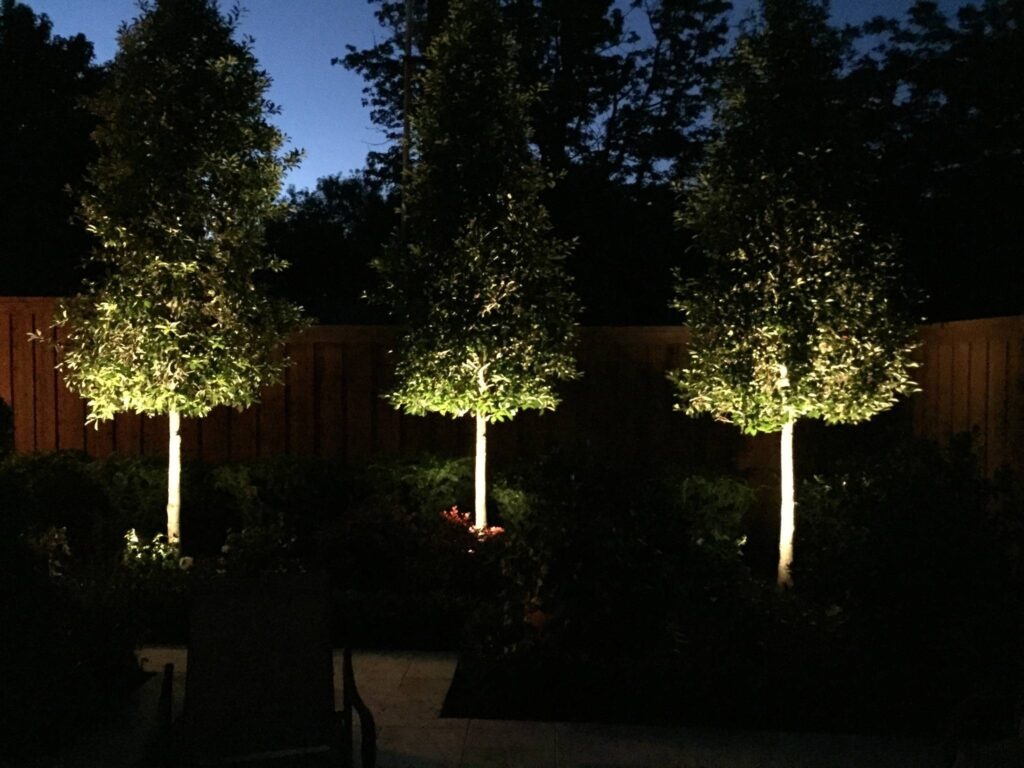
- Uplighting trunks to show height and structure
- Grazing patterned bark to bring out texture without glare
- Soft canopy lighting that picks up leaves and branch shape
Eugene neighborhoods are often full of trees, so we are careful with glare and light spill. Tight beam spreads and careful aiming help keep light on your trees instead of in a neighbor’s window or into the night sky.
Layered, zoned lighting is another tool that works really well here. By breaking the design into separate zones, you create a scene that still looks intentional even if one part is affected by a storm. For example:
- A trunk zone that highlights the main structure
- A canopy zone that adds sparkle and depth
- An understory zone that lights small shrubs and groundcovers
If one zone has damage or needs to be shut off for a repair, the others continue to provide a balanced look instead of leaving the yard dark.
Smart Controls and Seasonal Adjustments
Storm-ready tree lighting is not just about hardware. Controls matter too. Smart controllers and dimmers let you respond quickly when the forecast calls for heavy wind.
With the right setup, you can:
- Dim certain zones that feel too intense in bare winter branches
- Turn off higher-risk tree zones during a major wind event
- Shift timing as sunset changes through the year
Seasonal changes in leaf cover, soil moisture, and daylight all affect how your lighting looks and behaves. Adjusting scenes as seasons change helps keep both safety and visual balance on track.
After any big storm, a short checkup makes a big difference. A professional can:
- Confirm fixtures are still tight and safe
- Realign any heads that have shifted or tilted
- Inspect wiring and connections for damage
- Suggest small upgrades if a pattern of wear shows up
When design, equipment, and ongoing care all work together, tree lighting in Eugene can stay beautiful and dependable, even on the stormiest nights.
Get Started With Your Project Today
Transform your property with expertly designed tree lighting in Eugene that highlights your landscape’s best features year-round. At CLG Lighting, we work with you to create a custom plan that fits your trees, your goals, and your budget. If you are ready to talk about ideas or schedule a consultation, simply contact us and we will help you get your project started.