
Safer Oregon Evenings with Smart Hardscape Lighting
Outdoor steps and retaining walls can turn tricky fast once the sun goes down, especially in Oregon’s wet weather. Long fall and winter nights, steady rain, moss, and the chance of ice all make stair treads and paver edges harder to see and easier to slip on. Good lighting is not just about looks here; it is about helping people move safely through your property.
Hardscape lighting focuses on the built parts of your yard, like stone steps, concrete paths, seat walls, and terraces. When lighting is planned for “safe tread illumination,” each step and level is gently lit so you can see where your foot will land without squinting into bright glare. Thoughtful design protects your family, guests, and customers while still keeping a relaxed, cozy feel outdoors.
At CLG Lighting, we provide licensed, bonded, and insured outdoor lighting services in Oregon, including hardscape lighting, landscape lighting, and permanent architectural lighting. We understand local building practices, the way Oregon weather treats hard surfaces, and how HOAs and neighborhoods often want lighting to look clean and understated.
Safe Tread Illumination for Steps and Terraced Yards
Steps, retaining walls, and multi-level patios work best at night when every tread and edge reads clearly at a glance. The goal is even, low-level light across the walking surface so depth and height changes feel natural, not surprising.
Common approaches for safer steps and terraces include:
- Step or tread lights set into vertical risers
- Under-cap lights tucked below stone or concrete caps on walls and steps
- Low-profile wall-mounted fixtures on the side of stairs
- Path lights that fill in gaps between hardscape features
Step and tread lights spread light across each stair, making risers and edges easy to read without throwing bright light into your eyes. Under-cap fixtures hide under the lip of a step or wall cap, washing light down the face of the stone and across the tread. This style is especially nice on wide stairs or curved steps because it follows the shape of the hardscape.
For multi-level patios and terraced yards, we often mix several types of fixtures so there are no dark “blind spots”:
- Recessed lights in risers at key transitions
- Under-lip lights on long seat walls and step caps
- Subtle path lights where hardscape meets planting beds
This kind of design helps everyone feel steadier, especially older adults or anyone with limited vision or balance issues. In Oregon’s darker, wetter months, when dusk comes early and surfaces stay damp, safe tread illumination can make the difference between a relaxed walk and a near miss.
Glare Control That Protects Eyes and Nighttime Views
Glare happens when a light source is too bright for your eye relative to its surroundings. You know it when you feel it: your eyes tighten, you look away, and you actually see less of what you are trying to step over. Around stairs and retaining walls, glare can hide trip hazards and spoil any nice view you have of trees, stonework, or the sky.
Professional glare control is one of the big advantages of well-designed hardscape lighting. Rather than bare bulbs or harsh spots, we focus on:
- Shielded fixtures that hide the light source from direct view
- Louvered or frosted lenses to soften hot spots
- Lower color temperature LEDs for a warmer, easier-on-the-eyes tone
- Indirect lighting that bounces off stone, pavers, or wood
- Correct beam angles that aim light at the tread, not at your face
With these tools, stair and wall lighting can be bright enough for safe movement while still feeling calm and inviting. You get clear visibility without that “stadium light” effect. Controlled lighting also helps keep the yard more dark-sky friendly, so you can still enjoy stars and the natural feel of Oregon nights.
Our goal is always balance. The safest step is the one you can see clearly, but that does not mean you have to sacrifice ambiance or outdoor entertaining comfort.
Drainage-Aware Mounting in Oregon’s Wet Climate
Oregon’s rain is no joke, and it has a big impact on how long hardscape lighting lasts. Water that pools around fixtures can lead to corrosion, fogged lenses, or shorts. Soil that shifts with long wet periods or freeze-thaw cycles can pull on wires and loosen fixtures set into steps or walls.
Drainage-aware mounting starts with respect for how water already moves on your property. Good practice often includes:
- Mounting fixtures above typical water lines or splash zones
- Keeping weep holes in retaining walls open so water can escape
- Using gravel backfill and drainage paths behind walls
- Sealing conduits and junction boxes to keep water out
- Choosing corrosion-resistant fixtures rated for wet locations
When lighting is added to existing hardscape, it is important not to block drainage or trap water behind walls or under steps. We coordinate with hardscape installers when possible, or work carefully with what is already built, to conceal wiring and protect transformers while leaving drainage patterns intact.
Done right, your step and wall lighting should hold up through years of Oregon rain without loose fixtures, shorted wires, or streaked lenses.
Integrating Hardscape Lighting with Landscape and Permanent Lighting
Hardscape lighting works best as part of a bigger outdoor lighting plan. Steps, paths, and retaining walls guide movement, while trees, planting beds, and the home itself provide the backdrop.
A cohesive design might include:
- Step and wall lights on stairs, seat walls, and terraced beds
- Path lights that link driveways, walkways, and patios
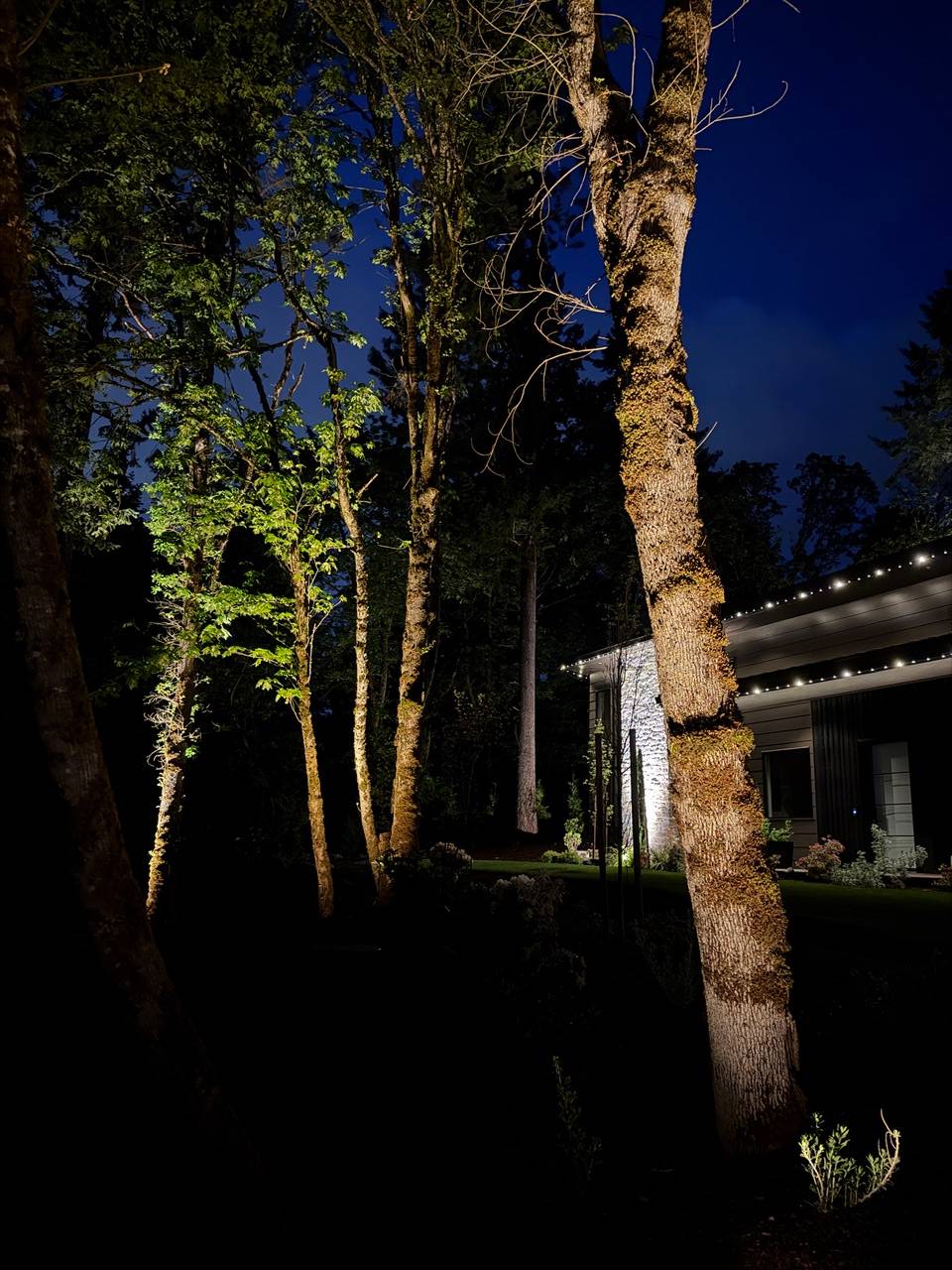
- Uplights on trees and key plantings for depth and drama
- Accent lighting on stonework or water features
- Permanent architectural lighting on eaves, trim, or rooflines
When all of these pieces talk to each other, your yard feels natural to move through. Brightness, color tone, and fixture style can be coordinated so nothing feels random or out of place.
Modern controls make hardscape lighting even more practical. Zoning and dimming allow you to brighten stairs and driveways while keeping sitting areas softer. Timers and smart controls can adjust for changing sunset times, so steps and walls come on when people actually use them instead of on a fixed schedule that only works part of the year.
Holiday lighting can also sit over permanent systems as a separate layer. With careful planning, wires and clips do not interfere with built-in fixtures, and you avoid clutter, extra glare, or overloaded circuits.
Planning Your Oregon Hardscape Lighting Project with Pros
If you are starting to think about safer steps and better-lit retaining walls, the first step is a simple walk-through of your property after dark. Many people find it helpful to note:
- Where they slow down or reach for a handrail
- Areas that stay damp or slick longer than others
- Dark corners at the top and bottom of stairs
- Places where different levels meet, like patio edges or raised beds
- Spots where glare from existing lights makes it hard to see the ground
From there, a professional who focuses on hardscape lighting services in Oregon can help map out fixture types, placements, and control options that fit your property and the way you use it. Because lighting around steps and walls often involves cutting into masonry, drilling, and working with power in wet locations, it is important to work with someone who is licensed, bonded, insured, and familiar with local codes.
Thoughtful hardscape lighting is about more than just putting lights on stairs. It is about creating clear, comfortable routes around your home or business, protecting your investment in stone and concrete work, and making evenings outdoors feel safer and more inviting through every rainy season.
Transform Your Outdoor Space With Custom Hardscape Lighting
Ready to bring your patio, pathways, and walls to life after dark with lighting that actually fits how you live outside? At CLG Lighting, we tailor our hardscape lighting services in Oregon to highlight your best features while improving safety and comfort. Tell us about your project and we will recommend a clear, practical plan that fits your budget and timeline. If you are ready to get started or have questions, simply contact us today.