
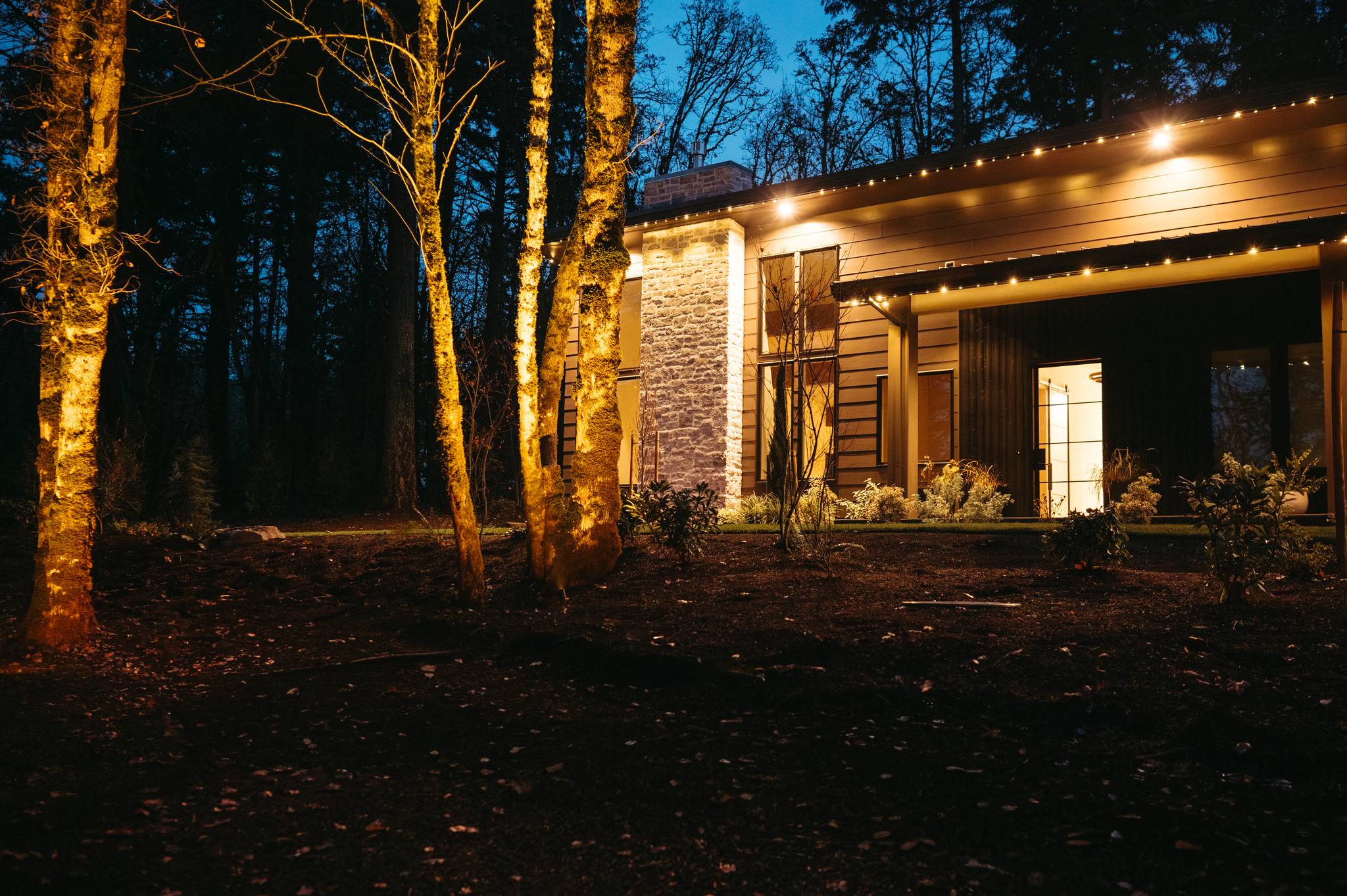
Light up the Hillside: Lasting Beauty on Sloped Lots
Permanent lighting installation in SW Portland Hills is not just about adding a few bright spots. On a steep lot, light becomes part of the structure, the trees, and the views. When it is done well, those sharp driveways, tiered gardens, and tall evergreens feel calm, safe, and welcoming every single night.
Sloped Northwest lots bring special challenges, like big elevation changes, wet soil, mossy steps, and thick tree cover. They also bring amazing design chances that flat yards simply do not have. With the right plan, your hill can glow from the street and feel comfortable when you are walking outside.
When we say permanent architectural lighting, we mean low-profile fixtures that are built into your home so they stay up all year and look clean in daylight. Architectural-grade landscape lighting means high-quality outdoor fixtures that are designed to last and to show off plants, stone, and paths with soft, controlled light. Both are a natural fit for hillside properties.
In the sections that follow, we share how we think about sloped sites, how we keep people safe, and how we build a system that holds up to Northwest weather and year-round use.
Reading the Slope: Site Planning That Works for You
Good hillside lighting starts with walking the site and really reading how the slope behaves. A professional designer will look at:
- Grade changes from street to front door
- Retaining walls, boulders, and terraces
- Stairs, decks, and upper patios
- Key trees and native plantings
- Views from inside windows and outdoor seating areas
On a hill, light needs to be layered from bottom to top. If you only light the house, the yard feels like a dark pit. If you only light paths, the home can feel like it is floating. We like to:
- Light lower paths and driveways with low-glare fixtures
- Add gentle accents on mid-slope shrubs, small trees, and walls
- Highlight upper decks, railings, and the main entry
This creates a visual “ladder” for the eye, so the whole property reads as one scene instead of random bright spots.
Sightlines are a big deal on sloped lots. People look:
- Downhill from the house
- Uphill from the street or sidewalk
- Across from neighboring properties
We plan fixture locations and beam angles so you see the effect, not the bulb. Shielding and careful aiming keep light out of your eyes when you glance through a window or drive up the hill.
Zoning and dimming are mapped early. Drives, paths, trees, decks, and architectural features often go on separate zones. That way you can:
- Run path and driveway lights brighter on wet winter nights
- Dim tree and garden areas for soft summer evenings
- Turn architectural lighting into more of a backdrop when you want a darker sky
Designing Safe, Subtle Pathways on Steep Terrain
Safety is one of the biggest reasons people ask for permanent lighting installation in SW Portland Hills. Steep switchback paths, narrow steps, and shiny wet concrete can be a real worry on dark, rainy nights. The goal is clear footing without glare.
We reach for different fixture types depending on the slope:
- Recessed step lights tucked into risers for clean, even light
- Low-profile path lights placed off the walking line to avoid trip hazards
- Rail-mounted fixtures on handrails for extra comfort on long runs of stairs
- Wall-wash lighting on retaining walls to outline edges without spotlighting people
Uneven terrain can create deep shadows between fixtures if spacing is wrong. We overlap beams slightly so you do not get “black holes” between steps or on landings. On tight corners, we may add a small fixture close to the bend so people can see where the path turns.
Glare control is even more important on a hillside than on level ground. When you are looking down a slope, it is easy to catch a bulb straight in the eye if the fixture is too tall or too bright. To keep things comfortable, we focus on:
- Lower mounting heights so light falls where you walk, not in your face
- Shielded fixtures that hide the light source from common viewing angles
- Warmer color temperatures that protect night vision and feel cozy in Northwest rain
Permanent Architectural Lighting That Flatters Hillside Homes
On a hill, your home is on display from many angles, often from far below. Permanent architectural lighting can outline rooflines, call out interesting elevations, and anchor the home so it feels settled into the slope at night.
For multi-level facades, stacked decks, and tall gables, we like to mix:
- Gentle grazing along vertical siding or stone so texture shows without harsh streaks
- Subtle spotlights on columns or key structural lines to show the home’s shape
- Eave lighting to bring upper stories into the composition so they do not look like they are floating above a dark void
Color-tunable permanent systems are great for homes on steep lots because they avoid the ladder problem. Fixtures stay in place year-round, and you change scenes from a controller instead of climbing on a slick driveway or long staircase. That lets you swap from warm white everyday looks to bolder colors for game nights or parties when you want more drama.
The systems we design are meant to handle Northwest conditions. That means thinking about wind on ridges, heavy rain, moss on shaded surfaces, and long months of low sun. Channels, tracks, and wiring are kept discreet and tight to the architecture so the home still looks clean during the day.
Protecting Your Investment on Wet Northwest Slopes
Hillside lighting has to fight gravity and water at the same time. The right parts and layout make a big difference in how long things last and how often they need attention.
For fixtures and materials, we use:
- Solid brass or other marine-grade metals that age well outdoors
- Waterproof connections that resist wicking and corrosion
- Finishes that can deal with constant moisture and UV exposure
Slopes add their own set of worries, like erosion and moving soil. Poor drainage can wash out around bases, tip fixtures, expose conduit, or leave them standing in pooled water. We pay close attention to:
- Drainage paths coming off roofs, driveways, and upper terraces
- Areas where runoff might cross wires or fixture locations
- Root zones of big trees to avoid damage when placing cable
Low-voltage LED systems are a natural fit for hillsides. They are energy efficient and easier to service, and transformers can be placed in spots that stay accessible without climbing down a risky bank. Cable routes are planned to follow stable lines, often tucked behind walls or along existing hardscape, so they stay protected.
Seasonal maintenance keeps everything looking like it did on day one. After winter storms, it helps to:
- Clear debris and moss off fixtures and lenses
- Check beam angles if plants have grown or shifted
- Confirm that drainage still sends water away from lights
- Adjust scenes for longer or shorter evenings as seasons change
From Dark Slope to Signature Nightscape
A sloped lot in the SW Portland Hills can feel tricky at first, but with thoughtful permanent lighting it becomes a three-dimensional night scene that is safe to move through and beautiful to look at. Paths, trees, and architecture all play a part, and the hill itself becomes part of the design instead of a problem to work around.
Working with an outdoor lighting specialist who understands steep Northwest sites helps protect your home, your guests, and your long-term investment. With a clear plan for layering light, controlling glare, and dealing with wet soil and tall grades, your hillside property can shift from dark and risky to calm and inviting every single night.
Brighten Your SW Portland Hills Home With Worry-Free Permanent Lighting
Transform your home’s curb appeal and nighttime safety with our expert Permanent lighting installation in SW Portland hills. At CLG Lighting, we design and install custom systems that fit your architecture, lifestyle, and year-round needs. If you are ready to plan your project or have questions about options and scheduling, contact us so we can help you take the next step.