
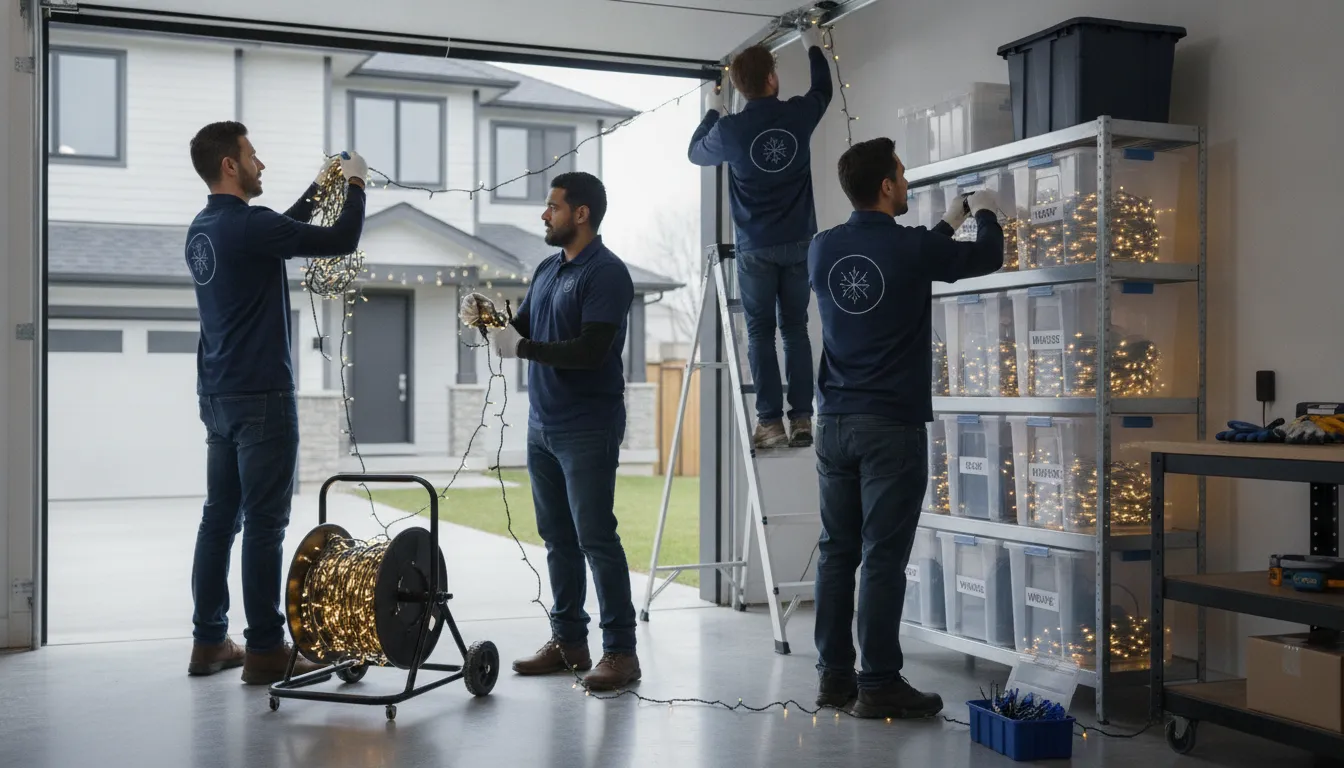
A well-organized holiday display starts with a thoughtful takedown. Removing lights carefully can help protect your roof, gutters, landscaping, and the strands you plan to use again. It also gives you a chance to spot frayed wires, cracked sockets, or damaged plugs before they end up back in a storage bin. Whether you manage a small home display or lights across a commercial property, timing and safe access matter. Learn how to choose the right day, work through each section, store supplies clearly, and decide when to call an outdoor lighting professional for holiday lighting removal and storage.
Key Takeaways
- Choose safe conditions for removal: Turn off and unplug lights, wait for dry, calm weather, and use a stable ladder with a spotter. Call a professional for steep roofs, high displays, or difficult access.
- Protect lights and your property: Release clips gently, never pull cords, and check strands for damage. Coil dry lights, label them by display area, and store them in a cool, dry place.
- Confirm service details before booking: Request a written quote and check whether it covers removal, inspection, storage, reinstallation, and any extra fees. Ask how the provider protects your property and handles damaged equipment.
When Should You Remove Holiday Lights?
Take them down after the season, before prolonged weather exposure
Once the holiday season ends, plan to remove your lights before weeks of rain, wind, or freezing temperatures take a toll on the display. Outdoor lights and their clips, cords, and connections face ongoing exposure to moisture and changing temperatures. Taking them down promptly also gives you a chance to check each strand before storing it.
Set aside enough time to work carefully, especially if your display covers rooflines, trees, or walkways. For a large installation, you may want to remove the lights in stages or schedule help from a professional. TORKLAW’s holiday safety guidance recommends careful removal after the season, particularly before decorations face prolonged harsh weather. If conditions are unsafe, wait for a better day.
Pick a dry, calm day and check access, roofs, and ground
Choose a dry day with little wind. Wet or icy surfaces can make ladders, roofs, and walkways slippery, while strong gusts can make it harder to handle equipment safely. Before you start, check the ground for uneven spots, wet leaves, ice, and landscaping that could affect ladder placement.
Look over the roof and gutters from the ground, and plan how you’ll reach each section of the display. Keep tools and removed lights clear of paths, and block off any area where people might walk beneath your work. Universal Home Experts’ removal advice also recommends checking access points, roof conditions, and the ground before taking lights down.
Plan around business hours, property use, and seasonal availability
At home, choose a time when children, pets, and visitors can stay clear of ladders and work areas. For a business or shared property, schedule removal when fewer customers, staff, or tenants will be passing through. You may need to temporarily close an entrance or coordinate with a property manager before work begins.
If you plan to hire an installer, contact them early to ask about scheduling. Confirm which areas the crew will access and whether you need to move vehicles or keep walkways clear. Planning around your property’s use makes removal safer and less disruptive. Memorial Health’s safety tips recommend considering schedules and property use when planning work with ladders or equipment.
Turn off the display and disconnect power first
Before handling lights, switch off the display and unplug it from the outlet or power source. Disconnect any timers and extension cords, too. Keep plugs and connections away from standing water, and avoid handling electrical equipment with wet hands. If you can’t reach the plug safely, don’t stretch from a ladder. Ask for help or wait until you can disconnect it safely.
With the power off, check cords and connections for fraying, cracks, or signs of moisture. Set damaged lights aside rather than packing them with working strands. Memorial Health’s holiday safety advice recommends disconnecting power before removal to reduce the risk of electric shock.
How Can You Remove Holiday Lights Safely?
Before taking down holiday lights, switch off the display and unplug each strand. If the lights connect to a hardwired system, turn off the appropriate circuit and follow the manufacturer’s instructions. Don’t handle lights with exposed wires, damaged plugs, or other visible electrical problems.
Work one section at a time, and ask someone to stay nearby if you’re using a ladder. Oregon’s wet weather can make roofs, walkways, and ladder feet slippery, so choose a dry, calm day. If a light is out of reach or the setup feels unsafe, leave it in place and contact an outdoor lighting professional.
Set a stable ladder on level ground and use a spotter
Place the ladder on firm, level ground where it won’t shift. Open it fully and lock the braces before climbing. Keep your body centered between the rails, and climb down to move the ladder instead of leaning to reach lights farther along the roofline.
Ask another adult to steady the ladder and keep people clear of the area below. A spotter can also pass you tools or receive light strands, so you don’t have to climb while carrying bulky items. Review these ladder safety tips before you begin. If the ladder can’t sit securely or the height feels uncomfortable, don’t climb.
Wear suitable footwear; avoid wet, icy, or windy conditions
Wear shoes or boots with clean, grippy soles, and use gloves if they help you handle clips without snagging wires. Avoid loose clothing that could catch on branches or decorations. Keep your phone nearby, and let someone know you’re working outside.
Postpone removal if rain, frost, ice, or strong wind makes the roof, ladder, or ground slippery. Oregon’s weather can change quickly, so check the forecast and the surfaces you’ll use before starting. Even a damp deck or walkway can make it harder to keep your footing. Follow ladder safety guidance and wait for dry, calm conditions before working at height.
Remove clips carefully; never pull cords
Unplug each strand, then remove it one section at a time. Release clips gently instead of pulling on the wire or twisting the lights. Tugging can damage the insulation, loosen connections, or break bulbs, leaving the strand unsafe or unusable next season.
If a clip is difficult to reach, use an appropriate tool only when you can do so without damaging the roof, siding, or trim. Don’t force a stuck clip. Pause to check how it’s attached, and ask for help if you can’t remove it safely. This guide to removing holiday lights also recommends unplugging strands and working one section at a time.
Protect roofs, gutters, landscaping, and other features
Lower strands carefully rather than letting them drop onto shrubs, garden beds, walkways, or outdoor furniture. As you work, avoid dragging cords across shingles, scraping gutters, or pulling branches while removing tree lights. Take clips off one by one, and keep an eye out for small pieces that could fall into landscaping or onto paths.
Check roof edges and gutters for any clips left behind. If a light is caught beneath a shingle or tucked into a spot you can’t reach safely, don’t pry it loose from a ladder. The CPSC’s holiday decoration safety tips recommend securing outdoor decorations to help limit wind damage. Careful removal helps protect both your property and reusable lighting equipment.
Check strands, plugs, and sockets; set damaged items aside
Inspect each strand as you take it down. Look for frayed or cut wires, cracked sockets, loose connections, broken bulbs, and plugs that appear damaged or discolored. Keep questionable items separate from equipment that’s ready for storage, and label them so no one accidentally uses them next season.
Don’t plug in a damaged strand to test it or attempt repairs unless you’re qualified to work on electrical components. Check the manufacturer’s guidance for repair or disposal. A quick inspection now helps you identify problems before the next installation. These holiday light safety tips explain what to look for, including frayed wires, damaged sockets, and loose connections.
Hire a professional for steep roofs, high installations, or complex displays
Consider professional removal if lights are installed on a steep roof, a tall tree, a second-story roofline, or another hard-to-reach area. It may also be the safer choice for large commercial displays or systems with multiple circuits, timers, or detailed layouts. Avoid taking risks to reach a strand that’s beyond your comfort or equipment.
Before scheduling, ask whether the service includes removal, inspection, organized storage, and reinstallation. An experienced outdoor lighting provider can explain how the crew will access the display and handle its electrical components. For elevated outdoor decorating, holiday safety guidance recommends planning ahead and having help available. If you’re unsure about access or connections, contact a professional.
How Should You Pack and Store Holiday Lights?
A tidy storage system starts before the lights go into a bin. Make sure every strand is unplugged and dry, then inspect bulbs, plugs, cords, clips, and timers. Set aside anything that needs repair or replacement so it does not get mixed in with working equipment. For a home display, sort supplies by areas such as the roofline, trees, and patio. For a commercial property, group them by building, entrance, or display zone.
Choose sturdy containers that protect lights from dust and crushing, and keep accessories with the strands they belong to. Label each container clearly, then make a quick inventory of what is inside and what needs attention. These steps help homeowners and property managers find the right equipment faster next season, and make it easier to plan for repairs or replacements before installation. If a professional lighting crew handles your seasonal display, ask how they organize and document stored lights.
Coil strands around reels or cardboard to prevent tangles
Avoid dropping loose strands into a storage bin, where they can knot around bulbs, cords, or other decorations. Instead, wind each strand around a light reel, cord holder, or piece of sturdy cardboard. Keep the coils loose enough to avoid straining wires or bending bulbs, then secure the end gently so it stays in place. Store strands separately, especially when they differ in length or are assigned to different display areas.
Cardboard is a simple option for home storage; reels can make longer strands easier to handle. Megan’s Moving recommends winding lights around cardboard to help prevent tangles. For a large home or commercial display, coil and pack one area at a time. That makes it easier to keep the right strands together and return them to the correct location next season.
Protect bulbs, clips, timers, cords, and replacement parts
Place coiled strands in sturdy containers, and avoid putting heavy decorations on top of them. Keep bulbs from knocking against hard accessories by placing clips, timers, extension cords, and replacement parts in small bags or separate compartments. If a strand uses particular clips or spare bulbs, store those items with it. This simple step can save time when you’re ready to install the display again.
Check that lights and accessories are fully dry before packing them away. Use containers with secure lids, and keep delicate bulbs apart from heavier cords or hardware. For outdoor displays, group supplies by area so each set of lights and accessories stays together. If your storage space is limited, stack containers carefully and label any box containing fragile items where it can be seen.
Label containers by property area, light type, and strand
Use specific labels rather than writing only “holiday lights.” Include the property area, light type, and any detail that helps distinguish one strand from another. For example, label a container “front roofline, warm white, 50 feet” or “patio, bistro lights, strand 2.” On a commercial property, add the building, entrance, or display zone so a crew can match each set of lights to its intended location.
Label the container and any smaller bags inside it, especially if supplies may be moved during the year. Christmas World recommends identifying the light type or area on storage labels. A consistent format makes it easier for anyone handling the equipment to find the right lights without opening every container. If you use a professional lighting service, ask whether its labels match the installation plan.
Track your inventory to simplify next season’s setup
Keep a simple record of what you stored, where it is, and its condition. A spreadsheet or notes app can list each strand’s location, approximate length, light color, and accessories. Mark anything that needs testing, repair, or replacement, and update the list when equipment is added or removed. For a commercial display, record supplies by building or zone to help estimate what will be needed before installation.
An inventory can also help you avoid buying duplicates and plan repairs ahead of the season. Twinkly recommends tracking holiday lights and decorations to make future setup easier and identify items that need replacing. If a lighting provider removes and stores your display, ask whether they can share an inventory and note any equipment that needs attention.
Store lights in a cool, dry place; keep damaged items separate
Choose a cool, dry indoor space for your containers, and keep them off damp floors and away from direct sunlight. Avoid placing boxes where they may be crushed or exposed to moisture. Before storage, confirm that lights, cords, and accessories are dry, and use containers with secure lids to keep dust away. These habits help keep your supplies organized between seasons.
Keep strands with frayed cords, cracked bulbs, or damaged plugs separate from working lights. Label them clearly so no one installs them by mistake, and record whether they need repair or replacement. Christmas World recommends storing lights in a cool, dry place and keeping damaged items apart. Inspect every strand again before using it next season, and replace equipment that appears unsafe.
When Should You Hire a Professional for Removal and Storage?
Weigh professional service against DIY safety, time, and convenience
A small display that’s easy to reach may be manageable to remove and pack yourself. For larger or higher displays, consider whether the time and effort are worth it, especially if you’d need to climb a ladder or work near roof edges. Don’t take on the job in wet, icy, or windy conditions, and unplug the lights before handling them. A professional can take care of removal while helping reduce the risks of working at height. When comparing quotes, ask whether they include installation, removal, storage, and reinstallation. These services can be priced separately, and some providers supply the lights while others work with equipment you own. Get the details in writing before you decide.
Consider help for large properties, difficult access, or limited storage
Professional help can be useful when a display covers several rooflines, tall trees, walkways, or multiple buildings. Steep roofs, high peaks, and hard-to-reach areas can make removal more complicated, while a large collection of lights may be difficult to pack and store at home. Ask whether the provider handles the whole display and where it keeps equipment between seasons. Find out how lights and accessories are labeled so they can be matched to the right areas next year. Some companies offer installation, maintenance, removal, and storage as part of a seasonal service. This can simplify planning for both homeowners and commercial properties, as described in this overview of professional holiday lighting services.
Confirm the service covers removal, inspection, organized storage, and reinstallation
“Removal and storage” can mean different things to different providers. Confirm whether the crew will take down the lights, inspect strands and connections, pack and label the equipment, and store it until the next season. Ask whether reinstallation is included or billed separately. It’s also worth discussing how the team will protect rooflines, gutters, landscaping, and other exterior features during removal. Agree on what happens if the crew finds damaged strands, bulbs, or clips: will they set those items aside, repair them, or contact you before replacing them? For safer handling, lights should be unplugged and removed section by section, rather than pulled down by their cords. Review this holiday light removal guidance when discussing the provider’s process.
Check experience, reviews, insurance, and storage conditions
Choose a provider with experience handling displays like yours, whether they’re installed on a home, a commercial building, trees, or other outdoor features. Read customer reviews and ask for proof of insurance. You can also request references or photos of similar projects to get a clearer idea of the company’s work. Ask where the lights will be stored and how they’ll be protected from moisture and damage. If the provider stores equipment for multiple customers, confirm that your items will be labeled and kept organized. Clear answers can help you understand how the company will care for your property and equipment. These are useful points to check when evaluating a holiday lighting provider.
Confirm who owns the lights and what happens if equipment gets damaged
Before signing an agreement, confirm whether the lights belong to you or the provider. If you own them, ask how the company identifies and stores your equipment, and what happens if a strand, bulb, timer, or clip is damaged during removal or storage. Find out whether repairs and replacements are included, and whether you’ll be contacted before the provider buys replacement parts. It’s also helpful to ask how the crew checks equipment before packing it away. Damaged wires, sockets, and connections should be separated from working lights and brought to your attention. The holiday lighting safety guidance recommends inspecting decorative lights for damage before use, a standard worth discussing with your provider.
What Should You Know About Costs and Choosing a Provider?
The right quote should explain what the crew will do, what it costs, and how your lights will be handled after removal. Ask for details before booking, especially if your display includes hard-to-reach rooflines, multiple structures, or custom features.
Ask how property size, layout, access, and display complexity affect the price
Removal costs depend on the time, equipment, and care your setup requires. A large property, long roofline, steep roof, or difficult-to-reach area may take longer to service. Multiple buildings, trees, landscaping, and a detailed display can add more work, too.
Share photos of the display or ask the provider to assess the property before quoting. That gives them a clearer picture of access and complexity, and gives you a better basis for comparing estimates. Online homeowner reports about professional lighting costs can help you think of questions, but they are individual experiences, not verified market averages.
Confirm whether the price includes removal, storage, reinstallation, and maintenance
A removal quote may cover only taking down the lights. Ask whether it also includes packing, organized storage, strand inspections, and reinstallation next season. If maintenance is available, clarify whether basic checks are included or whether repairs and replacement parts cost extra.
Confirm who owns the lights and what happens to them after removal. Some providers store and reuse their own equipment, while others handle lights owned by the customer. Ask how items will be labeled, whether damaged strands will be set aside, and whether the provider will contact you before making repairs. A clear, written list of included services helps you avoid surprises when the next season comes around.
Check storage fees, extra charges, and scheduling terms
Ask whether storage is included or billed separately, and how the fee is calculated. Check for additional charges related to difficult access, large displays, repairs, or extra visits. If reinstallation is part of the service, find out whether its cost is included now or quoted separately later.
Confirm the expected removal window, how much notice the provider needs, and how weather delays affect the schedule. It’s also useful to ask about deposits, payment timing, and cancellation terms. A holiday lighting discussion among service providers describes one company’s payment split, but that example is not a standard rate. Ask each provider to explain their own terms before you book.
Request a written quote and compare services before you decide
Ask for a written quote that lists the property, display, services, fees, and payment schedule. Find out whether the price could change if the crew encounters additional lights or access challenges, and how they’ll get your approval before doing extra work. If storage is included, ask where equipment will be kept and how it will be protected.
Compare providers based on the same scope of work, not just the total price. Check their experience with displays like yours, customer reviews, insurance, and communication about scheduling. Make sure you understand who is responsible if lights or property features are damaged during removal or storage. A detailed quote makes it easier to choose a provider that fits your property and plans for next season.
Frequently Asked Questions
Is there a specific date when holiday lights should come down?
There’s no single date that works for every property. Plan removal after the holiday season, and choose a dry, calm day when roofs, ladders, and walkways are safe to use.
Can I leave holiday lights up all year?
Seasonal lights and clips are generally intended for temporary displays, so check the manufacturer’s instructions before leaving them outside. For lighting you want to enjoy year-round, ask an outdoor lighting provider about permanent fixtures designed for ongoing use.
What should I do if I can’t safely reach part of the display?
Leave that section in place and contact a professional. Steep roofs, tall trees, and high rooflines can require specialized equipment and experience.
How can I tell whether a strand is safe to store for next season?
Look for worn or cut cords, cracked sockets, damaged plugs, loose connections, and broken bulbs. Keep questionable strands separate from working lights, label them, and follow the manufacturer’s guidance on repair or disposal.
What should I ask a professional before booking holiday light removal?
Confirm what the service includes, such as removal, inspection, packing, storage, and reinstallation. Ask about pricing, scheduling, insurance, equipment ownership, and how the provider will handle damaged lights.