Fog-Friendly Driveway Lighting for Eugene Homes
Good driveway lighting in Eugene is not just about looks; it is about getting home safely on wet, foggy nights. When the fog drops over the neighborhood and headlights reflect off shiny pavement, it can be hard to see where the driveway starts, where it turns, or where that low wall or planter sits.
Many people think the answer is brighter, bigger lights. In heavy fog, that often makes things worse. Standard flood-style fixtures can turn the air in front of you into a bright white sheet. In this article, we will walk through how fog behaves, what types of fixtures work better, and how a thoughtful driveway lighting plan can make your home feel safer and more welcoming in all seasons in the Pacific Northwest.
How Fog Behaves Around Your Driveway
Fog is basically a cloud sitting on the ground. Every drop of water in that cloud catches light and throws it in different directions. When light hits fog from a high or very bright source, much of it bounces straight back into your eyes. Instead of lighting the driveway, it lights the fog itself, so you lose depth and contrast.
In many Eugene neighborhoods, there are extra things that keep fog close to the ground, like:
- Tall tree canopies holding cool, damp air
- Nearby hills that block air flow
- Moisture from rivers, creeks, and low-lying areas
- Shaded streets and yards that never fully dry out
All of this means fog often hangs low, right where your driveway is. If you light only from above, the fog glows and the pavement disappears. Good driveway lighting in Eugene works with this, not against it. It uses layers of softer, lower light that follow the shape of the ground so your eyes pick up edges, curves, and changes in height instead of just haze.
Smart Fixture Choices for Fog-Friendly Driveways
When we design driveway lighting in Eugene, we focus on fixtures that keep light near the surface and out of your direct line of sight. Some of the most fog-friendly options include:
- Low bollards that mark edges without shining into drivers’ eyes
- Shielded path lights that throw light down and to the side
- In-grade or recessed lights set into the driveway or borders
- Small, aimed fixtures that highlight key features like corners or walls
Color and brightness matter just as much as fixture type. Cool, blue-white light tends to feel harsh in mist and can create more glare. Warm-white LEDs, usually in the 2700K to 3000K range, give softer contrast and help your eyes read texture on wet pavement and gravel.
We also keep lumen levels controlled. More light is not always better. In fog, gentle, even light often works far better than one or two blinding spots. That is why:
- We favor multiple low-output fixtures over a few high-output ones
- We aim beams carefully to stay on the driveway and edges
- We add shielding where needed to block direct view of the light source
Of course, this is Eugene, so fixtures have to put up with constant moisture. We use:
- Corrosion-resistant materials like quality metals and finishes
- Sealed housings that keep out water and debris
- Long-lasting LEDs that handle frequent damp and temperature swings
Professional design and installation helps everything work together. Correct aiming, spacing, and shielding are what turn a group of fixtures into a clear, calm light path instead of a washed-out glow in the fog.
Designing for Safety, Style, and Neighbors
A good driveway lighting plan should feel almost like a soft runway leading you home. You should be able to glance ahead and instantly see where the driveway edges are, where it curves, and how steep it is, without feeling like you are driving into a spotlight.
We often create this effect by:
- Tracing both sides of the driveway with low, shielded fixtures
- Adding gentle markers at bends, turns, and slope changes
- Highlighting obstacles, like boulders, posts, or retaining walls
Your driveway lighting should also tie into the rest of your outdoor lighting. When walkway lights, entry lights, and garden accents all speak the same visual language, the whole approach to your home feels calm and easy to read. Key ideas include:
- Matching color temperature across driveway, paths, and entry
- Keeping brightness levels in balance so one area is not jarring
- Using similar fixture styles so nothing feels out of place
Respect for neighbors and the night sky is part of good design too. Thoughtful driveway lighting aims light only where it is needed. We pay attention to:
- Beam spreads that keep light on pavement, not up into windows
- Glare shields that hide the bulb from direct view
- Dimming options so lights can be softer late at night
For people who plan to stay in their homes for many years, clear visual cues become even more important. Marking steps, level changes, and changes in paving material makes it easier for everyone, including aging eyes, to move safely on dark, wet nights.
Permanent Architectural Lighting That Works with Fog
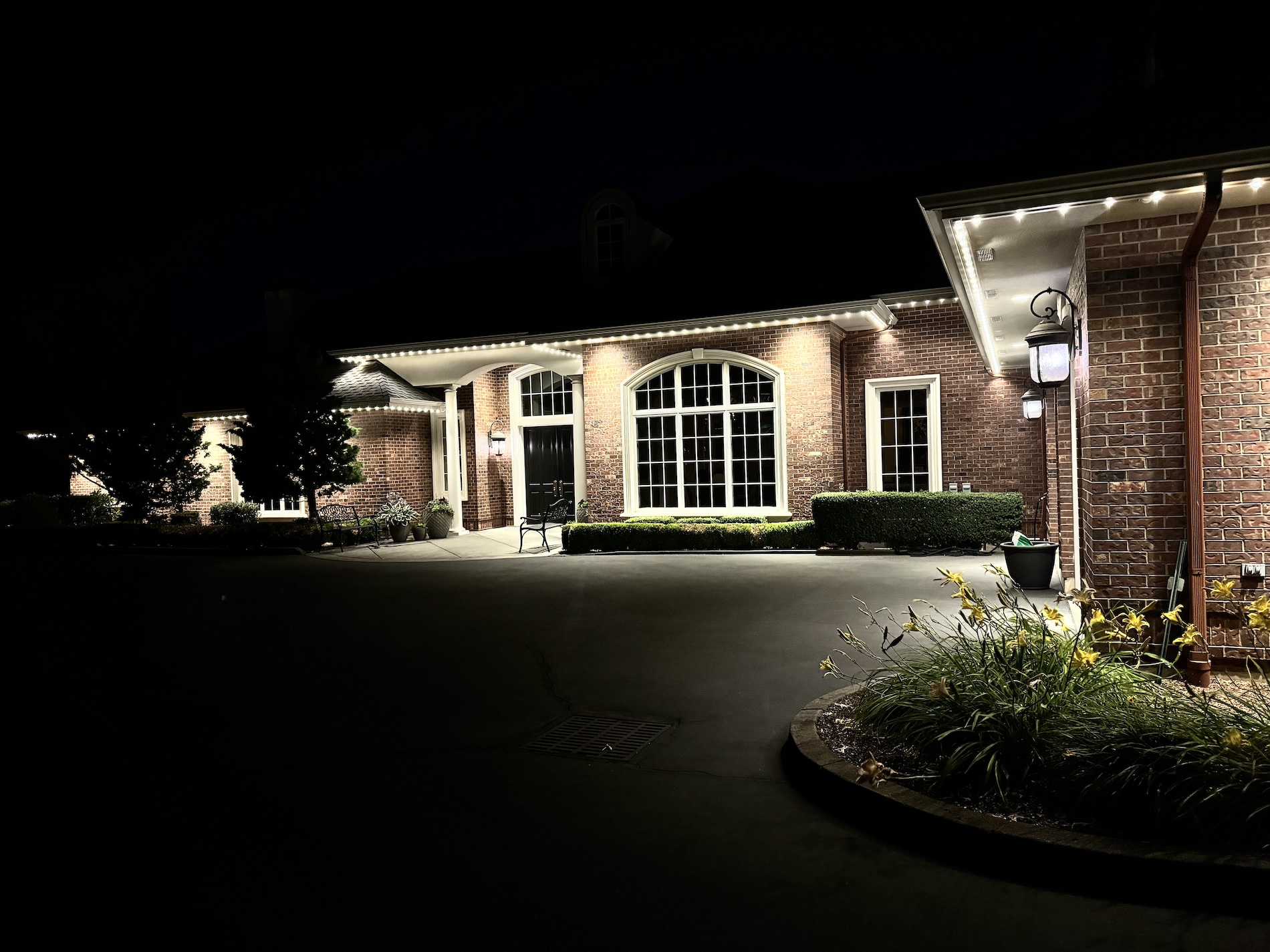
Your driveway does not exist by itself, it leads to your home. Soft, permanent architectural lighting on the house can help your eyes make sense of space in foggy conditions. Instead of blasting the front with bright floods, we often use techniques like:
- Wall washing, a gentle glow across broad surfaces
- Grazing, light placed close to a wall to catch texture
- Accent lighting on columns, posts, and garage doors
These vertical cues help drivers judge distance and alignment. If the garage doors and nearby walls are softly lit, it is easier to center the car and see how close you are, even when the air is thick.
Color and control options add flexibility. Many homes work best with neutral white light for everyday use. From there, you can layer in:
- Subtle color scenes for special occasions that still keep paths clear
- Slightly brighter settings for heavy fog or busy evenings
- Softer late-night modes for a calmer feel
Permanent, professionally managed lighting systems keep this consistent from season to season. Instead of wrestling with temporary fixtures or short-lived DIY setups, you have a stable base that holds up through years of rain, fog, and daily use.
Seasonal and Long-Term Strategies for Eugene Driveways
From fall through early spring, Eugene often sees longer nights, slick leaves, and frequent low clouds. This is when weaknesses in driveway lighting really show up. A smart system lets you adjust for changing conditions without starting from scratch.
With the right controls in place, you can:
- Shift on-times earlier as days get shorter
- Extend evening hours on busy nights
- Nudge brightness up on the foggiest stretches of the driveway
- Save gentler scenes for clear, dry evenings
Soft, permanent holiday-style accents can live alongside practical driveway lighting without taking over. The key is to keep flashing or very bright decorative lights away from the driving path, so your eyes stay focused on edges, curves, and obstacles.
At CLG Lighting, we focus on outdoor lighting systems that work with the Pacific Northwest climate, not against it. When driveway lighting in Eugene is planned with fog in mind, you get safer arrivals, fewer stressful moments behind the wheel, and a home that looks welcoming in any weather.
Get Started With Your Project Today
Transform your property with professionally designed driveway lighting in Eugene that boosts safety, visibility, and curb appeal. At CLG Lighting, we listen to your goals and create a lighting plan tailored to your home and budget. If you are ready to talk details or schedule a consultation, simply contact us and we will help you take the next step.