
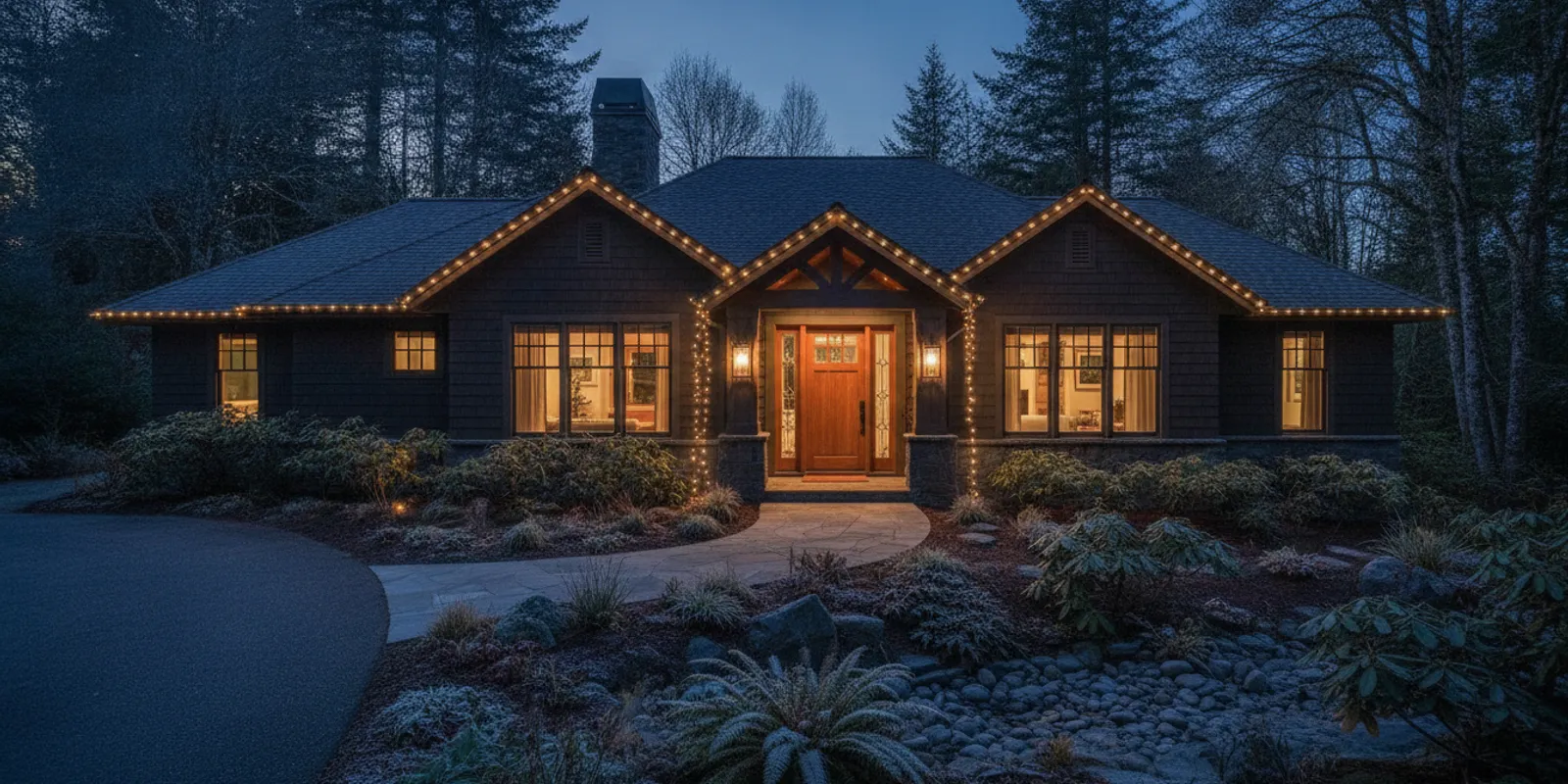
Planning a christmas lights outdoor installation starts with more than choosing a color or counting roof peaks. The display needs to suit the home, the places people use after dark, the available access, the season’s schedule and the amount of care you want to handle. A written plan can help you compare a do-it-yourself display with a professionally managed service before you commit.
Request a complimentary holiday lighting consultation
What should you decide before planning an outdoor Christmas lights installation?
Begin with the experience you want the lights to create. A restrained roofline can make a home feel welcoming without illuminating every surface. A display that includes a porch, entry trees or a garden feature can create a fuller scene, but each additional area affects design, materials, installation effort and later removal. There is no single correct amount of lighting. The useful question is which parts of the property matter most when viewed from the street, driveway, walkway and main outdoor gathering areas.
Walk around the property during daylight and again after dark if possible. Notice which architectural lines are visible, where trees interrupt a view, how a visitor approaches the entry, and which areas already receive light from windows or existing exterior fixtures. Think about the scene from more than one viewpoint. A roofline that looks balanced from the road may appear incomplete from a side approach. Conversely, a feature that looks prominent from a nearby window might be barely visible from the street.
It also helps to decide what you want to avoid. You may prefer not to light every roof edge, to keep a favorite tree unwrapped, or to preserve a quiet view from a bedroom. Consider whether neighbors have close sightlines and whether the display should be visible from public areas or primarily enjoyed from within the property. These preferences are useful design information, not details to leave until installation day.
Write down the main purpose in plain language: welcome guests at the entrance, define the home’s roofline, bring warmth to a front garden, or create a more complete seasonal scene. Then identify a few priority areas and any areas that are off limits. This gives a designer or installer a starting point while leaving room for a site-specific recommendation. It also makes it easier to compare proposals on scope rather than judging them only by a total price.
Which areas of the property belong in the display?
Most planning conversations begin with the home’s most visible features. Roof edges, gables, eaves and entry details create clear lines that can be read from a distance. A roofline-only concept can be a deliberate finished design, not just an incomplete version of a larger display. If the home has several roof sections, ask how the design will treat their relationship: which lines continue, which stop, and whether the composition will feel balanced from the primary viewing angle.
Next, consider the approach. A front door, porch columns, an arch or a prominent entry tree can help draw attention toward the place guests arrive. A path or driveway may need a different approach from a roofline because it is experienced at closer range and by people moving through the space. Discuss where seasonal lighting can be added without interfering with how the household uses the route, gates or parking area. Keep the conversation about visual definition and convenience; no lighting arrangement should be treated as a guarantee of safety.
Trees and shrubs can add depth and seasonal character. Their form, height, branch structure and position matter. A single specimen tree may make a stronger focal point than several smaller plants lit equally. Also think ahead about what the landscape looks like after leaves fall or branches move in wind. The planned effect should make sense for the actual planting and the views around it, rather than relying on a summer photograph alone.
Do not overlook side and rear areas simply because they are less visible from the street. A patio, outdoor dining area or garden entrance may be more important to how you use the property in winter. On the other hand, lighting every elevation can increase scope without improving the views you care about. Rank each area as essential, optional or out of scope. That prioritization helps keep the proposal aligned with your intended use and budget.
For a home in Eugene, CLG’s Eugene holiday installation page describes its local holiday service pathway. It can be a useful next step if you want to discuss which areas of your particular property suit a professionally planned seasonal display. The page should not be read as a promise of a specific schedule or a standard package: the property and requested scope still shape the conversation.
How can you make a clear display-area plan?
A simple annotated photograph or sketch can make your priorities easier to explain. Take a wide view from the street and one or two closer views of the entry or other features you want to include. Mark the roofline sections, trees, porch, gates or patio you have in mind. Add notes such as “focus here,” “keep this area dark,” or “viewed from the driveway.” The images do not need to be architectural drawings. Their purpose is to communicate the intended effect.
Separate features you want illuminated from the method you imagine using. For example, you may know that the front gable should stand out without knowing how a lighting provider will design that detail. Avoid locking the plan to a particular attachment or product before the property has been reviewed. A professional can assess the requested look alongside the building, access and installation considerations, then explain what is feasible within the proposed scope.
For larger homes, estates, shared properties or commercial sites, identify the viewing zones separately. A property manager might distinguish a main entrance, tenant-facing frontage, pedestrian routes and outdoor dining areas. An HOA or multi-property manager may want a consistent seasonal character but need each building reviewed for its own layout and access. Do not assume that one plan or one installation sequence will fit every building simply because the locations share an owner or brand.
Also list who needs to review the concept. A household may want agreement among the people who use the property. For a managed or shared site, identify the person authorized to approve scope and any review steps that apply. Confirm any relevant association or property rules before the design is finalized. The goal is to surface requirements early, not to assume that an installer can obtain approval on the property owner’s behalf.
Use this plan as a guide, not a substitute for a site discussion. A photo can show a roofline but not necessarily explain access, hidden obstacles, connection locations or how the property is used on installation day. When you request an estimate, share the priorities and ask what information the provider still needs to confirm. That exchange helps distinguish an initial concept from a reviewed, property-specific proposal.
How do access and property care affect installation planning?
Access is a practical part of the design. Roof height, roof shape, slopes, landscaping, gates and the location of paved areas can all affect how a requested display is approached. A long driveway or restricted entry may affect how equipment and materials reach the work area. Trees, garden beds and other features can change what routes are available. These are reasons to describe the site accurately and arrange a property review, not reasons to assume a particular method before a professional has assessed it.
Point out anything that could affect access: locked gates, an uneven approach, a narrow side passage, a steep section, a delicate garden edge or an area that cannot be crossed. If there are pets, scheduled deliveries, business hours or other constraints, mention those too. The point is to help the team understand how the property operates and what coordination may be needed. Do not move heavy items or alter the site just to prepare for an estimate unless the provider specifically requests it.
Property care deserves a direct conversation. Ask how the planned work will avoid unnecessary disturbance to planting, exterior finishes and the areas around the home. Explain which surfaces or landscaping need particular attention. If you have concerns about an attachment point or a recently completed exterior project, identify it before agreeing to the plan. Clear communication about the property is more useful than relying on a general assurance that every site is the same.
Consider the daily routine during setup and removal. Will the work area overlap with a primary entrance, a garage, a delivery zone or a customer-facing area? Is there a time window when access should be kept clear? For a shop, restaurant or other operating property, discuss customer flow and whether work needs to be coordinated around opening hours. A plan that acknowledges these details is more practical than a display plan focused only on the finished night-time appearance.
Before work begins, confirm the agreed scope and any preparations requested of you. Ask what parts of the property the team expects to access, what the household or manager should secure or communicate, and who to contact if a condition has changed. Do not infer that a proposal includes work or property repairs that are not described. A clear scope makes it easier for both sides to recognize what is planned and to raise a question before the installation proceeds.
When should you start planning seasonal lights?
Holiday lighting is time-sensitive because the display is intended for a particular season, and many households and businesses plan around the same period. There is no universal date that guarantees availability. If you have a preferred display period, an event, a business opening or a particular week when the lights need to be ready, raise that early and ask the provider whether the requested timing can be accommodated. A conversation about timing is not a confirmed appointment; rely on the terms and schedule confirmed by the team.
Planning ahead also gives you time to think through scope. A homeowner can decide whether to begin with a roofline or include an entry feature. A property manager can coordinate stakeholders and budgets. A commercial operator can discuss business hours, public-facing areas and any site-specific review before a seasonal deadline becomes urgent. Early discussion does not mean every design decision must be final at once; it gives room to clarify what needs review and which choices can be made later.
If you are already close to the season, ask what is realistically possible rather than assuming a provider can meet a requested date. Share the property location, what you want illuminated, any access constraints and the date that matters to you. Then ask what steps remain before an installation date is confirmed. A transparent answer about the schedule is more helpful than an unsupported promise, especially when weather, scope or property access may affect the plan.
Removal needs planning too. If the lights are intended for a temporary seasonal display, ask when removal is expected, how the process is arranged and whether storage is part of the service you are considering. A managed holiday program can include planning, installation, in-season maintenance, takedown and storage, but the written proposal should make clear which services apply to your project. Confirm what happens to materials after the season and whether any future-season arrangement is described; do not assume ownership or renewal terms that are not written down.
For property managers, schedule discussions may need to account for more than one site or approval group. Identify which locations are in scope, whether their display concepts differ and whether access arrangements vary. Ask how the provider wants to coordinate the review and proposal. A location list is a helpful start, but it does not establish that each site has identical needs or that one installation date can be promised for all properties.
What should you compare in a do-it-yourself plan?
A DIY plan can offer direct control over the choice of lights, when you work and how the display changes from year to year. It also means that you are responsible for planning the design, obtaining suitable materials, arranging access, managing installation, addressing failures during the season and taking the display down. Consider the total task rather than the purchase alone. The project may involve preparation, setup, adjustments and storage, in addition to the initial decision about what to buy.
Start with a realistic inventory of the work. Which areas are reachable with the equipment and experience you already have? Which features would require working at height, awkward access or coordination with someone else? What portions can be completed without disrupting the household? If the project includes a commercial or shared property, who is responsible for approving the plan and managing the site while work occurs? When an aspect falls outside your knowledge or comfort, pause and seek appropriate professional guidance instead of improvising.
Make a materials plan before purchasing. Note the design areas, approximate routes and any existing lights or controls you intend to use. Check that products are intended for the setting and follow their manufacturer instructions. Keep product packaging and records so that you can identify what was used later. Do not assume that products that look alike have the same intended use, specifications or support. If you are uncertain about compatibility or a particular installation condition, ask a qualified professional or the product manufacturer before proceeding.
Think about what happens after the display is on. Who will check it, respond if part of it stops working and decide whether to adjust or remove it? Can you safely reach the affected area? Do you have a way to store materials so they can be identified and used as intended in the future? If your availability is limited during the season, the maintenance responsibility may matter as much as the original installation effort.
DIY and managed service should be compared by responsibility as well as price. A do-it-yourself approach can make sense when the desired scope is modest, access and tasks are appropriate for your skills, and you are comfortable handling seasonal care and removal. A professional conversation may be useful when the design is complex, access is challenging, the property has multiple zones, or you prefer another party to manage the seasonal work. These are decision points, not a judgment that one approach suits every household.
When might a professional seasonal service fit better?
A professional service can be worth discussing when you want design, installation and seasonal follow-through considered together. CLG describes professional holiday lighting as a managed service that can include planning, installation, in-season maintenance, post-season removal and storage. Ask the team to confirm which parts apply to the proposed project and how they are described. A provider’s general service description does not automatically determine every detail of a particular proposal.
This option may be especially relevant when the planned display includes several architectural features, multiple trees or distinct zones, or when coordinating a property is more important than purchasing a set of lights. For a business or shared property, a managed conversation can help put scope and access questions in front of the people who need to resolve them. It still requires you to communicate how the site operates and to review the proposal; outside help does not eliminate property-specific decisions.
Ask who will guide the design discussion, how the team will confirm the scope and what the written estimate includes. Clarify how in-season service is handled, whether removal and storage are included, and what the proposal says about materials and future-season arrangements. Ask how you should report a concern once the display is installed. The answers should be specific enough for you to understand the service being offered without assuming a response time or commitment that has not been stated.
CLG’s published holiday lighting starts at $1,000. That starting figure is a planning reference, not a quote for every home or commercial site. The final price depends on the project’s scope and property details. Ask for a written, property-specific estimate that identifies the proposed areas, services and any relevant conditions. Compare what is included, not just the headline amount. A larger display or different access needs may produce a different proposal, so avoid treating a starting price as a guaranteed total.
If your main concern is whether a managed service is a fit, prepare questions before the consultation. You might ask whether your priority features can be included, what the team needs to assess access, what is included in seasonal follow-through and how the estimate will describe the work. You can also ask whether a smaller scope would preserve the look you want. That approach makes the discussion practical and leaves room for a design recommendation grounded in the property.
How should you assess controls, colors and the look after dark?
Think about the display as it will actually be seen: after dark, from the places people approach and spend time. The same color can feel different on a roofline, a tree and an entry feature. A warm, restrained look may suit one property, while a more colorful seasonal scene may be the goal for another. Decide what mood you want, then ask how the proposed design will carry that intention across the selected areas.
Controls and operating habits are part of the plan. Ask how the display is intended to be turned on and off, who will manage it, and whether the proposed controls fit the way the household or site operates. If the property has several areas, find out whether the proposal treats them as one display or as separate zones. Do not assume a particular app, automation feature, schedule or control method unless the provider confirms it in the proposal.
Consider how the display relates to existing exterior and landscape lighting. Holiday lights are temporary, while other outdoor lighting may be used throughout the year. A seasonal design should complement the broader setting rather than accidentally competing with every existing fixture. If you already have a landscape system, note which scenes or areas are used in winter and discuss how the holiday display will coexist with them. CLG’s guidance on landscape lighting in Oregon can help you think separately about year-round outdoor illumination and seasonal decoration.
Walk through likely viewing points in your mind. Look at the property from the road, approach, front door and the main indoor or outdoor area from which the lights will be enjoyed. Consider whether the display needs to read clearly from a distance or feel intimate at close range. If a feature is visible from a neighbor’s property, think about the effect there too. These observations help you explain preferences; they do not replace a site-specific design review.
Ask to review the scope in terms of both areas and intended effect. If a proposal says “front elevation,” confirm which sections that includes. If it mentions trees, ask which trees are part of the design. If color or patterns matter, explain your preference and ask what the proposal states about them. The clearer the description, the easier it is to understand what will be installed and to raise a question before work begins.
What should you ask about materials and durability?
Outdoor seasonal displays are exposed to the conditions at the property, so ask how the proposed materials are selected for the requested use and what care they require. Product specifications and manufacturer instructions matter. Avoid assuming that one fixture, fastener or lighting product is suitable for every surface or outdoor condition simply because it was used elsewhere. The right discussion begins with the property and the particular products included in the plan.
Ask what the proposal says about components, installation and service if a section needs attention during the season. If the project includes an existing display, describe what you know about its age, products and previous issues, but do not treat a visual similarity as proof of compatibility. A provider may need to inspect the system before deciding what can be reused or what needs to be changed. Put any agreed reuse or replacement detail in the written scope.
Storage can influence how easy it is to identify materials next season. Ask whether storage is part of the service, how the proposal describes it and whether anything is expected of you after removal. If you handle storage yourself, keep materials organized and labeled by area when practical. Preserve product information and note any failures or changes in the display. Those records can make future planning more straightforward, although they do not guarantee that materials remain suitable or functional.
Durability is not only about an individual product. The overall result also depends on how the design fits the property, how work is carried out and what support applies afterward. Review written terms rather than relying on broad statements about lifetime coverage or repairs. Ask which warranty or workmanship terms apply to the particular system and where the provider’s responsibilities end. A clear answer should distinguish a product manufacturer’s terms from any separate service or workmanship terms.
For customers comparing proposals, note whether each one identifies the areas, materials or service components well enough to make a fair comparison. A proposal that leaves a key item unclear is an invitation to ask a question, not to guess. Request clarification before accepting, especially if you are comparing a DIY supply list with a professionally managed scope. The underlying responsibilities differ, so a price-only comparison may leave important work uncounted.
What should a written holiday lighting estimate explain?
A useful estimate makes the proposed work understandable. Look for a description of the property areas included, the general design scope, installation and seasonal services, the price and any stated conditions. If removal or storage is part of the offer, make sure those are addressed rather than assumed. The estimate should also make clear what is not included when that boundary matters to your decision.
Check that the scope reflects your priorities. If you asked for a roofline and two entry trees, see whether those features are listed. If you asked to leave a patio or a side elevation unlit, confirm that the plan does not imply broader work. Where descriptions use broad terms, ask for a more precise explanation. It is easier to resolve a mismatch before accepting a proposal than after the work has been scheduled.
Review any timing language carefully. A preferred week discussed during a consultation is not necessarily a confirmed installation date. Look for the confirmed schedule or the steps required to confirm it. If weather, access or another site condition could alter the plan, ask how the provider communicates changes. Do not assume guaranteed availability unless the written agreement says so.
Ask how payment and any financing option are handled if relevant. CLG lists an application for the Synchrony Home Design Credit Card as a financing option. Approval is not guaranteed, and promotional terms can change. Review the current application and its terms directly before making a decision. Keep the choice to apply separate from the design discussion, and do not assume a particular rate or promotional period.
Before you approve, make a short list of unresolved points and get clear answers. That list might include the exact locations, access arrangements, included seasonal care, removal, storage, control details and schedule. Keep a copy of the written proposal and any clarification that changes the scope. The goal is not to turn a seasonal display into a complicated contract exercise; it is to know what work you are agreeing to and what questions remain.
How can homeowners and property managers prepare for a consultation?
For a homeowner, preparation can be simple. Gather a few photographs, identify the areas that matter most, note the viewing points and decide what you would prefer to leave dark. Write down any access or property-care concern and the timing you hope to meet. You do not need to choose every product or technical detail before talking with a professional. A concise description of the desired result is a better starting point than an unverified shopping list.
For commercial properties, retail locations, hospitality sites and franchises, add operating details. Note when customers or staff use the relevant areas, which entrances need to remain available, and who can authorize work. If brand or color preferences apply, identify them as preferences for discussion. Do not assume a design can use a particular logo, color treatment or installation method without review and approval. Keep the site-specific plan distinct from what might be suitable at another branch.
For an HOA or multi-property portfolio, identify the decision-maker, review process and locations under consideration. Separate shared common areas from individual buildings or private areas. If the goal is visual consistency, explain what should be consistent and where each site can differ. The property manager can help organize that information, but each property still needs its own scope and access discussion. A set of addresses alone is not a final plan.
Ask what happens next after the initial conversation. CLG presents its holiday work through consultation, design, installation and ongoing seasonal support. Confirm whether the team needs a site visit or further information before preparing a written proposal, and ask how you will receive the next step. The process is human-reviewed and property-specific; an inquiry is not an instant booking or a commitment to a design.
If you are still comparing options, make a short decision sheet with the same questions for each provider: What areas are included? What seasonal work is included? What access details were considered? What is the stated timing? Which materials or services need clarification? That creates a more useful comparison than relying on general descriptions or a single total. It also helps reveal whether a lower initial price reflects a genuinely narrower scope or simply leaves important details unanswered.
How can you decide between DIY and managed installation?
There is no universal answer. Start by weighing three things: the appearance you want, the tasks you are prepared to handle and the time you can give the project. If a modest display fits your experience and you are comfortable handling seasonal care and removal, a DIY approach may align with your priorities. If design, access, multiple property zones or follow-through feel difficult to manage, request a professional estimate and compare the proposed service with the work you would otherwise take on yourself.
Separate preferences from constraints. “I want the entry to feel welcoming” is a design preference. “The side gate must remain accessible” is a property constraint. “I can only be on site on certain days” is a scheduling detail. These points help a provider understand what matters and help you judge whether a proposal fits. Do not let an attractive image replace a discussion of how the design would translate to your building and access conditions.
Compare the total effort, not simply the price of lights against a professional estimate. DIY may involve research, shopping, installation, adjustments, troubleshooting, takedown and storage. A managed service may bring several of those activities together, but the exact inclusions must be confirmed in writing. If you are not certain what a proposal covers, request clarification rather than assuming it includes every seasonal task.
For CLG, the next step is a conversation about the property and a written estimate rather than online selection from a fixed catalog. The contact page lets you discuss your lighting needs. You can also review CLG’s holiday lighting removal and storage considerations and its outdoor lighting financing information while preparing questions. Those pages provide context; your written proposal and current terms govern your project.
Use the consultation to find out whether the recommended scope fits the look, property care, schedule and service support you need. If it does not, ask whether a simpler or differently focused plan is possible. The best choice is the one whose responsibilities and scope you understand and are willing to take on.
Ask CLG for a property-specific holiday lighting estimate
What should you document during a property review?
A property review is most useful when it connects the desired appearance with real site conditions. Before the discussion, note the approximate locations you want considered and take photographs from the main viewing angles. During the review, ask which details the team needs to verify in person. The provider may need to consider roof geometry, access, landscaping, existing lighting and the practical route to the work areas. Let the team identify its own installation requirements rather than assuming a photograph tells the whole story.
Keep a short record of decisions as they are made. Write down which sections are in the proposed display, what is intentionally excluded, and whether any optional features remain undecided. If the design changes after the initial conversation, ask for the updated scope in writing. This is particularly helpful when several people are reviewing a home project or when a manager needs to communicate the plan to a board, owner or operations team. A shared written version reduces the chance that one person is comparing a roofline concept while another expects a larger landscape display.
Document practical constraints as well as design choices. Note access windows, gates, parking or delivery needs, business hours and any part of the property that should remain available throughout the work. For a residential property, explain household routines that affect the entry or driveway. For a commercial property, clarify who can answer questions while work is underway and who is authorized to approve a change. These details do not determine the provider’s schedule, but they help everyone discuss a workable plan before a date is confirmed.
Use the review to clarify the boundary between the estimate and work that is not included. If an existing fixture, controller or display needs attention, ask whether inspection or repair is part of the holiday scope or would require a separate discussion. If you have an existing landscape system or permanent architectural lighting, explain how you use it during the holiday season and ask whether any coordination is relevant. Do not assume that a seasonal lighting estimate includes diagnosis or modification of a different system unless the proposal says so.
Finally, ask how questions will be handled once the proposal is sent. Find out whom to contact if a feature is described differently than you expected, a site detail changes or you want to revise the concept before acceptance. Keep the latest proposal with its clarifications so that everyone is working from the same version. A few minutes spent confirming the plan can make the design, access arrangements and service expectations much easier to understand.
What questions should you resolve before the season?
Does an inquiry confirm an installation date?
No. An inquiry begins a discussion about the property, requested scope and timing. Ask the team what steps remain and rely on the schedule confirmation it provides. Do not treat a preferred date or general seasonal timeline as a guaranteed appointment.
Is the $1,000 starting price a quote for my home?
No. CLG’s published holiday lighting starts at $1,000. The final written proposal is specific to the property and requested scope. Confirm which areas and services are included before comparing the total with another plan.
Does every managed holiday display include removal and storage?
CLG describes a managed holiday service that includes post-season removal and storage, alongside planning, installation and in-season maintenance. Ask the team to confirm how those services apply to your particular proposal and review the written scope rather than assuming identical terms for every project.
Should I choose every display detail before asking for an estimate?
No. Identify the areas and effect that matter to you, along with any areas to leave out and practical property constraints. A professional can discuss the design and clarify what needs to be assessed. You can ask questions about colors, controls and service details as the scope is developed.
What if I manage more than one property?
List each property, the intended display areas, access conditions and the person responsible for approvals. Explain which preferences should be consistent across locations and which can vary. Ask for each property’s scope and schedule to be confirmed rather than assuming that one plan applies everywhere.
How do you turn an idea into a workable plan?
Choose the areas you want people to notice, identify how the property is accessed and decide how much seasonal work you want to manage yourself. Share those details early, ask how timing and seasonal care are handled, and review the written estimate for the scope you actually discussed. Whether you choose a small DIY display or a managed service, planning around the property makes it easier to understand the work and the commitments involved.
For an Oregon home or managed property, a thoughtful holiday display is a site-specific project, not a one-size-fits-all package. Ask clear questions, confirm what is included and allow the design to respond to the building and its use. That gives you a practical basis for deciding what belongs in your outdoor Christmas lights installation.