
Keep Your Landscape Visible Through Winter Storms
Winter darkness can make a familiar commercial property feel harder to read. In Oregon, early sunsets, rain, fog, wet pavement, and low contrast can hide the landscape features people rely on to find an entrance or walk safely from their vehicle to the door.
At CLG Lighting, we see landscape lighting as a planned system, not a row of bright fixtures. A thoughtful design can help visitors spot entrances, walkways, planting beds, trees, parking areas, stairs, signage, and defining building details without washing the property in harsh light. For commercial properties throughout the Willamette Valley and across Oregon, permanent outdoor lighting can support a welcoming appearance through changing weather and shorter days.
Find Winter Visibility Hazards Before They Cause Problems
Rainy weather often reveals lighting gaps that are easy to miss during summer. Sidewalks become darker when wet. Leaves can cover step edges. Standing water may reflect nearby lights and make it harder to see changes in surface height. Landscape edges and planted areas can blend into walking routes, while a shadowed doorway can feel uninviting, even when the business is open and ready for visitors.
We recommend reviewing your property at dusk or after dark, especially after rain. Walk the same route an employee, customer, delivery driver, or visitor would take. Notice where your eyes need time to adjust and where the path ahead feels uncertain.
Areas worth reviewing include:
- Parking lot entrances and drive lanes
- Accessible paths, ramps, curbs, and crosswalks
- Stairways, handrails, and changes in grade
- Planting beds, trees, and landscape borders near walkways
- Main entrances and transitions from bright to dark spaces
Landscape lighting design in SW Portland Hills needs to consider more than the building itself. Hilly terrain, mature trees, winding drives, planted slopes, and nearby homes can all affect where light belongs. We design lighting to lead people through the property with fewer sudden dark zones while keeping unnecessary spill and glare in check.
Build Safer Routes with Layered Outdoor Light
A single bright fixture rarely solves a visibility problem. In fact, too much brightness in one area can make the nearby darkness seem even deeper. Layered lighting works better because each fixture has a clear job, whether that is showing a walking route, defining a planted edge, marking a stair edge, or giving drivers a better view of an approach.
Path lights, bollards, step lights, tree-mounted downlighting, and carefully aimed fixtures can work together to create visual guidance without making the property feel overlit. The goal is not to turn every surface into a spotlight. It is to make the route from the parking area to the front door easy to follow while giving the landscape shape and depth after dark.
During a professional design process, we look closely at features such as:
- Curb edges and wheel stops
- Ramps and accessible routes
- Steps, landings, and railings
- Entry approaches and covered walkways
- Trees, shrubs, planting beds, and landscape transitions
Wet evenings can make pavement reflections especially distracting. When surface details disappear in reflected light, consistent illumination helps people see where they are placing their feet and where they are driving. Proper fixture placement and shielding can keep light directed where it is useful instead of shining into drivers’ eyes or neighboring windows.
For landscape lighting design in SW Portland Hills, visual comfort matters just as much as brightness. Warm color temperatures, appropriate beam spreads, and smart aiming help create a polished look that supports safer movement after dark while showing off the natural character of the property.
Highlight Your Building Without Creating Glare
People should be able to recognize your property before they reach the front door. Landscape lighting can bring attention to the elements that make an approach easier to identify, such as specimen trees, entry planting, stone borders, garden features, sign areas, and planted spaces near the building.
That recognition matters on dark, rainy evenings when visitors may be searching for a suite, office, storefront, or service entrance. A clearly illuminated landscape focal point can make the property feel active and cared for while helping people confirm they have arrived at the right place.
We avoid treating landscape lighting as a floodlight problem. Uncontrolled floodlights can create glare, deep shadows, and uneven visibility. They may also flatten the appearance of plantings and hardscape, leaving the area bright but hard to read.
Instead, a custom design may use controlled techniques like uplighting, grazing, washing, moonlighting, and downlighting. Each approach places light with purpose. Uplighting can add structure to trees. Grazing can reveal texture in stone or planting walls. Downlighting can brighten an entrance or walking area from above without putting a bright source directly in someone’s line of sight.
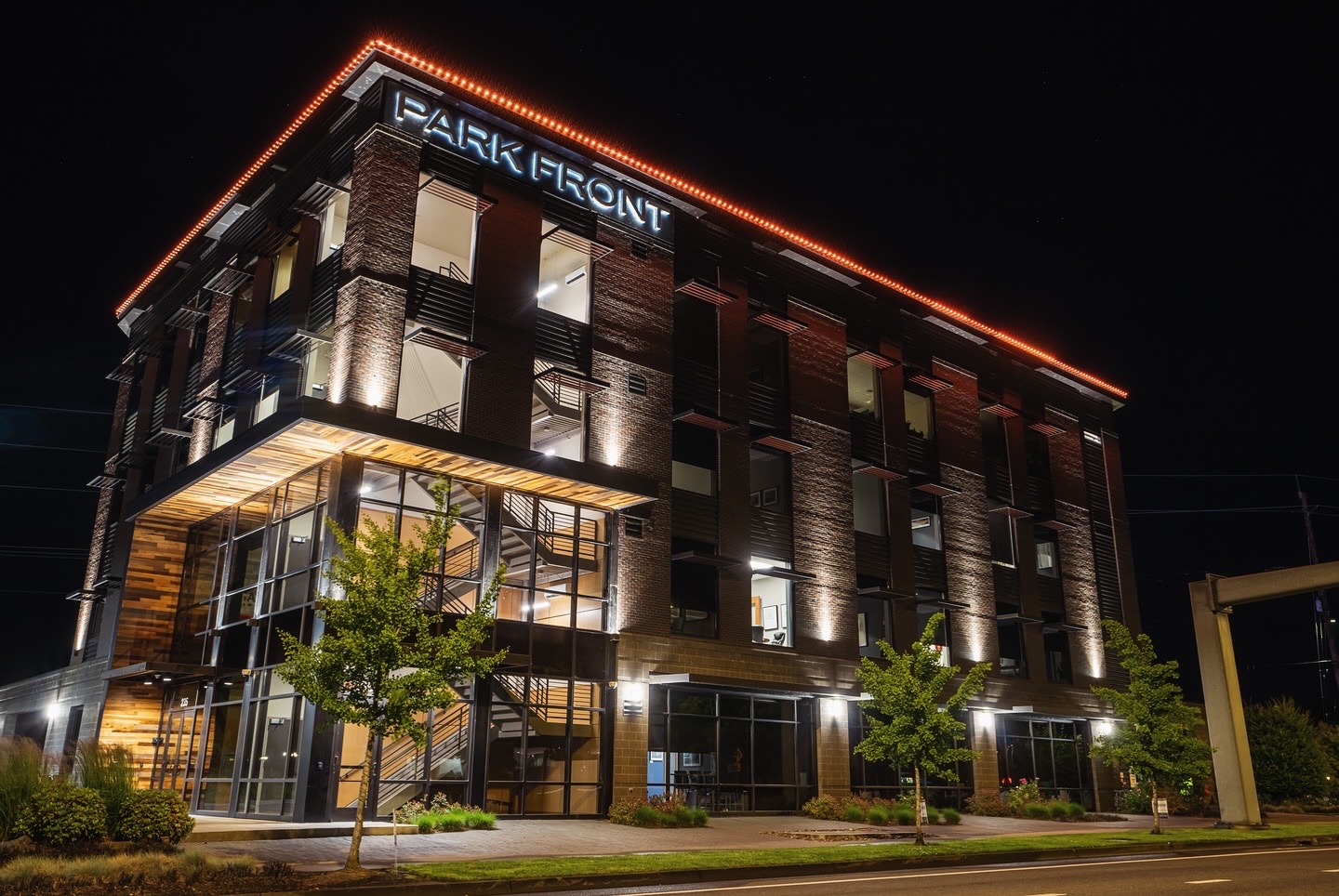
Thoughtful landscape lighting can also complement architectural details without making the building the only focal point. When lighting is balanced, a commercial property can look established, welcoming, and easy to find while still respecting nearby homes and the natural character of the site.
Invest in Permanent Lighting That Handles Oregon Winters
Winter lighting should not be a temporary patch for a deeper property issue. Permanent systems are designed to provide dependable visibility throughout the year, including long periods of rain and changing outdoor temperatures. Durable fixtures, weather-resistant connections, reliable controls, and professional installation all matter when lighting will be exposed to Oregon conditions season after season.
Controls also make daily operation easier for property managers. Rather than relying on someone to switch fixtures on and off at the right time, a system can be planned around the way the property is used.
Useful control options may include:
- Timers for predictable operating hours
- Photocells that respond to changing daylight
- Zoned controls for different areas of the property
- App-based controls for simple adjustments
- Separate settings for entrances, paths, landscape features, and building details
Permanent landscape lighting and seasonal holiday displays can work well together. The permanent system provides everyday guidance, landscape definition, and curb appeal. Holiday lighting can then add a festive layer during the winter months without replacing the practical lighting people need for safe arrival and departure.
Plan a Better-Lit Winter Property Today
The best time to identify winter visibility concerns is before a dark, rainy evening turns a small lighting gap into a frustrating experience. A nighttime assessment can reveal where people lose sight of the route, where glare affects comfort, and which landscape features could make the property easier to recognize.
A strong lighting plan considers safety, appearance, building character, landscape design, outdoor features, and neighboring properties as one connected picture. When those parts work together, your property can remain clear, welcoming, and easier to use long after the afternoon light fades.
Bring Winter Visibility Into Focus
CLG Lighting can create a cohesive design that supports your property’s architecture, landscape, and seasonal needs. Our commercial architectural lighting in SW Portland Hills services are tailored to improve clarity while complementing the character of your outdoor spaces. To discuss a lighting plan for your property, contact us today.