Transforming Desert Entries Into Nighttime Landmarks
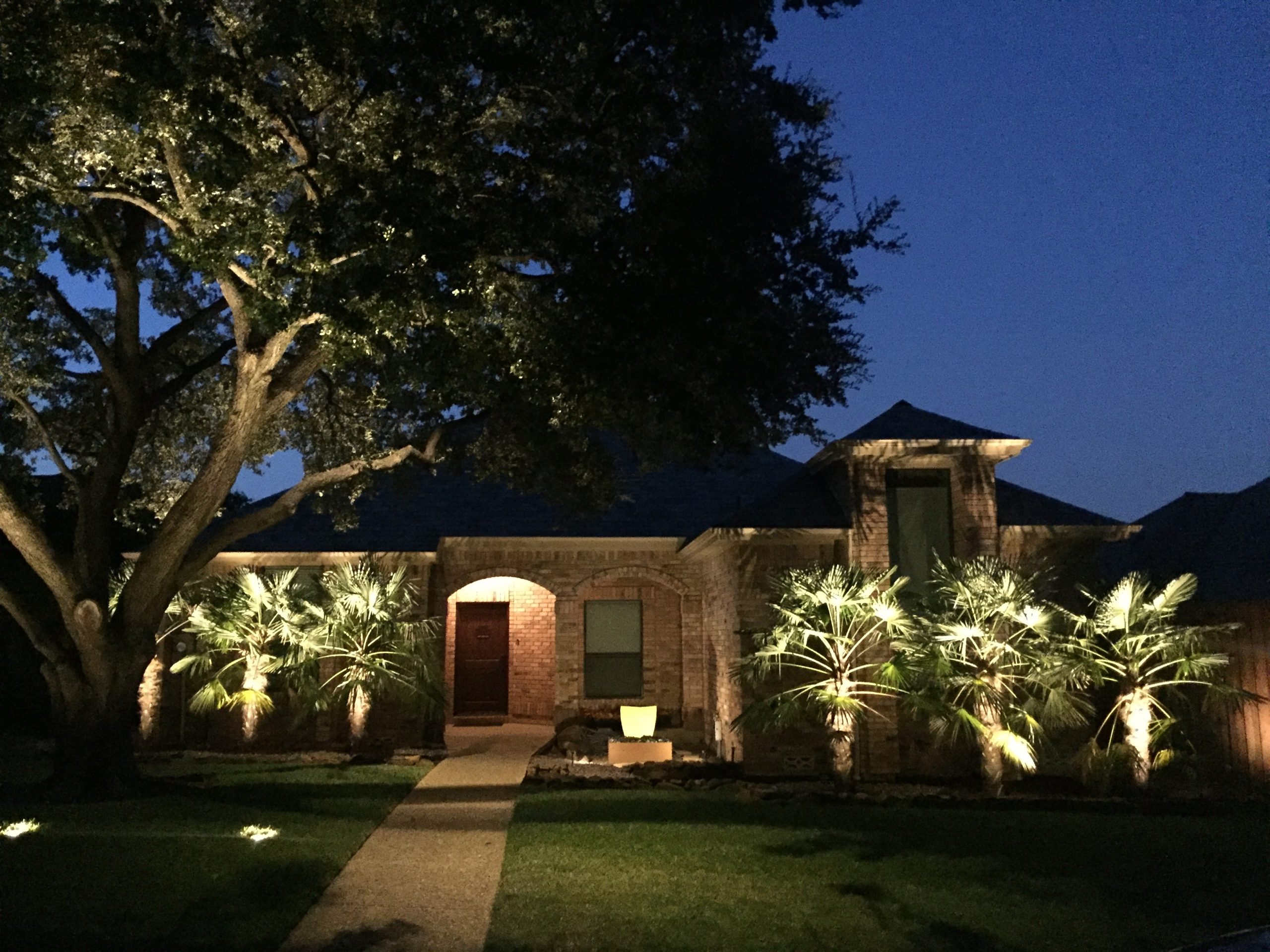
Modern desert entries are showing up all over Bend, especially around newer neighborhoods and mountain-modern homes. Gravel, boulders, and hardy native plants fit the high-desert feel, but at night they can either disappear into darkness or turn harsh and glary. Thoughtful entry feature lighting in Bend turns these simple materials into a warm, welcoming focal point that feels intentional and finished.
A well-lit entry makes it easier for guests, delivery drivers, and family members to find the right driveway, read the address, and safely reach the front door. It also lets the architecture and desert planting shine after sunset, so the property looks just as good at night as it does in daylight. With Bend’s strong sun, big temperature swings, and growing dark-sky awareness, the right materials, finishes, and light control make a big difference in how long your system lasts and how good it looks over time.
What Makes a Modern Desert Entry in Bend
A modern desert entry is less about big lawns and flower beds and more about texture, shape, and contrast. You usually see:
- Gravel or decomposed granite instead of turf
- Basalt or lava rock boulders as sculptural accents
- Drought-tolerant plants like sage, bunch grasses, and manzanita
- Corten steel edging or panels and simple concrete or paver walkways
These elements pair nicely with the mountain-modern homes around Bend, where clean lines, low-slope roofs, large windows, and a mix of wood and steel are common. The goal is a calm, simple look, not a busy or overly decorative one. Any lighting in this space should support that feel, not fight it.
Good entry feature lighting in Bend focuses on three main goals. First, it gently guides people from the street to the front door without blinding them. Second, it highlights key features like a cluster of boulders, a specimen tree, or a custom address wall so the entry feels special. Third, it sets a warm, inviting tone that still protects the desert night, instead of washing everything out with bright, cold light.
Smart Material and Finish Choices for Desert Fixtures
Bend’s dry air and dust can be tough on fixtures, especially at exposed entries. Picking the right fixture material is a big part of getting a long-lasting system.
Common options include:
- Brass, strong and naturally corrosion resistant, good for ground fixtures
- Copper, ages into a soft patina that fits desert tones well
- Aluminum, lighter weight, depends a lot on the quality of the coating
- Composite, often used for in-ground locations, not as pretty but very tough
In a desert-style entry, finishes that hide dust and water spots are your friend. Popular choices include antiqued brass, weathered bronze, and dark graphite or black. These finishes sit nicely next to corten steel, dark rock, and wood, so the lights feel like part of the design instead of little bright dots.
We also pay attention to how fixtures relate to the house and hardscape. Matching or echoing the tone of metal trim, railing, or door hardware gives a pulled-together look. Low-profile bollards, simple path lights, and minimal wall fixtures usually suit a modern desert entry far better than traditional lanterns with glass panes and scrolls.
Handling Heat, UV, and Seasonal Swings in Bend
Bend’s climate is beautiful, but it is not gentle. High-altitude sun beats down all summer, especially on south- and west-facing entries. Afternoons can be hot, then nights turn cool or even cold outside the warm season. Ice, snow, and wind are part of the picture too.
These conditions affect more than just the fixture body. Lenses can yellow, gaskets can dry out, and low-quality LED boards can struggle with higher operating temperatures. That is why we look for UV-stable lenses, quality powder-coated housings, and LED components designed for heat. Good parts keep color consistent and prevent early failures.
How the system is installed also matters. For long life in Bend, we focus on:
- Deep, solid mounting into stable base materials
- Proper sealing and drainage around in-ground fixtures
- Wire connections that can breathe but still block moisture and dust
- Transformers and wiring sized correctly for the load and distances
When those details are handled well, your entry lighting is much more likely to make it through many freeze-thaw cycles without sagging, fogging, or flickering.
Dark-Sky Friendly Statement Lighting
Central Oregon has a strong dark-sky mindset, and many neighborhoods care about glare and light spill. Desert entries usually have open views and big skies, so too much light can feel harsh very quickly. The good news is that you can still create a bold, sculptural look while staying dark-sky friendly.
Fixture design and placement are key. Fully shielded fixtures that hide the light source from direct view help cut glare. We favor downlighting instead of uplighting when possible, especially on walls, soffits, and entry features. Tight beam spreads let us put light only where it is needed, which keeps it out of neighbors’ windows and out of the sky.
Instead of a few very bright floodlights, we like to build drama with layers and contrast:
- Warm color temperatures that feel like soft firelight
- Lower lumen levels that still give enough visibility
- Accent light targeted at boulders, address walls, or a single tree
- Path and step lights that focus on safety without washing the whole yard
This approach keeps the entry special and easy to use, but still respectful of the larger desert night.
Designing for Fall and Winter Entry Use
In Bend, the front entry works hardest when days are short. By late fall and through winter, people often leave and come home in the dark, sometimes with snow and ice on the ground. That is when smart entry feature lighting in Bend really proves its worth.
Layered lighting helps the space work in different conditions. We often combine:
- Path and step lighting to show edges and changes in height
- Low-level wall or bollard lighting at key turns or pinch points
- Soft moonlighting from trees or architectural points to give gentle overall light
- Focused accents on address markers or entry columns for quick recognition
Snow can reflect light, so we keep levels comfortable even when surfaces are white and bright. At the same time, the modern desert feel stays intact, with clean lines of light and shadow rather than big hot spots.
For homes and commercial entries that use permanent architectural lighting along rooflines or soffits, we think carefully about how it pairs with ground lighting. Soft linear accents can define the shape of the house without overpowering the desert foreground. Holiday lighting can be layered in seasonally, as long as it is installed in a way that protects existing fixtures and does not undo carefully planned dark-sky-friendly choices.
Planning a Bend Desert Entry That Lasts
Designing a modern desert entry is very site specific. Driveway length, slope, snow storage areas, and how the house sits on the lot all affect what type of lighting will work best. We like to look at how you actually approach the home, where visitors park, and which features you love most, then build the lighting plan around that real-world use.
From there, we choose fixture materials, finishes, beam angles, and control options that fit Bend’s climate and local expectations about night lighting. The result is an entry that looks clean and modern, works smoothly through heat and winter, and respects the shared desert sky.
Get Started With Your Project Today
Transform your front entry into a welcoming, well-lit focal point with CLG Lighting guiding the entire process. Explore how our entry feature lighting in Bend can highlight your architecture, improve safety, and create a memorable first impression. If you are ready to discuss ideas or schedule a site visit, simply contact us and we will help you plan the right solution for your home.