
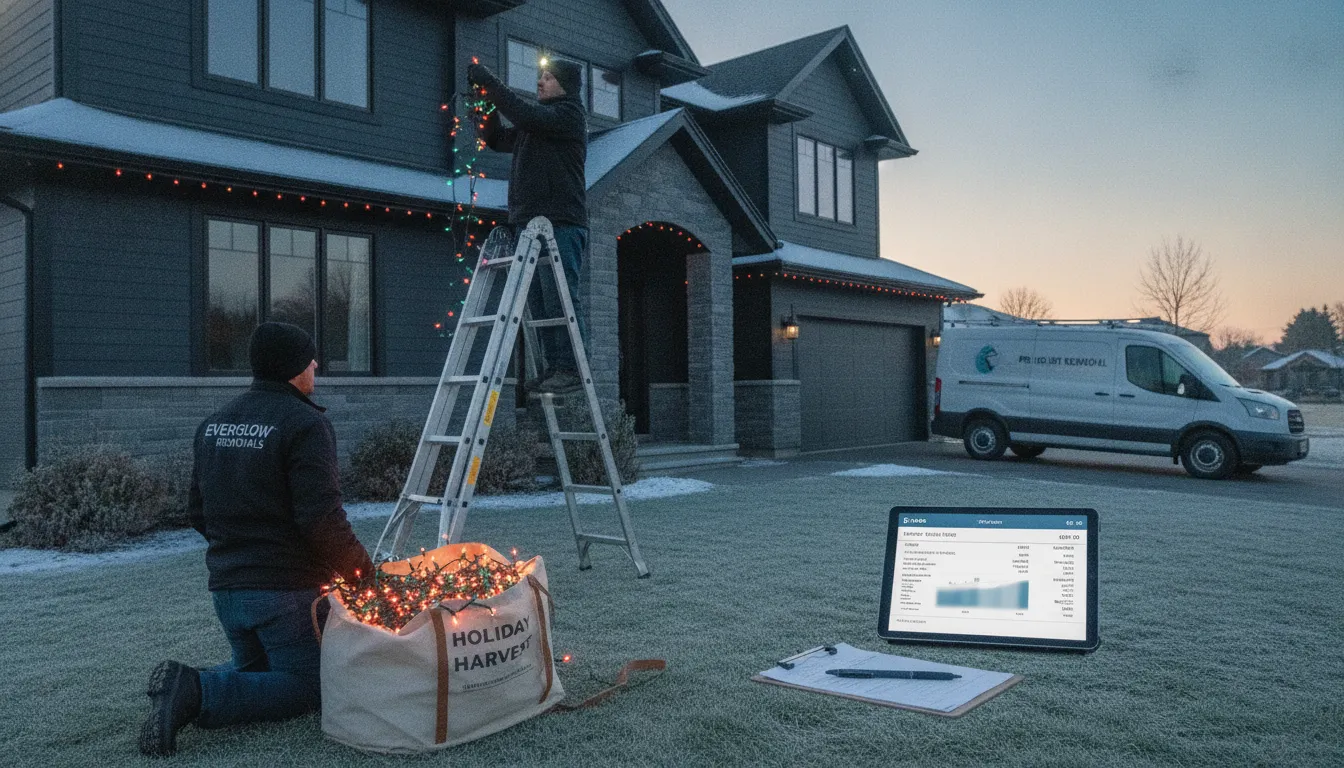
Taking down holiday lights can feel like a small job until you’re facing a wet roof, tangled strands, and a ladder. Hiring a crew can save time and keep you off high or slippery surfaces, but it helps to know what the service may cost before you book. The professional Christmas light removal cost depends on the size of your display, where the lights are installed, and what the provider includes. Some companies bundle takedown with installation, while others charge separately for removal, packing, or storage. This guide explains common price ranges, the details that affect your quote, and the questions to ask Oregon lighting providers before scheduling service.
Key Takeaways
- Budget with a range, then get a tailored quote: Separate removal often falls between $100 and $400, but display size, roof access, and property type affect the final price.
- Check the full service scope: Confirm whether the quote includes packing, storage, disposal, travel, and any extra work before comparing providers.
- Plan around safety and scheduling: Ask how the crew handles weather delays and difficult access, especially for steep rooflines or commercial properties.
How Much Does Professional Christmas Light Removal Cost?
Professional Christmas light removal typically costs $100 to $400 when it is priced separately from installation, according to HomeGuide’s Christmas light cost guide. Treat that range as a starting point, not a guaranteed quote. The price for your property depends on how much lighting needs to come down, where it is installed, and whether the provider will also pack or store it.
A straightforward residential display may require less time than a large installation with lights on several rooflines, trees, or hard-to-reach features. Commercial properties can involve longer façades, more extensive displays, and scheduling requirements that affect crew time. Since those details vary from one site to another, ask for a property-specific estimate rather than assuming a residential range applies to a business.
When comparing bids, look at the complete service price, not only the removal line. Some installers include takedown in a seasonal package; others bill for it separately or charge for related services. For Oregon homeowners and businesses, it’s also useful to confirm the expected removal window, since winter weather and access conditions can affect when crews can safely work. A written quote that lists the areas, labor, and extra services makes it easier to plan and compare providers.
What Do Homes and Businesses Typically Pay?
For a home, expect a separate removal charge to fall around $100 to $400, based on the general range reported by HomeGuide. A simple display may cost less than a larger setup, but the final quote depends on the amount of lighting and the effort needed to reach it.
Businesses should request an on-site or detailed property assessment. A storefront, office, or larger commercial building may have more lighting and access needs than a typical home, so a residential estimate may not reflect the work involved. Ask the provider to itemize the removal scope and any fees for equipment, travel, or scheduling.
How Do Per-Foot Rates, Flat Rates, and Minimum Charges Compare?
Some providers charge a per-foot removal rate, while others quote one flat amount for the full job. A per-foot price can help you compare similar displays, but first confirm what the measurement includes. Rooflines, trees, windows, and building façades may be measured or priced differently. Ware Landscaping’s pricing guide notes that some companies charge an additional $1 to $3 per foot for removal, while others bundle it with installation.
A flat rate gives you a single price for the agreed scope, which can be simpler when a project includes several areas. Providers may also set a minimum charge for smaller jobs. Ask how the estimate was calculated and whether it includes every section you want removed. Get the total in writing so you can compare it with other quotes on the same basis.
What Does a Removal Quote Include?
A removal quote should identify which lights the crew will take down, such as roofline strands, tree lighting, or decorations on a commercial façade. It should also clarify whether the price includes labor, equipment, travel, and packing. Don’t assume storage or disposal is included; ask about those services separately.
If the installer supplied the lights, find out whether the company keeps them or returns them to you. For a business, confirm which parts of the property are included and whether crews can work within your operating hours. A clear scope helps prevent surprise charges and makes it easier to judge whether two estimates cover the same work.
Why Does Separate Removal Cost More?
Takedown requires crew time, ladders or other equipment, and careful handling to avoid damaging the lights or property. Steep rooflines, wet surfaces, and hard-to-reach installation points can make the work slower. Nexwave Lighting outlines common safety and access challenges that can affect a removal job.
When a company bills for removal separately, it must schedule a dedicated visit and account for labor and travel as a standalone service. That may cost more than adding takedown to an installation package. Ask whether the provider offers a combined seasonal price, and confirm what the removal service includes before booking.
What Do Homeowners Often Misunderstand About Removal Costs?
A common mistake is comparing one provider’s installation-only price with another provider’s price for installation and removal. The lower figure may not include takedown, packing, or storage, which can change the total cost. ABC Home and Commercial’s installer selection guidance recommends checking what each estimate actually covers.
Ask every provider for the full seasonal cost, including removal and any services you expect to need. Check whether the company uses a per-foot rate, a flat price, or a minimum charge, and ask about possible extra fees. Comparing written estimates with matching scopes gives you a more useful picture than choosing based on the first number alone.
What Affects Christmas Light Removal Costs?
Christmas light removal costs depend on more than the number of lights on a home or building. The length and shape of the roofline, the height of the structure, and how easily crews can reach each area all affect the time and equipment needed. A simple, low roof may be quicker to clear than a tall property with steep pitches, multiple peaks, or lights wrapped around trees.
The installation itself matters, too. Custom displays, delicate clips, and tangled or damaged strands can take extra care to remove. The quote may also depend on whether you rent the lights from the installer or own them, and whether removal is bundled with installation or billed separately. For example, Ware Landscaping’s pricing guide notes that some companies charge an additional $1 to $3 per linear foot for takedown. Rates and services vary, so ask how your provider calculates the full cost.
When requesting an estimate, share details about the property, light display, and any access restrictions. Ask what the price covers, including packing, storage, and disposal. A clear scope makes it easier to compare quotes and understand which services are included.
How Do Property Size, Roofline, Height, and Access Affect Price?
A larger property usually takes more time to clear because crews have more roofline and landscaping to cover. Roofline length offers a useful starting point, but shape and access can matter just as much. Multiple peaks, dormers, steep sections, and lights attached to trees or other structures may require additional work.
Height can affect the equipment and safety measures a crew needs. Limited ladder placement, landscaping near the building, gates, or other obstacles can also slow the work. When asking for a quote, describe the roof height, steep areas, and any access challenges. Photos of the front, sides, and back of the property can help the installer estimate the job more accurately.
How Do Installation Complexity and Light Condition Affect Price?
A basic roofline outline is generally more straightforward to remove than a custom display with lights wrapped around trees or attached to hard-to-reach features. The type and placement of clips or fasteners can affect how carefully crews need to work to protect gutters, shingles, siding, and the lights.
The condition of the strands also matters. Tangled, brittle, or damaged lights may take longer to handle, sort, or dispose of. Ask whether the estimate covers takedown only or includes testing and organizing lights for next season. It’s also worth asking about the provider’s safety practices and materials. The Light Pros’ guide to turnkey Christmas light installation recommends looking beyond the initial price when evaluating an installer.
How Do Light Ownership and Installer Affect Price?
If you rent lights from the company that installed them, removal may be included in the seasonal service. The company keeps the lights and may also handle packing and storage. If you own the lights, confirm whether the crew will pack and label them or leave them ready for you to store.
Installers structure their pricing differently. Some quote installation and removal as separate services, while others offer a package that covers installation, maintenance, takedown, and storage. HomeGuide’s Christmas light cost guide notes that removal is often included when customers rent lights from the installer. Check the written quote to see whether “removal” means taking lights down only or includes packing and storage as well.
What Requirements Apply to Homes and Commercial Properties?
For any property, removal work should account for electrical safety, working at height, and the conditions crews may face on the day. Tall or steep rooflines can require specialized equipment and added precautions. Ask whether the provider has experience with your property type and carries liability insurance. Grants Outdoor recommends confirming liability coverage before hiring an installer, so you understand how accidental damage is handled.
Commercial properties may need extra planning around business hours, deliveries, customer access, or building management rules. Large façades, signs, and shared walkways can affect the work plan and schedule. Tell the provider about operating hours and any areas that must remain clear. Ask whether these requirements change the price or removal date, and make sure the agreed scope is documented in the quote.
What Extra Fees Should You Ask About?
A removal quote may cover only taking lights down, or it may include packing, storage, and other services. Before you book, ask what the crew will do with the lights, whether property access affects the price, and which situations could add charges. Clear answers make it easier to compare providers and avoid surprises on your final bill.
Do Packing, Storage, Repairs, or Disposal Cost Extra?
Ask whether the crew will pack and label your lights, then return them to you, or whether that service costs extra. If you want the provider to store them, confirm the annual fee, where they will be kept, and how you can retrieve them if you use a different installer next season. Ask whether the crew checks for damaged strands and whether repairs or replacement are available at an additional cost.
If your lights are no longer usable, find out whether disposal is included. Fees vary: one Christmas light removal cost guide notes that removal may be included in a per-foot rate or charged separately, while storage can carry its own annual fee. Ask for each service and its price in writing.
Do Travel, Difficult Access, or Special Scheduling Cost Extra?
Check whether the quote includes travel to your property. A rural location or a home outside the provider’s usual service area may affect the price. Share details about access before accepting an estimate, including a steep roof, multiple stories, limited parking, or a narrow path to the work area. The company can explain whether those conditions require extra labor or equipment.
If you need removal on a specific date, ask whether priority scheduling, evening work, or a narrow appointment window costs more. Your price may also depend on whether you own the lights or rented them from the installer. A holiday lighting pricing overview explains that packages covering design, installation, removal, and storage may cost more while including more services. Confirm exactly what your quote covers.
How Do Early or Late Removal, Deposits, and Payment Terms Affect Cost?
Confirm the removal window before you agree to a price. Ask whether removing the lights earlier than scheduled, or leaving them up longer, changes the fee. In Oregon, weather and safe roof access can affect when a crew can work, so find out how the provider handles delays and whether rescheduling comes with a charge.
Clarify when payment is due, whether a deposit is required, and which payment methods the company accepts. Some providers split payment between installation and takedown, while others use different terms. A contractor discussion describes a payment split between those two visits, but each company sets its own policy. Make sure your written agreement lists the total price, payment dates, and conditions that could change the amount.
When Might Damage or Unexpected Work Add Charges?
Ask what the provider considers extra work before the crew arrives. Tangled or brittle strands, hard-to-remove clips, unusual attachments, or previously damaged lights may take longer to remove than standard installations. Find out how the company handles these issues and whether it will contact you for approval before doing work that adds to the bill.
Also ask who is responsible if removal damages a light, gutter, roof, or another part of your property. Confirm that the provider carries insurance and explain how to report damage. The Light Pros’ cost guide cautions that a low quote may not include proper insurance or careful work practices. Compare each provider’s written scope and protections, not just the starting price.
When Can Timing Affect the Cost?
The date you choose can affect appointment availability, how the crew plans the work, and whether weather allows safe access to your property. A later removal date does not automatically mean a higher price, but rescheduling, a separate trip, or a tight deadline may change what a provider can offer. Ask about timing and fees before booking.
How Do Post-Holiday Demand and Seasonal Availability Affect Price?
Many homeowners request removal soon after the holidays, so preferred appointment times may fill quickly. If you need the lights down by a specific date, book early and ask whether that deadline affects the price. A separate visit or special scheduling may carry an additional charge, but policies differ by provider.
Check whether removal is included in your installation package. If it isn’t, the service may cost extra: HomeGuide’s cost overview gives a range of $100 to $400 for removal when it is not included. Ask for the fee and expected removal window in writing, and confirm whether either can change if weather delays the appointment.
How Can Weather and Roof Access Delay Removal?
Rain, wind, and slick surfaces can make roof work unsafe. A professional crew may postpone removal until conditions improve, which can shift your appointment. Ask how the company handles weather delays, how it will contact you, and whether rescheduling could add a fee.
The layout of your property matters, too. Steep or multi-level rooflines, limited ladder access, and lights installed in trees may require more time or specialized equipment. Nexwave Lighting outlines common winter removal risks, including wet conditions and unstable ladders. Share details about your roof and landscaping when requesting a quote, then check that the estimate accounts for the access and equipment the job may require.
What Scheduling Windows and Package Pricing Should You Ask About?
Ask the provider to specify the removal window, how much notice you’ll receive, and what happens if weather changes the schedule. Find out whether you need to be home or clear access to gates, walkways, and landscaping. Get any rescheduling fees and changes to the agreed scope in writing.
Compare the full package, not just the installation price. Some providers include removal and storage, while others charge for those services separately. Ask which areas are covered, who owns the lights, and whether packing or storage costs extra. This installer question checklist highlights details worth confirming, including service windows, materials, and payment terms. Clear answers make it easier to compare quotes for the same work.
What Should You Ask When Comparing Quotes?
A removal quote is only useful when you know exactly what it covers. One company may price takedown alone, while another includes packing, storage, or service for damaged lights. Ask each provider the same questions and request the answers in writing. That makes it easier to compare the work and spot costs that could come up later.
Does the Installation Package Include Removal?
If you’re hiring a company to install holiday lights, ask whether takedown is included or billed separately. Some providers price installation and removal together; others charge for each visit. Confirm whether the package also includes design, mid-season service calls, packing, or storage, since these can affect your total seasonal cost.
Ask when removal is scheduled and whether the timing is guaranteed or depends on availability. If you’re coordinating holiday lights with landscape, permanent, or bistro lighting, make sure the work plan fits your property and other scheduled services. A full-service installation package may include several steps beyond hanging and removing lights, so have the provider list each one before you approve the estimate.
What Is the Full Price, and Which Fees Cost Extra?
Ask for the total price, then request a breakdown of what it covers. The estimate should clarify labor, equipment, takedown, packing, storage, and service calls. Ask whether taxes are included and whether additional charges may apply for steep roof sections, difficult access, or changes to the agreed scope.
It’s also worth asking what happens if the crew finds tangled strands, broken clips, or damaged lights. The provider may need your approval before doing extra work, so find out how that process works and whether it affects the final bill. A lower starting price may cover removal only, leaving packing or storage as separate expenses. Ask the company to put all expected charges in writing, following the same cost details to confirm before hiring. That gives you a more accurate comparison than the headline price alone.
Who Provides and Keeps the Lights?
Clarify whether the lights belong to you or the installation company. Some providers rent lights as part of a seasonal service; others sell them to customers. Ownership can affect the quote, the services included, and what you’ll need to arrange after takedown.
If you own the lights, ask whether removal includes packing and labeling them by roofline, tree, or display area. Find out whether the company will store them or return them to you. If the provider owns the lights, ask whether the price includes maintenance or replacement and what happens to the lights after removal. Also confirm whether next season’s installation is part of the agreement or requires a new quote. Get the details in writing so you know who supplies, maintains, stores, and replaces the lights throughout the season and between seasons.
When Will the Crew Remove, Pack, or Store the Lights?
Ask for the expected removal window and how the company will contact you if weather or scheduling changes affect the date. In Oregon, rain and slick surfaces can make roof access unsafe, so check how the provider handles weather delays and rescheduling. If you have a business, ask how the schedule will limit disruption to customers, staff, or deliveries.
If packing or storage is included, confirm how the lights will be labeled, where they’ll be kept, and whether storage costs extra. Ask who is responsible for the lights between seasons and when they’ll be available for the next installation. A clear removal and storage plan should identify the timing, packing method, condition records, and each party’s responsibilities. These details help protect your lights and make next season’s setup easier to plan.
What Insurance, Damage Protection, and Guarantees Does the Provider Offer?
Ask whether the company carries liability insurance and what steps it takes if a crew member accidentally damages your roof, gutters, siding, or landscaping. Request proof of coverage, and ask whether you need to be home while the crew works. A provider should be able to explain how it handles property damage and who you should contact if you notice an issue after removal.
Find out what the company guarantees, too. This might include careful takedown, a response to reported damage, or service for lights that fail during the season. Ask about exclusions, claim deadlines, and any limits on coverage, then get the terms in writing. Reviewing the provider’s insurance and damage-protection details can help you understand what is covered before work begins.
How Can You Compare Itemized Quotes for the Same Work?
Request an itemized estimate from each provider and check that every quote covers the same areas and services. Compare the number of rooflines or display zones, light ownership, removal timing, packing, storage, and repairs. Note any conditions that could lead to added charges, such as damaged strands or areas that require special access.
Ask each company to explain unclear items and record any changes in writing before approving the work. You can also ask what the crew will do if it finds broken clips, tangled lights, or damage to the property. A written comparison of service details lets you assess the full scope, not just the quoted total. With matching details in front of you, it’s easier to see which estimate best fits your property, budget, and expectations.
Is Professional Christmas Light Removal Worth the Cost?
Professional Christmas light removal may be worth the cost if it saves you time, reduces the need to work at height, or includes packing and storage. The value depends on your property, the display, and what the quote covers. Compare the service’s full scope with the effort and equipment DIY removal would require.
How Can a Professional Save Time and Protect Your Home?
Taking down holiday lights can take longer than expected, especially when strands are tangled or clips are difficult to reach. Rooflines, ladders, and wet winter surfaces can also make removal risky. In Oregon, consider rain and slick conditions before deciding to do the work yourself.
A professional crew has experience and equipment for removing lights from roof edges, trees, and other elevated areas. That may reduce the risk of falls or accidental damage to shingles, gutters, and siding, though no service can eliminate every risk. Nexwave Lighting outlines common removal hazards, including wet weather and steep rooflines, in its guide to post-holiday lighting.
Before you hire, ask which parts of the display the crew will remove and how the company handles any damage it finds.
How Can Removal Services Simplify Storage and Next-Season Planning?
A removal service may label and pack your lights, saving you the work of untangling strands and finding space for boxes. Some providers also store customer-owned lights between seasons. Ask how the lights are organized, where they’re kept, and whether storage is included in the quote.
Pricing varies. Ware Landscaping reports that removal may be included in an installation package or charged separately at around $1 to $3 per foot. Storage can add an estimated $50 to $200 per year. Use its holiday lighting cost guidance as a starting point, then confirm the specific charges with your provider.
Planning ahead can help, too. Ask whether the crew will flag failed bulbs or damaged strands during removal, and whether repairs or replacements cost extra. You’ll have a clearer idea of what may need attention before the next season.
Why Might the Lowest Quote Cover Less?
A low quote may exclude services another provider includes, such as removing lights from trees, packing them for storage, or returning to address a problem. It may also assume easier access or a smaller display than your property requires. Compare the written scope of work, not just the total price.
Ask each company to itemize the removal areas, labor, packing, storage, disposal, and any minimum charge. Grants Outdoor cautions that unusually low quotes may reflect lower-quality materials or service in its Christmas light installation FAQ. A lower price isn’t automatically a bad deal, but you should know what it includes before booking.
If one estimate is noticeably lower than the others, ask the provider to explain the difference. An itemized quote makes it easier to compare the same work across companies.
When Might DIY Removal Be a Poor Fit?
DIY removal may not be a good fit if your display runs along a steep roofline, spans multiple stories, or reaches over hard-to-access landscaping. Consider whether you have a stable ladder, suitable footwear, and enough time to remove and pack the lights safely. If surfaces are wet or slippery, wait for better conditions.
Professional help may also make sense if you’re unsure how the lights were attached or whether removing them could damage gutters, shingles, or siding. Before hiring, ask when the crew will return for takedown and how the company handles service issues. Christmas Lights Experts DFW recommends asking installers about removal and follow-through in its list of questions to ask before hiring.
If you remove the lights yourself, work with another person, avoid reaching beyond the ladder, and stop if conditions feel unsafe.
How Can Oregon Homeowners Plan for Removal?
A clear removal plan helps you budget accurately and avoid last-minute surprises. Before hiring an installer, confirm the schedule, what the price includes, and how the crew will handle Oregon’s wet winter conditions and your property’s access needs.
Confirm the Removal Window Before You Hire
Ask whether the company provides a set removal date or a scheduling window. Find out how it will contact you if weather or crew availability causes a delay, and whether someone needs to be home to provide access to gates, outlets, or storage areas.
Clarify what happens to the lights after they come down. Will the crew label strands by location, check for damage, and pack them for storage? Who owns the lights, and who is responsible for storing them until next season? Getting these details in writing makes it easier to compare estimates and understand what you’re paying for. This Christmas light installer checklist offers useful questions about scheduling, labeling, and storage.
Ask How Local Weather and Property Access Affect Scheduling
Rain, ice, and wind can make rooflines, ladders, and walkways unsafe. Ask how the crew decides when conditions are safe for removal and what happens if bad weather delays the appointment. A professional provider should explain its safety practices and how it will keep you updated about schedule changes.
Share any access challenges before the crew arrives. Tell the provider about steep or tall rooflines, narrow side yards, locked gates, nearby trees, or areas where a ladder may be difficult to position. These details can affect the time, equipment, and cost of the work. For more context on the risks of winter takedown, read this overview of post-holiday light removal.
Coordinate Removal With Other Outdoor Lighting Services
If you use one provider for holiday, landscape, permanent, or bistro lighting, ask whether it can coordinate removal with another service visit. Combining appointments may make it convenient to check a timer, address a loose connection, or discuss lighting plans for the next season. Confirm which services are included and whether inspections or repairs cost extra.
Also check whether removal and storage are part of your installation package or billed separately. Some companies include takedown in a seasonal plan; others charge for it as a separate service. Ask for an itemized estimate so you can compare the full cost, rather than installation prices alone. This guide to choosing a Christmas light installer recommends confirming which services the package covers, including removal and storage.
Related Articles
- How Much Does Christmas Light Installation Cost?
- Christmas Light Installation Cost Per Foot
- How Much Does a Turnkey Christmas Light Installation Cost?
- Your Christmas Light Installation Questions Answered
- How to Hire a Christmas Light Installer: Questions to Ask
Frequently Asked Questions
How much should I budget for Christmas light removal?
A separate residential takedown service often falls between $100 and $400, but your quote may differ based on the display and property. Ask for a written estimate that reflects your specific setup.
Is removal usually included with Christmas light installation?
It depends on the provider and package. Some seasonal plans include takedown, while others charge for it separately. Check whether packing and storage are also covered.
What details can help me get an accurate quote?
Share the areas with lights, roof height and shape, access challenges, and whether you own or rent the lights. Photos of the property can help the provider assess the work.
Can bad weather delay professional removal in Oregon?
Yes. Rain, wind, or slick surfaces can make roof work unsafe. Ask how the company handles weather delays, updates you about schedule changes, and reschedules the appointment.
How can I compare removal quotes fairly?
Make sure each estimate covers the same display areas and services. Compare labor, equipment, packing, storage, travel, and possible extra fees, then confirm the agreed scope in writing.