
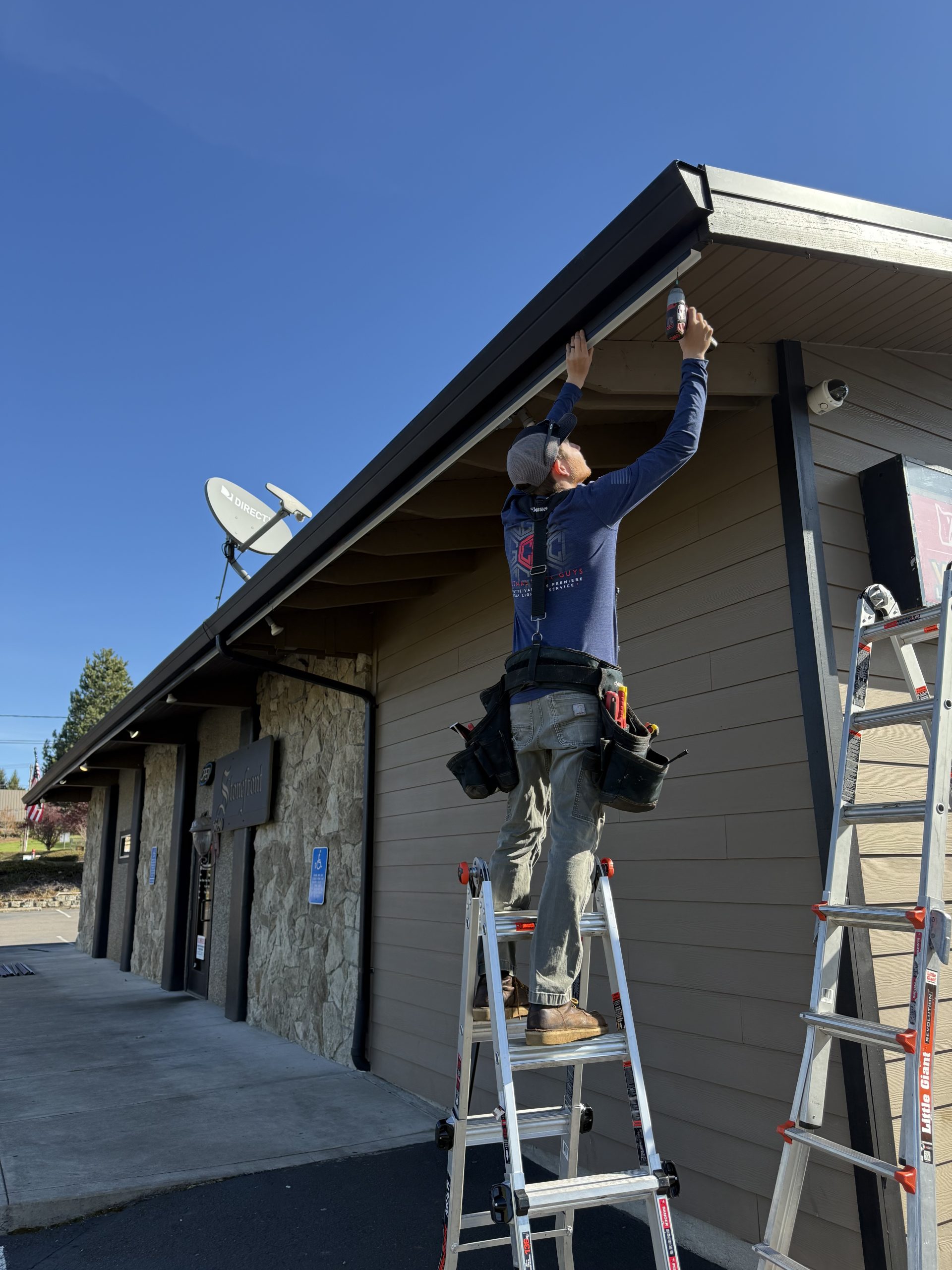
Maximize Lighting Value in Oregon’s Tough Climate
Outdoor lighting can make a home or business in Oregon look amazing at night. Paths feel safer, trees stand out, and buildings have a warm, welcoming glow. But behind that beauty, there is rain, moisture, corrosion, and energy use quietly affecting what you really spend over time.
When you plan new lighting, the upfront number is only part of the story. Long-term maintenance, service needs, energy use, and warranty coverage all play a big role in what you pay over the life of the system. That is especially true in our wet, variable Oregon climate.
In this article, we compare two main options: traditional landscape lighting installation in Oregon and permanent architectural lighting, including permanent holiday-style systems. We look at how each holds up in rain, how often they need service, and what helps keep energy and repair costs low. At CLG Lighting, we focus on outdoor and permanent lighting systems that are built with this long view in mind.
What Drives the Real Cost of Outdoor Lighting in Oregon
When we talk about “cost of ownership,” we mean everything you invest from day one until you retire or replace the system. That includes more than just the fixtures and installation.
Real cost of ownership usually includes:
- Fixtures, transformers, wiring, and controls
- Professional design and installation labor
- Energy use every month
- Maintenance visits and cleaning
- Repairs, replacements, and upgrades over 5 to 15 years
Oregon’s climate adds stress on every part of that list. Our region sees heavy rain, lots of wet soil, moss growth, and in many areas, freeze and thaw cycles. Add coastal moisture and UV exposure in sunnier months, and outdoor fixtures are under constant attack from water and corrosion.
Low-cost or DIY systems often use thin metals, weak seals, and basic connectors. In our climate, that can mean:
- Loose or failing connections from water intrusion
- Corroded screws and brackets
- Cloudy lenses and faded finishes
- Shorter fixture life and more frequent replacements
Architectural-grade systems, on the other hand, are built for professional installation and long-term service. They are designed to be opened, cleaned, adjusted, and repaired. For Oregon homeowners and businesses, that durability, plus easy access to service, is just as important as the initial quote.
Upfront Costs: Landscape Lighting vs. Permanent Lighting
Professional landscape lighting installation in Oregon usually starts with design. Someone walks the property, studies how you move around it, and plans fixture locations, beam angles, and wiring routes. Upfront costs often cover:
- Outdoor-rated LED fixtures
- Transformers and low-voltage wiring
- Connectors and junctions rated for wet locations
- Labor to trench, run wire, mount fixtures, and aim lights
Permanent architectural lighting, and permanent holiday-style systems, tend to have a higher starting investment. The fixtures are often mounted along rooflines, eaves, or building details and tied into advanced control systems that can change colors, create patterns, or schedule shows. That brings in:
- Specialized, often custom-built fixtures or linear lighting
- More complex mounting hardware and sealants
- Control boxes, software, and integration with smart devices
But smart planning at install can create savings over time. With both landscape and permanent systems, it helps to:
- Design logical zones so you only light what you need
- Run extra or larger gauge wire in key areas to support future additions
- Place transformers where they are accessible for service
- Plan around mature trees, slopes, and drainage to avoid costly rework
Careful, professional installation in Oregon conditions can prevent problems like cut wires, water pooling around fixtures, or lights blocked by fast-growing plants. That reduces “do it twice” costs later on.
Long-Term Maintenance, Rain, and Corrosion Risks
Oregon’s moisture is not just a background detail; it is one of the main forces shaping maintenance needs. Soft, wet soil moves, moss creeps over fixtures, and constant dampness pushes water into every weak point.
For traditional landscape lighting, typical maintenance can include:
- Re-aiming or leveling fixtures as soil shifts
- Cleaning lenses covered in dirt, pollen, or moss
- Trimming plants so they do not block light or overheat fixtures
- Replacing the occasional fixture, lamp module, or failed connector
Permanent architectural lighting lives higher up but has its own set of checks:
- Inspecting mounting points for movement, rust, or seal failure
- Checking seals and gaskets to keep water out of housings
- Looking over wiring and connectors along rooflines or soffits
- Updating or resetting control systems and firmware when needed
Corrosion-resistant materials matter a lot over a 5- to 10-year period. Quality systems often use:
- Brass or copper fixtures
- Marine-grade aluminum where weight is a concern
- Stainless steel hardware and mounting screws
- Gel-filled or sealed connectors rated for direct burial
These features can cost more at the start but often lower the number of service calls, reduce surprise failures, and push replacements farther into the future. Imported bargain kits or DIY systems may need frequent troubleshooting, new fixtures, or complete replacement after only a few seasons in Oregon weather.
Energy Use and Efficiency Over Oregon’s Seasons
LED technology has changed outdoor lighting in a big way. Both landscape lighting and permanent architectural lighting today can run on low-voltage LED systems that use much less energy than older bulb types.
Energy use depends on:
- How many fixtures are installed
- The wattage of each fixture
- How many hours per day the system runs
- How bright the lights are set
Most landscape lighting around a home or business runs from dusk until bedtime. It often focuses on paths, steps, driveways, and feature trees. Permanent architectural lighting, especially on commercial buildings or in busy neighborhoods, might stay on longer and may include color-changing or dynamic effects.
To keep monthly bills under control, good design can include:
- Properly sized transformers that are not overloaded
- High-efficiency LED fixtures with the right output for each task
- Dimming and scheduling, so you do not run everything at full power all night
- Zoning that lets you turn off low-priority areas when not needed
With smart controls, you can run subtle, low-level lighting most nights, then bring out brighter or more colorful looks only for special events. That reduces energy use and also lowers thermal stress on components, which can help them last longer. Often, those efficiency gains help offset the higher upfront investment in quality fixtures and controls.
Warranty, Service, Lifespan, and Choosing the Right Strategy
Warranties are a big part of long-term value, but many people only look at the length and skip the details. Quality manufacturers and professional installers often cover:
- Fixtures and finishes
- Transformers and control gear
- Workmanship on connections and installation
For both landscape and permanent lighting, it helps to understand how water intrusion, corrosion, and finish wear are handled, especially in a climate like Oregon. Some warranties may limit coverage if fixtures are installed in standing water or in ways that trap moisture against the housing.
Local, specialized service makes a big difference when storms, plant changes, or accidents happen. A provider who knows Oregon soils, local building styles, and typical weather patterns can design realistic maintenance plans, suggest sensible inspection intervals, and respond quickly if something fails.
When you are weighing your options, a simple way to think about long-term savings is to look at:
- Property type: home, rental, or business
- Main goals: safety, curb appeal, branding, or holiday impact
- Your interest in maintenance: low-touch, hands-on, or somewhere in between
Some properties do best with high-quality landscape lighting only. Others benefit more from permanent architectural lighting that can support branding or frequent events. Many do well with a hybrid approach, where landscape lighting shapes the property and permanent lighting highlights the roofline or building features. In every case, paying attention to total cost of ownership helps your lighting stay beautiful, safe, and efficient for years in Oregon’s tough but rewarding climate.
Brighten Your Outdoor Space With Expert Design
Transform your property with professional landscape lighting installation in Oregon tailored to your home’s unique features. At CLG Lighting, we carefully plan each fixture for both beauty and safety, so your outdoor areas look inviting after dark. If you are ready to talk through ideas or schedule a consultation, simply contact us and we will help you get started.