
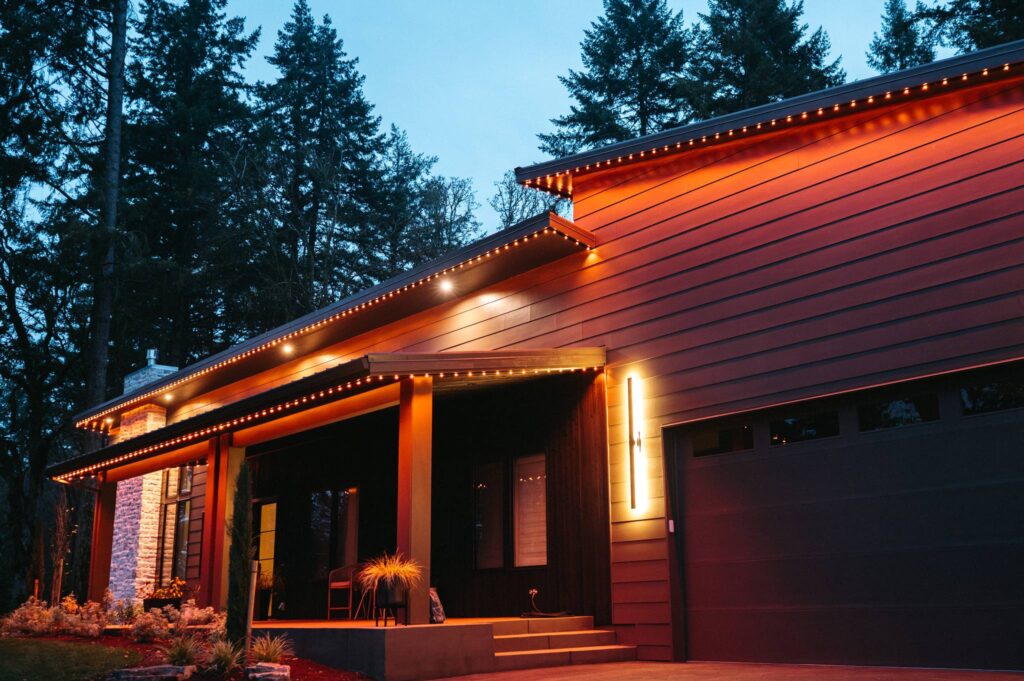
Transforming Eugene Nights with Thoughtful Lighting Design
Outdoor lighting can completely change how your home feels after dark. With the right design, a quiet Eugene yard at dusk turns into a warm, welcoming extension of your living space. Paths feel safer, trees and garden beds stand out, and the house itself has a soft nighttime glow instead of disappearing into the shadows.
Many homeowners hear terms like moonlighting and permanent lighting and are not quite sure what they actually mean. Both sound nice, but they serve different purposes and create very different effects. Knowing how they compare helps you avoid guesswork and plan a system that truly fits your property.
In this article, we will break down moonlighting and permanent architectural lighting in simple language. We will talk about how each one works, why Eugene’s climate and trees matter, and how a thoughtful mix of both can give you beauty, safety, and long-term value. At CLG Lighting, we work with architectural-grade outdoor lighting every day in the Willamette Valley, so we design with our local rain, tall trees, and soft summer nights in mind.
What Moonlighting Really Means in Landscape Design
Moonlighting is a landscape lighting technique that copies the look of natural moonlight. Instead of shining bright lights up from the ground, we place fixtures high in mature trees or on tall architectural features. The light shines down through branches and leaves, so it falls in gentle, dappled patterns on lawns, patios, and garden beds.
Good moonlighting feels calm, not harsh. It is great for:
- Romantic ambiance on patios and decks
- Soft shadows across walkways and paths
- Highlighting ornamental trees, shrubs, and planting beds
- Keeping most of the yard darker so you still see the night sky
Because the light comes from above, it feels more like actual moonlight and less like a spotlight. This helps with dark sky concerns and keeps glare away from your eyes and your neighbors.
In Eugene, moonlighting pairs especially well with:
- Tall evergreens and mature maples that can safely hold fixtures
- Patios and outdoor seating areas used on warm summer evenings
- Water features, where the light can shimmer and reflect on moving water
We also have long periods of cloudy fall and winter weather. Moonlighting gives just enough glow on those gray evenings to make steps, paths, and outdoor rooms feel safe and inviting, without flooding the yard with bright light.
How Permanent Lighting Shapes Your Home’s Nighttime Identity
Permanent architectural lighting is a different kind of system. Instead of lighting from trees or garden beds, the fixtures are built into your house itself. They are usually installed along:
- Rooflines and eaves
- Gables and peaks
- Key structural lines or trim details
These fixtures are low-profile and meant to stay up all year. When done well, they provide a clean line of light that shapes how your home looks from the street. Many systems offer flexible color control too, so you can switch from warm white to bold colors whenever you want.
In Eugene neighborhoods, permanent lighting can:
- Boost curb appeal and help your home stand out at night
- Highlight the character of Craftsman, mid-century, or modern architecture
- Create a bright, clear entry point so guests know exactly where to go
Because our Pacific Northwest weather includes a lot of moisture and temperature swings, the fixtures and wiring need to be designed to hold up. Permanent lighting helps you avoid climbing ladders for seasonal decorating or swapping temporary lights. With smart control options, you can create scenes for holidays, game days, or family events, then save those settings for next time.
Moonlighting vs. Permanent Lighting in Eugene Landscapes
Both moonlighting and permanent lighting can be beautiful, but they are not meant to do the same job.
Moonlighting focuses on the landscape. Its purpose is:
- Natural, soft ambiance
- Gentle safety lighting along paths and sitting areas
- Drawing attention to trees, beds, and outdoor rooms
Permanent lighting focuses on the architecture. Its purpose is:
- A clear, defined roofline at night
- Stronger visibility from the street or driveway
- Flexible colors and scenes for different occasions
When it comes to installation and upkeep:
- Moonlighting uses fewer fixtures, but they are mounted higher, often in tall trees. That makes placement and wiring more complex and requires safe access for maintenance or adjustments.
- Permanent lighting uses more linear, integrated fixtures along the house. Once installed properly, they are designed to stay in place long term with minimal handling.
Both approaches, when planned and installed professionally, are built for long life. You should expect quality components that stand up to Eugene’s rain and temperature changes.
Many Eugene homeowners find that a mix of both styles works best. For example:
- Moonlighting over mature trees and outdoor seating areas to soften the yard
- Permanent lighting along the roofline and entry to define the home’s shape and guide guests
Together, they create a cohesive nighttime look where the house and yard feel like one connected space.
Designing for Seasons, Weather, and Lifestyle in Eugene
Eugene has a steady rhythm across the year. In early summer, sunsets come late and people linger outside. From fall through early spring, evenings are darker and wetter, and safety lighting becomes more important.
Moonlighting and permanent lighting can both support that rhythm:
- Moonlighting gives summer gatherings a soft, relaxing feel around decks, play areas, and fire pits.
- Permanent lighting keeps driveways, stairs, and the front door clearly visible on rainy winter nights.
Here are a few practical design ideas:
- A family-focused backyard might use moonlighting over a play area, lawn, and fire pit, with low-level path lights to connect everything.
- The front of the home might have permanent lighting along the roofline in a warm white tone for everyday use, then switch to color scenes for special events in December or for local game days.
Professional design and installation are especially important in our area because of:
- Correct placement in tall trees so fixtures are secure and not damaging branches
- Good glare control so the light falls where you need it without shining directly into windows
- Choosing weather-resistant components that can handle lots of rain and seasonal changes
- Smart controls that let you adjust timing and brightness to match your routine and energy goals
When all of this comes together, you get a system that looks good, feels safe, and is easy to live with.
Planning Your Ideal Eugene Lighting System with Confidence
The best starting point is simple. Think about how you actually use your outdoor spaces at night right now. Where do you wish you had more light? Which areas feel dark or a little unsafe? Which parts of your yard or house would you love to see highlighted after sunset?
If you picture soft, natural light in the trees, relaxed evenings on the patio, and a stronger connection to your garden, you may lean more toward moonlighting. If a bold, defined roofline, clear visibility from the street, and flexible color scenes appeal to you, permanent architectural lighting might be your focus. Many Eugene homes benefit from a hybrid layout that uses both.
At CLG Lighting, we design and install architectural-grade outdoor lighting systems for homes and businesses in our region. Our team works with landscape lighting, moonlighting, and permanent lighting installation in Eugene, so we understand how to blend these tools into one clear, attractive plan that fits local weather, architecture, and plant life. With a thoughtful design, your property can feel just as welcoming at night as it does during the day.
Transform Your Property With Custom Permanent Lighting Today
At CLG Lighting, we design and install architectural lighting that fits your home or business and works beautifully all year. If you are ready to explore permanent lighting installation in Eugene, our team will walk you through every step, from planning to final setup. Tell us about your goals, and we will recommend a solution tailored to your space and budget. Have questions or want to schedule a consultation? Simply contact us to get started.