Safer, Smarter Holiday Lighting on Forest Heights Hillsides
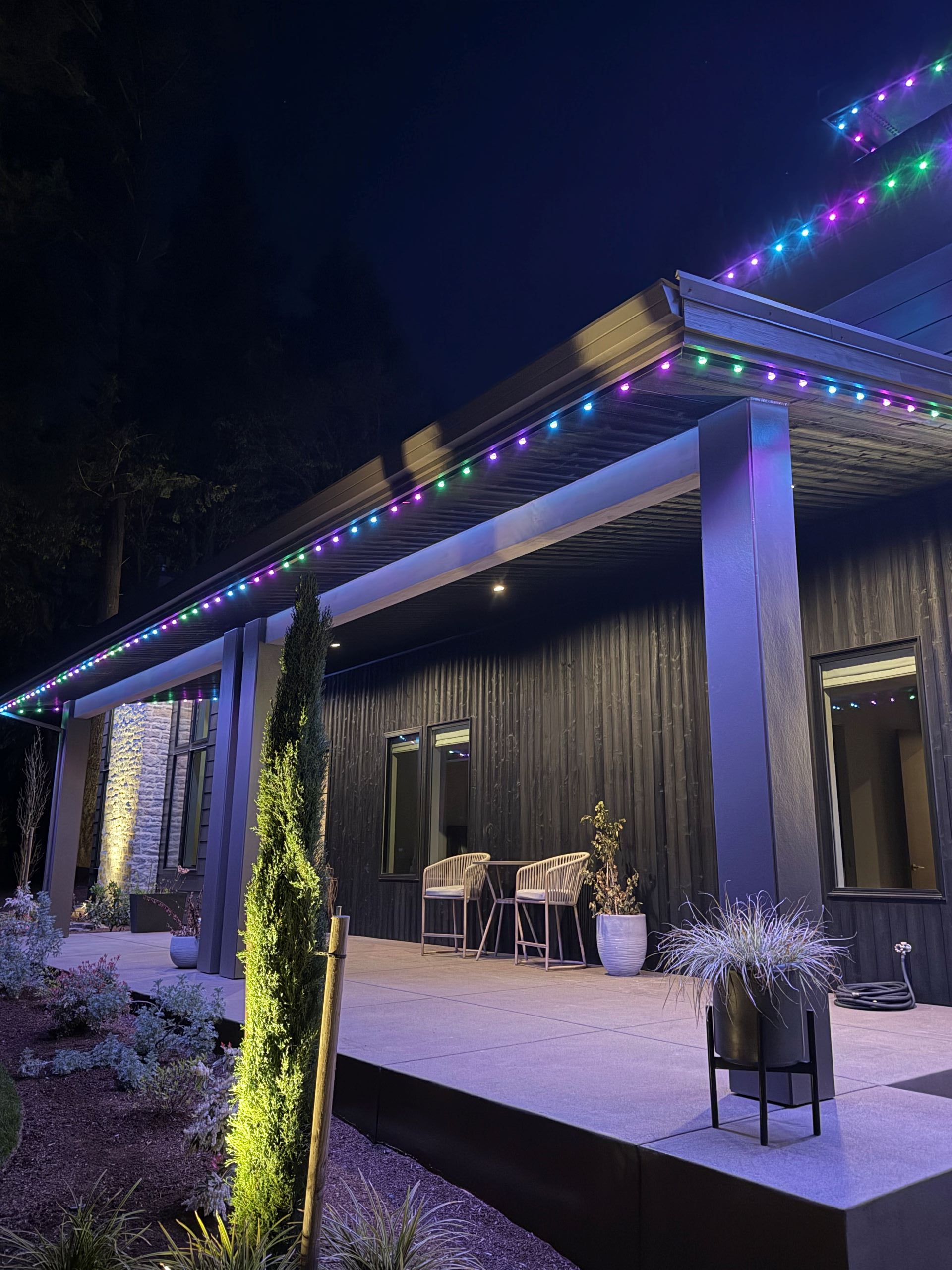
Permanent architectural and holiday lighting can do a lot for a Forest Heights home. It can make steep driveways feel safer at night, outline those tall rooflines, and give your trees a soft glow against the evergreens. On a hillside, good lighting is not just about looks; it is also about comfort and confidence every time you come home in the dark or rain.
Steep streets, stacked retaining walls, and view-sensitive lots make permanent Christmas lights installation in Forest Heights very different from a flat suburban cul-de-sac. Slopes can move, soils can erode, and neighbors often share views of the same wooded canyon. That means lighting needs to be planned with both engineering and rules in mind, not just decor.
In this article, we will walk through how we think about steep hillside homes: reading the slope before drilling, choosing mounting methods that respect fragile soils, planning access and worker safety, and working with Forest Heights HOA expectations and City of Portland visibility guidelines.
Reading the Hillside Before You Drill a Single Hole
On a steep lot, a careful site assessment is the first step before a single fastener goes into wood, concrete, or stone. We want to understand how the hill behaves so the lighting system does not cause problems later.
We pay close attention to things like:
- Soil type and moisture level, especially areas that stay damp
- Existing erosion patterns, ruts, or slumps on the slope
- Retaining walls, rockeries, and drain outlets
- Where water flows in heavy rain, including swales and ditches
On the house itself, roof pitch and height matter a lot. A three-story rear elevation over a ravine is a very different access problem than a one-story front porch. Fascia condition, rafter tails, and gutter details help determine where permanent tracks and fixtures can be safely attached.
We also look at:
- Deck framing and railings that might support discreet lighting
- Tree canopies that might block views or catch snow and ice
- Locations for transformers and control gear that stay dry and reachable
If there are existing geotechnical reports, waterproofing details, or foundation drains, those are part of the puzzle too. We want to stay away from hidden drain lines, keep fasteners out of critical membranes, and avoid anything that might change how water moves across an already sensitive slope.
Mounting Methods That Protect Erosion-Prone Slopes
On steep Forest Heights sites, how and where lights are mounted is just as important as how they look. Permanent Christmas lights installation in Forest Heights often blends several structural approaches so we respect both the building and the hillside.
Common mounting methods for architectural and holiday lighting include:
- Fascia and rafter mounts that use existing framing for strength
- Stand-off brackets that hold tracks away from siding or stone veneer
- Masonry anchors in solid concrete or block, not loose rockery joints
- Non-penetrating rails on suitable flat roof sections, weighted instead of screwed
Each method has a different impact on the structure and the way water drains off the building. Our goal is to keep water flowing where it should, not into wood, behind siding, or onto a bare slope.
For landscape lighting on hillsides, we usually favor low-voltage systems with:
- Path and step lights along stairs and walkways
- Small accent fixtures on trees or architectural features
- Carefully routed wiring that follows existing edges or walls
On erosion-prone slopes, we avoid long open trenches that slice across the hill. Instead, wiring can follow the top of retaining walls, underside of deck framing, or existing conduit paths. Where any ground disturbance is needed, it should stay shallow and parallel to the slope, not cut straight down.
Preventing water intrusion and erosion also means paying attention to details like:
- Sealed penetrations at all exterior fixtures and tracks
- Thoughtful placement near gutters, downspouts, and scuppers
- Stainless or coated fasteners suitable for Northwest rain
- Protecting fragile groundcovers from repeated ladder traffic
When all of this is planned up front, permanent lighting can live on a hillside for many years without adding stress to the slope.
Access, Worker Safety, and Long-Term Service Planning
Steep Forest Heights properties require very specific access strategies. Tall ladders, soft soils, and wet mossy surfaces are a risky mix unless they are handled carefully.
Safe access on these lots might include:
- Ladder positioning on level pads or cribbing, not bare soil
- Roof jacks for secure footing on steep pitches
- Harness tie-offs on strong structural points
- Temporary platforms or scaffolds in very steep or high areas
We are always thinking about the person who will need to service the system later too. Permanent lighting should not require extreme ladder work every time a controller needs a reset.
Good long-term planning includes:
- Accessible junction points rather than buried splices
- Modular lighting runs that can be swapped in sections
- Smart controller locations at reachable heights, in dry, protected spots
- Clear labeling of circuits so service is quick and predictable
All of this happens within OSHA and electrical safety standards. That includes proper load calculations, GFCI protection where required, correct wire sizing, and weather-rated components that hold up to Portland rain, wind, and freeze-thaw cycles. When safety is built into the design, the system is easier and calmer to own.
Working with Forest Heights HOA and City of Portland Rules
Forest Heights has a distinct nighttime character. Many homeowners want festive lighting, but they also want to protect views of the hillsides and keep things peaceful. That is where HOA guidelines and City of Portland rules come in.
Typical HOA expectations often cover:
- Softer color palettes or white as a base for most of the year
- Limits on intense blinking, chasing, or animated patterns
- Hour limits for brighter holiday scenes at night
- How visible lighting can be from common areas and neighboring homes
City rules and general best practices add another layer, including:
- Avoiding light trespass into bedrooms or across property lines
- Respecting dark-sky principles where possible
- Using shields and aiming fixtures to keep light out of the treetops
- Staying within residential zoning and building code requirements
Thoughtful design is what ties all of this together. Architectural-grade permanent lighting can be set to a calm, warm tone for most evenings, then switched to a holiday scene when the season calls for it. With dimming and scheduling controls, brightness can step down late at night so the hillside keeps its softer feel. Discreet fixture placement lets the architecture stand out without turning the whole ravine into a light show.
Designing Year-Round Beauty, Safety, and Peace of Mind
Permanent holiday and landscape lighting on a Forest Heights hillside is really a four-season project. In winter, it means safer stairs, clearer driveways, and a warmer welcome at the front door. On dark rainy evenings, it helps you see edges and changes in grade. In summer, it can turn decks, patios, and trees into relaxing outdoor rooms without harsh glare.
At CLG Lighting, we look at permanent Christmas lights installation in Forest Heights as a mix of beauty, slope awareness, and long-term reliability. With careful planning, the right mounting methods, and attention to HOA and city guidelines, even the steepest lot can enjoy durable, low-maintenance lighting that respects both the neighborhood and the natural hill.
Transform Your Home With Hassle-Free Holiday Lighting That Lasts
Make this the year you stop wrestling with ladders and tangled strings and enjoy a professional, worry-free display instead. Our team at CLG Lighting can design and install a custom system tailored to your home with our permanent Christmas lights installation in Forest Heights. We handle everything from planning to installation so you get beautiful, reliable lighting season after season. Ready to get started or have questions about your project timeline and budget, simply contact us today.