Light the Way Home in Forested Hills
Safe driveway lighting in Forest Heights and other forested hills is not just about looks; it is about feeling calm every time you turn into your drive. Steep slopes, sharp curves, and heavy trees can make even a short driveway feel dark and a little stressful at dusk. When the rain shows up, that mix of wet pavement, shadows, and glare can make it hard to see where the edges really are.
Thoughtful driveway lighting turns that daily moment into something simple and welcoming. Good lighting helps you see the pavement, the drop-offs, and the steps. It helps guests and delivery drivers spot your entrance without guessing. With the right design, you can get both safety and curb appeal, without turning your driveway into a runway.
At CLG Lighting, we focus on outdoor lighting design and installation across Oregon, including hillside neighborhoods like Forest Heights and the West Hills. We work with permanent architectural lighting and low-voltage landscape lighting that stand up to wet, shaded, sloped terrain and still look good year-round.
Unique Challenges of Driveway Lighting in Forest Heights
Driveways in forested hills rarely run straight and flat. Many have:
- Steep grades that get slick in rain
- Tight curves with poor sightlines
- Narrow entries that are easy to overshoot in the dark
These details change how we place fixtures and how bright they should be. A light in the wrong spot can cause glare right at eye level as you drive up or back down. Too little light and you feel like you are guessing where the pavement ends. Too much in one spot and your eyes struggle to adjust to the dark trees around you.
Dense stands of firs and broadleaf trees soak up light. Mossy ground and mulch can do the same. That means driveway lighting in Forest Heights usually calls for more than one bright fixture at the garage. Instead, we look at:
- Layered light along curves and edges
- Narrow beams where trees crowd the drive
- Fixtures that can be aimed to keep light on the pavement, not into the woods
Oregon’s rainy winters and early sunsets add another twist. Wet pavement reflects light back at you, so we pay close attention to glare. We also think about neighbors and wildlife. Careful aiming and shielding help reduce stray light into forest habitats and uphill windows. The goal is steady, comfortable light that works in long winter nights, not just a pretty effect on a dry summer evening.
Landscape-Driven Design for Safer, Softer Driveways
A softer, safer driveway usually starts with landscape lighting that respects the property instead of fighting it. We use a mix of path lights, in-grade fixtures, and low-profile bollards to outline where you should drive and walk.
Path lights are great for:
- Edging walkways that branch off the driveway
- Marking the inside of a tight curve
- Drawing the eye toward steps or the front entry
Recessed in-grade fixtures can be set right into concrete, pavers, or gravel borders. They mark edges without sticking up, which is helpful in tight areas, near snow shovels, or along car doors. Low-profile bollards give a bit more height and can gently wash light across the surface, which is handy on steep slopes.
We pay close attention to the existing trees, rock walls, and slopes. Instead of blasting a bright flood across everything, we may:
- Graze light along stone or boulder edges to show drop-offs
- Softly wash nearby plants so the driveway feels framed, not exposed
- Highlight any change in elevation, like a slight step or a narrow pinch point
A dark-sky-conscious approach is especially important in forested neighborhoods. We try to keep the natural night feel, just removing the stress. That means:
- Shielded fixtures that block upward light
- Warmer color temperatures that feel calm and less harsh
- Tight, targeted beams that light the driveway and paths, not the tree canopy
The result is light that feels gentle to your eyes, but still gives clear guidance for tires and feet.
Permanent Architectural Lighting for Year-Round Curb Appeal
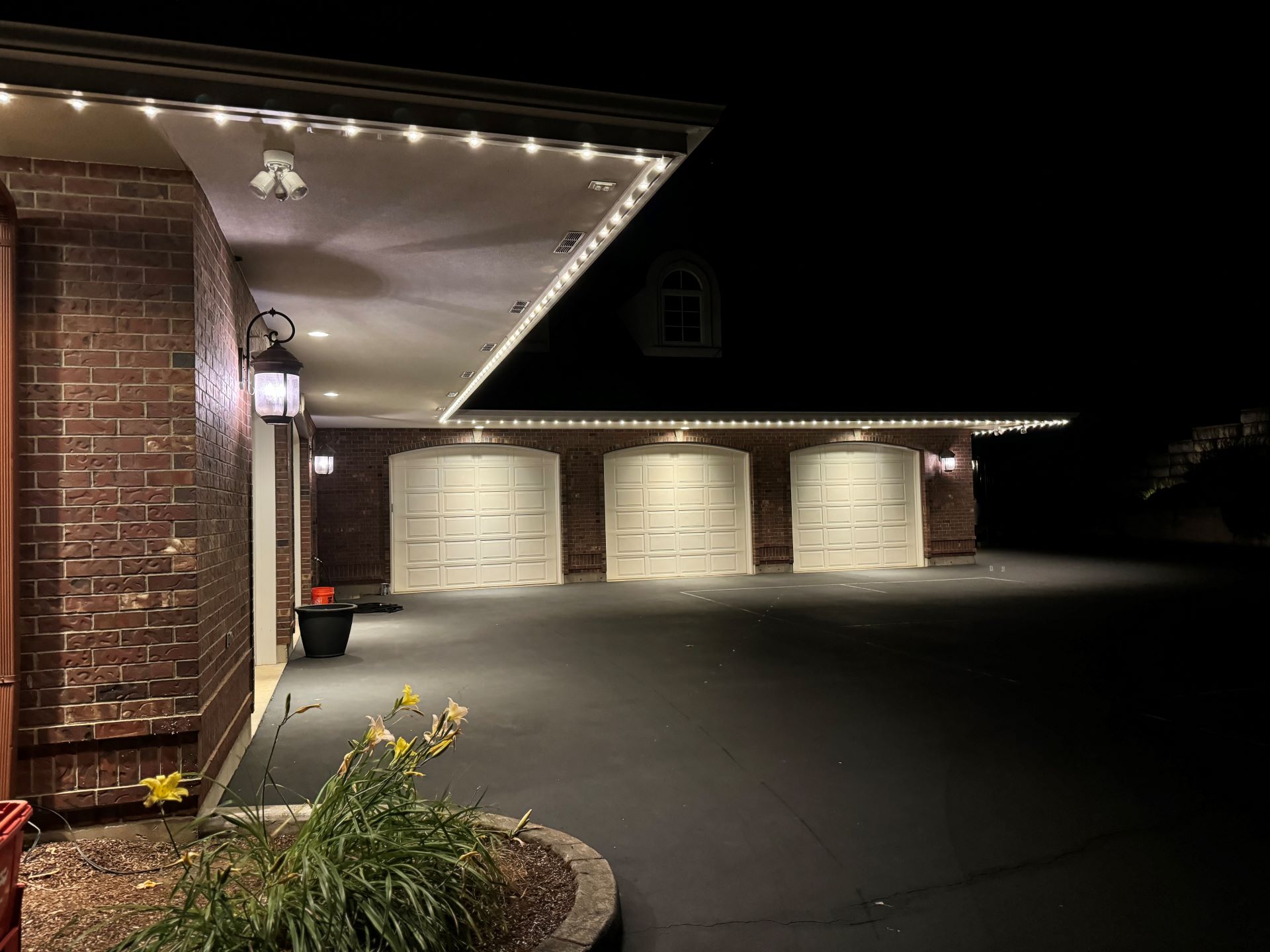
Landscape fixtures are only part of the story. Permanent architectural lighting along the home and hardscape can guide the way long before anyone reaches the garage. Subtle lines of light under eaves, along retaining walls, or on entry columns give your driveway and front approach a clear structure at night.
Permanent systems can:
- Lead drivers from the street to the right entry point
- Make steps and level changes at the front door obvious
- Tie driveway lighting and front porch lighting into one calm scene
High-quality permanent lighting offers flexibility. Many systems can shift between color and white light, so you can have fun colors for special events, then go back to classic warm white for everyday evenings. Dimmable controls help you tune brightness so it feels right for foggy nights, clear winter skies, or long summer twilights. App-based control makes it easy to change scenes or timing when sunset starts creeping earlier.
Oregon’s climate means durability matters. We pay attention to:
- Corrosion-resistant housings that do not mind constant moisture
- Sealed connections that keep water out of wiring
- Mounting and routing methods that work with shifting soil and root growth
When architectural and landscape lighting are planned together, driveway lighting in Forest Heights feels like part of the home, not an add-on.
Seasonal Lighting Strategies for Oregon’s Long Nights
Even though the days are long in summer, this is the perfect time to think about the dark, rainy months ahead. Fog, heavy rain, and early nightfall can turn a pretty hillside driveway into a real challenge if the lighting is not ready.
Permanent systems can be set up with seasonal scenes, such as:
- Brighter, slightly cooler light on stormy evenings to cut through rain
- Warmer, dimmer scenes for relaxed summer gatherings in the driveway or front yard
- Focused accent light around tricky spots like slopes, drains, and steps where ice may form
As plants grow and seasons shift, lighting needs little check-ins. We often suggest a simple tune-up before the rainy season. That can include:
- Adjusting aim as shrubs and branches fill out
- Cleaning lenses so dirt, pollen, and moss do not block light
- Checking for any winter or storm damage to fixtures or wiring
- Updating control schedules as daylight hours change
A driveway that is lit well for December might be too bright and late-running in July, so flexible control and seasonal planning keep things comfortable all year.
Planning Custom Driveway Lighting in Forested Hills
Every forested hillside property is different, which is why a design-first approach matters. When we look at driveway lighting in Forest Heights and similar neighborhoods, we study the slope, the curves, the surface material, and how the house and trees sit around it. Nighttime demos can be very helpful, letting you see how different fixtures and beam spreads actually feel when you drive up or walk along the edge.
We like to build layered plans that combine landscape lighting along the driveway, steps, and paths with permanent architectural lighting on the home and retaining walls. Fixture choices, beam angles, and color temperature are all tailored to balance safety, beauty, and efficiency. The goal is simple, calm arrivals and departures in every season, along a driveway that feels as inviting as it looks.
Get Started With Your Project Today
Transform your home’s curb appeal and safety with professional driveway lighting in Forest Heights designed and installed by the team at CLG Lighting. We take the time to understand your property, your goals, and your budget so every fixture works hard for you night after night. If you are ready to talk through ideas or schedule a consultation, simply contact us and we will help you plan the right solution.